Wholesale Price Index (WPI) inflation declined to 9.8% in July 2024 from previous month
GK and monthly revision
Wholesale inflation eases to 9.8% on softer energy prices
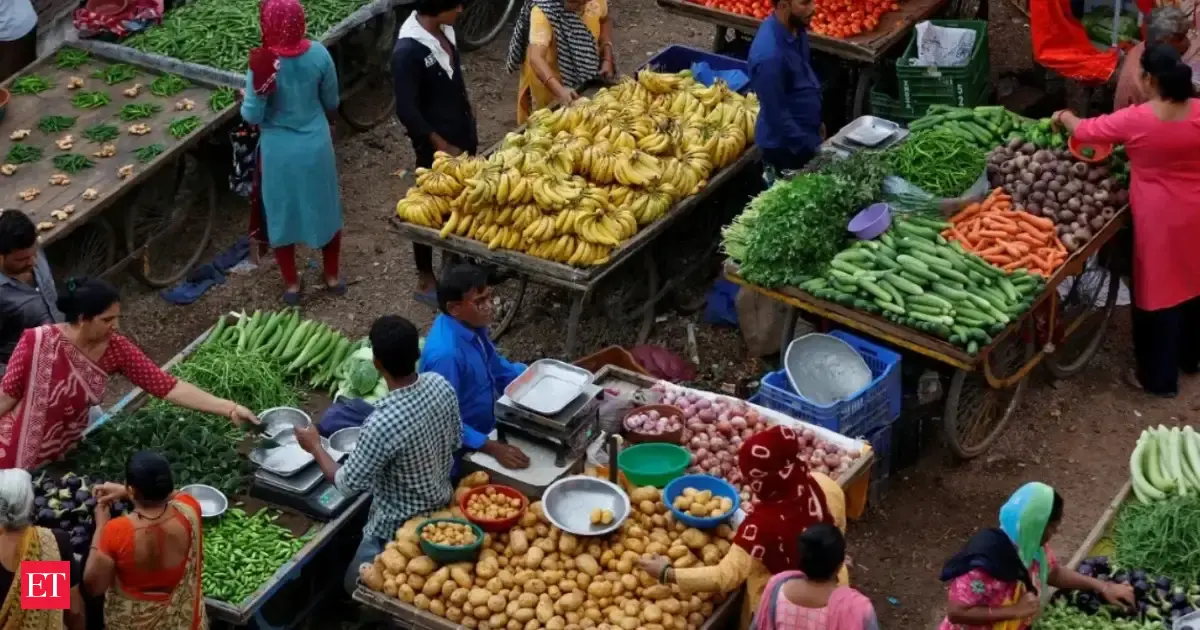
India's wholesale inflation eased to 9.8% in July due to declining energy prices, while retail inflation rose to 4.5% with food inflation hitting a 19-month high. The divergence between WPI and CPI trends highlights supply-side pressures in food and manufactured goods. Economists predict WPI inflation may fall below 9.5% next month, signaling potential easing of input cost pressures for producers.
Revision structure
Monthly events and exam calendar context
Static GK and one-liner notes
Quiz and mock-test revision path
Key points
Exam-ready takeaways
Retail inflation (CPI) increased to 4.5% in July 2024
Food inflation reached a 19-month high in July 2024
Easing WPI attributed to falling energy prices
Forecast: WPI inflation may dip below 9.5% in August 2024
Detailed analysis
Full exam-oriented breakdown
India's inflation landscape in July 2024 presents a fascinating case study in divergent price trends that every competitive exam aspirant must understand deeply. The Wholesale Price Index (WPI) inflation eased to 9.8% from double-digit levels seen in preceding months, primarily driven by a significant decline in energy prices — particularly mineral oils, electricity, and crude petroleum. This marks a critical inflection point after WPI remained in double digits for 16 consecutive months from April 2021 to July 2022, peaking at 16.63% in May 2022. Meanwhile, retail inflation measured by Consumer Price Index (CPI) inched up to 4.5%, with food inflation surging to a 19-month high of 11.5%, driven by vegetables, cereals, pulses, and spices. This divergence between producer-level (WPI) and consumer-level (CPI) inflation is not merely statistical — it reveals structural rigidities in India's supply chains and the asymmetric transmission of global commodity shocks. To appreciate the significance, we must trace the policy backdrop. The Reserve Bank of India (RBI), under its flexible inflation targeting framework adopted in 2016 (formalized through the RBI Act Amendment 2016), targets CPI inflation at 4% with a tolerance band of ±2%. The July 2024 CPI reading of 4.5% remains within this band but uncomfortably close to the upper threshold. The Monetary Policy Committee (MPC), constituted under Section 45ZB of the RBI Act, has maintained the repo rate at 6.5% since February 2023, signaling a pause after a 250-basis-point hike cycle. However, persistent food inflation — which carries a 39% weight in CPI — complicates the MPC's calculus. Food inflation's volatility stems from supply-side factors: erratic monsoons (2023 saw below-normal rainfall), export restrictions on wheat and rice, and logistical bottlenecks. These are beyond the reach of monetary policy, highlighting the limits of interest rate tools in managing supply-driven inflation — a key concept for UPSC and RBI Grade B aspirants. The constitutional dimension is equally vital. Agriculture falls under the State List (Entry 14, List II, Seventh Schedule), while trade and commerce are in the Union List (Entry 33, List I). This federal division often leads to coordination gaps — for instance, when the Centre imposes export bans under the Foreign Trade (Development and Regulation) Act, 1992, states bear the brunt of farmer distress. The Essential Commodities Act, 1955 (amended in 2020) empowers the Centre to regulate stock limits, but its invocation remains contentious. Meanwhile, the National Food Security Act, 2013, which guarantees subsidized grains to 800 million people, creates a massive procurement-distribution apparatus (FCI, state agencies) that influences open market prices. Understanding these institutional layers is essential for answering questions on governance and federalism. Economically, the WPI-CPI wedge has profound implications. Falling WPI suggests easing input costs for manufacturers — a positive for corporate margins and industrial recovery (IIP grew 5.2% in June 2024). But if food inflation persists, rural demand (65% of population) remains constrained, affecting FMCG, two-wheeler, and tractor sales. The RBI's August 2024 bulletin noted that "food inflation shocks have become more frequent and persistent," urging structural reforms: cold chain investment (only 15% of perishables covered), APMC market liberalization, and direct income support (PM-KISAN) over price controls. Politically, with general elections concluded in June 2024, the new government faces pressure to balance fiscal consolidation (targeting 4.9% fiscal deficit for FY25) with inflation relief. The budget's emphasis on agricultural productivity and supply chain infrastructure reflects this. Globally, India's experience mirrors emerging market challenges: energy price normalization (Brent crude fell from $90 to $80/bbl in July) helps WPI, but climate-induced food supply disruptions are a shared threat. The IMF's July 2024 WEO upgrade of India's growth forecast to 7% for FY25 assumes inflation moderation. For aspirants, the key takeaway is multidimensional: inflation is not a single number but a mosaic of global commodities, domestic agriculture, federal governance, and policy frameworks. Future implications? If monsoon 2024 remains robust (IMD predicts 106% of LPA), food inflation may ease by Q3 FY25, giving MPC room for rate cuts. But structural vulnerabilities — low agricultural productivity, fragmented markets, climate exposure — demand sustained reform, not cyclical luck. This is the narrative arc examiners expect you to master.
How to study
Turn news into exam marks
Revise monthly events by exam family instead of reading random updates.
Pair one-liners with mock tests so mistakes become the next revision list.
Keep state job pages, calendar pages and GK packs connected in one path.