
Scheme: NAMASTE (National Action for Mechanised Sanitation Ecosystem) for sewer/septic tank workers
GK and monthly revision
NAMASTE to be expanded to rural India, include more workers
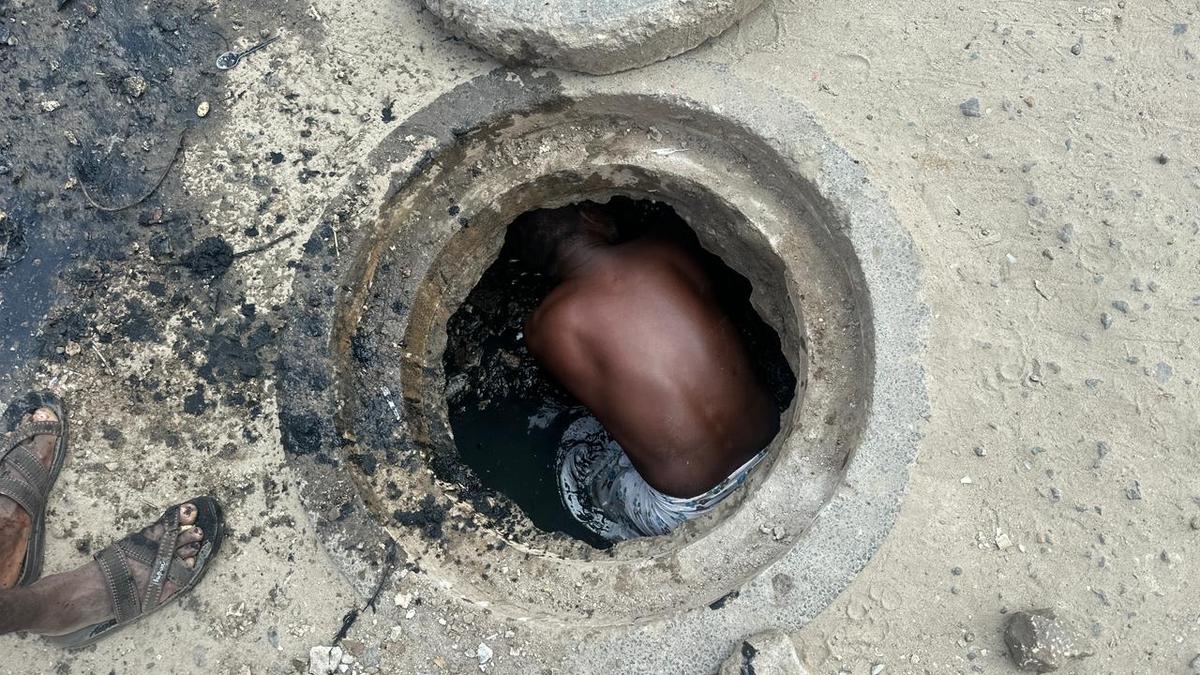
The National Commission for Safai Karamcharis (NCSC) has flagged a high rejection rate in the NAMASTE scheme for sewer and septic tank workers. Of nearly 1 lakh identified workers, only 810 were approved for capital subsidies, and just 147 received funds. The government plans to expand NAMASTE to rural areas and include more worker categories. This highlights implementation gaps in a flagship sanitation scheme and is crucial for exams focusing on social welfare, sanitation policy, and governance.
Revision structure
Monthly events and exam calendar context
Static GK and one-liner notes
Quiz and mock-test revision path
Key points
Exam-ready takeaways
Workers identified: nearly 1 lakh; approved for capital subsidy: 810; funds disbursed to: 147
Flagged by: National Commission for Safai Karamcharis (NCSC)
Government plan: Expand NAMASTE to rural India and include more worker categories
Significance: Highlights implementation gap in mechanised sanitation and worker rehabilitation
Detailed analysis
Full exam-oriented breakdown
The recent revelation by the National Commission for Safai Karamcharis (NCSC) about the abysmal disbursement rate under the NAMASTE scheme — National Action for Mechanised Sanitation Ecosystem — lays bare a critical implementation gap in India’s sanitation and social justice architecture. Launched in 2022-23 as a central government scheme under the Ministry of Social Justice and Empowerment, NAMASTE aims to eliminate hazardous cleaning of sewers and septic tanks by promoting mechanisation and providing capital subsidies, skill training, and safety gear to sanitation workers — predominantly from Scheduled Castes. The scheme was a direct response to the persistent violation of the Prohibition of Employment as Manual Scavengers and their Rehabilitation Act (PEMSR Act), 2013, which banned manual scavenging but failed to eradicate it due to weak enforcement and lack of alternative livelihoods. The data is staggering: nearly 1 lakh sewer and septic tank workers were identified across urban local bodies, yet only 810 were approved for capital subsidies, and a mere 147 actually received funds. This 99.85% rejection rate at the disbursement stage signals systemic bottlenecks — from flawed identification and documentation to bureaucratic inertia and lack of banking linkage. The NCSC, a statutory body constituted under the National Commission for Safai Karamcharis Act, 1993, has rightly flagged this as a betrayal of the constitutional mandate under Article 17 (abolition of untouchability), Article 21 (right to life with dignity), and Article 46 (promotion of educational and economic interests of SCs/STs). The Commission’s intervention underscores its role as a watchdog for the most marginalised, yet its recommendations remain advisory, limiting enforcement power. The government’s announced expansion of NAMASTE to rural India and inclusion of more worker categories — such as waste pickers and drain cleaners — is a welcome policy intent, but without fixing the delivery architecture, it risks replicating urban failures at a larger scale. Rural sanitation infrastructure remains weak; as per the 2011 Census, over 67% of rural households lacked drainage connectivity, and the Swachh Bharat Mission (Grameen) Phase II now focuses on solid and liquid waste management — creating new demand for mechanised services. Integrating NAMASTE with SBM-G, the National Rural Livelihoods Mission (NRLM), and the PM-SVANidhi scheme for street vendors could create convergence, but requires inter-ministerial coordination between the Ministries of Social Justice, Jal Shakti, Housing & Urban Affairs, and Rural Development. Economically, the scheme’s failure to disburse capital subsidies denies Dalit workers access to entrepreneurship — perpetuating caste-based occupational entrapment. Politically, it exposes the gap between legislative intent (PEMSR Act, 2013; NAMASTE guidelines) and administrative capacity. Socially, it reinforces the stigma and mortality associated with manual scavenging — over 300 deaths reported in sewers since 2017 per the Safai Karamchari Andolan. Internationally, India’s commitment to SDG 6 (clean water and sanitation) and SDG 8 (decent work) is undermined by such implementation deficits. Future implications hinge on three reforms: digitising worker identification via Aadhaar-linked databases with real-time tracking; empowering NCSC with binding directives and penal provisions for non-compliance; and shifting from subsidy-based to credit-guarantee models with interest subvention, linked to skilling under the Skill India Mission. Unless the state moves from scheme announcement to last-mile delivery, NAMASTE will remain a well-intentioned acronym — not a transformative reality for India’s invisible sanitation workforce.
How to study
Turn news into exam marks
Revise monthly events by exam family instead of reading random updates.
Pair one-liners with mock tests so mistakes become the next revision list.
Keep state job pages, calendar pages and GK packs connected in one path.