
RBI Governor Sanjay Malhotra justified early closure of FCNR(B) deposit scheme as data-driven and prudent
GK and monthly revision
RBI's early FCNR(B) deposit scheme closure 'data-driven' or a policy U-turn? Governor Malhotra explains
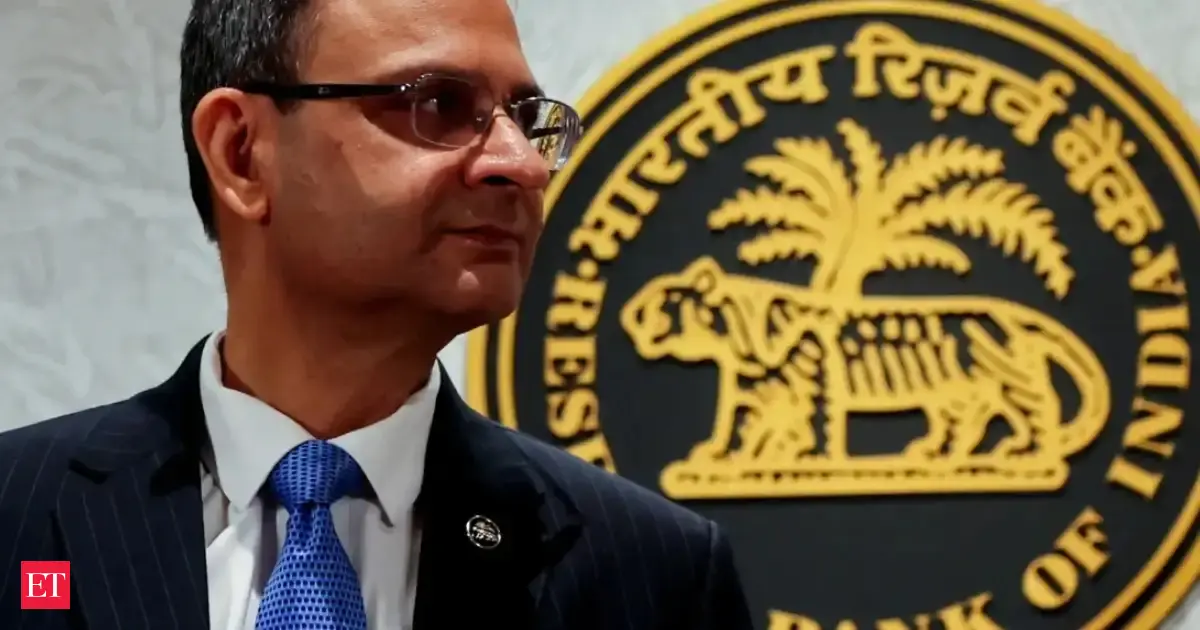
RBI Governor Sanjay Malhotra defended the early closure of the FCNR(B) deposit scheme, calling it a data-driven and prudent calibration. The decision was prompted by stronger-than-expected dollar inflows and aims to attract $80 billion into India's economy. The central bank emphasized its commitment to managing exchange rate volatility and maintaining stable market conditions. This move reflects RBI's proactive liquidity management and foreign exchange strategy.
Revision structure
Monthly events and exam calendar context
Static GK and one-liner notes
Quiz and mock-test revision path
Key points
Exam-ready takeaways
Scheme closure aims to attract $80 billion into Indian economy through foreign currency deposits
Decision based on stronger-than-expected dollar inflows into the country
RBI committed to managing exchange rate volatility and ensuring market stability
FCNR(B) stands for Foreign Currency Non-Resident (Bank) deposits scheme for NRIs
Detailed analysis
Full exam-oriented breakdown
The Reserve Bank of India's decision to close the FCNR(B) deposit scheme ahead of schedule has sparked significant discussion in financial circles, and as aspirants preparing for competitive exams, it's crucial to understand not just the 'what' but the 'why' and 'what next' of this development. Let me walk you through this step by step. First, let's establish the background. The FCNR(B) scheme — Foreign Currency Non-Resident (Bank) deposits — was originally introduced in 1993 as a replacement for the earlier FCNR(A) scheme. It allows Non-Resident Indians (NRIs) and Persons of Indian Origin (PIOs) to maintain fixed deposits in designated foreign currencies (USD, GBP, EUR, JPY, CAD, AUD) with Indian banks. The key attraction? The exchange rate risk is borne by the RBI, not the depositor. This means if the rupee depreciates against the dollar, the RBI compensates the bank, making it a virtually risk-free investment for NRIs. Now, why was this scheme reopened in 2022? Context matters immensely here. In 2022, the rupee was under severe pressure — it breached the psychological 80-per-dollar mark for the first time in history. Foreign portfolio investors (FPIs) had pulled out over $30 billion in the first half of 2022-23. The current account deficit was widening due to high oil prices post the Russia-Ukraine conflict. In this backdrop, the RBI, under then-Governor Shaktikanta Das, launched a special FCNR(B) window in July 2022 with enhanced interest rate ceilings (linked to SOFR/LIBOR + 250-300 basis points) to attract dollar inflows. The initial deadline was November 2022, later extended to June 2023, and then further. Enter Governor Sanjay Malhotra (who took charge in December 2024). His announcement of early closure — calling it "data-driven" and "prudent calibration" — needs to be read against the current macroeconomic data. As of early 2025, India's forex reserves have crossed $700 billion (reaching a historic high of $704.89 billion in September 2024). The current account deficit has narrowed significantly to around 1% of GDP. FPI flows have returned strongly — net inflows of over $25 billion in 2024. The rupee has been relatively stable, trading in the 83-84 range against the dollar. In short, the emergency conditions that warranted the special window no longer exist. The $80 billion figure mentioned by the Governor is cumulative — it represents the total FCNR(B) deposits mobilized since the special window opened, not a fresh target. This is a critical distinction for exam purposes. The scheme has served its purpose: it provided a buffer during volatile times, helped stabilize the rupee, and built a robust reserve cushion. From a constitutional and legal perspective, the RBI's action derives from its powers under the Reserve Bank of India Act, 1934 — specifically Section 45W (regulation of deposit-taking) and Section 45U (power to issue directions). The Foreign Exchange Management Act (FEMA), 1999, particularly Regulation 5 of FEMA (Deposit) Regulations, 2016, governs FCNR(B) deposits. The RBI's autonomy in monetary policy and exchange rate management, while not explicitly constitutional, flows from the RBI Act and has been reinforced by the 2016 amendment establishing the Monetary Policy Committee (MPC) under Section 45ZB. Stakeholders here are multi-layered: NRIs/PIOs (who lose a high-yield, risk-free avenue), Indian banks (who lose a stable, low-cost foreign currency funding source), the RBI (which reduces its contingent liability on exchange rate guarantees), and the government (which benefits from stable reserves and exchange rate). The "prudent calibration" phrase signals a shift from crisis management to normalcy — a hallmark of mature central banking. Broader themes? This connects directly to India's external sector management, capital account convertibility debates (we're still on the path, not there yet — the Tarapore Committee reports of 1997 and 2006 are relevant here), and the impossible trinity (you can't have free capital flow, fixed exchange rate, and independent monetary policy simultaneously — India chooses managed float and independent policy). It also reflects the RBI's evolving toolkit: from interest rate hikes to special deposit windows to forward market interventions. Future implications? Expect the RBI to continue normalizing its extraordinary pandemic and post-pandemic measures. The focus will shift to durable liquidity management (via VRRR auctions, OMOs), inflation targeting (4% ± 2% under the MPC framework), and preparing for global monetary policy shifts (Fed rate cuts cycle). For India's external sector, the challenge remains: how to attract stable FDI over volatile portfolio flows, and how to internationalize the rupee (the 2023 RBI framework for rupee invoicing of international trade is a step in this direction). For your exams, remember: FCNR(B) is not just a deposit scheme — it's a window into how India manages its external vulnerability, balances openness with stability, and uses the RBI's balance sheet as a shock absorber. The early closure isn't a U-turn; it's a graduation from crisis mode to confidence mode.
How to study
Turn news into exam marks
Revise monthly events by exam family instead of reading random updates.
Pair one-liners with mock tests so mistakes become the next revision list.
Keep state job pages, calendar pages and GK packs connected in one path.