
India allows exporters to invoice and receive payments in Indian rupees or foreign currencies from non-ACU countries.
GK and monthly revision
Rules eased to help exporters receive payments in rupees
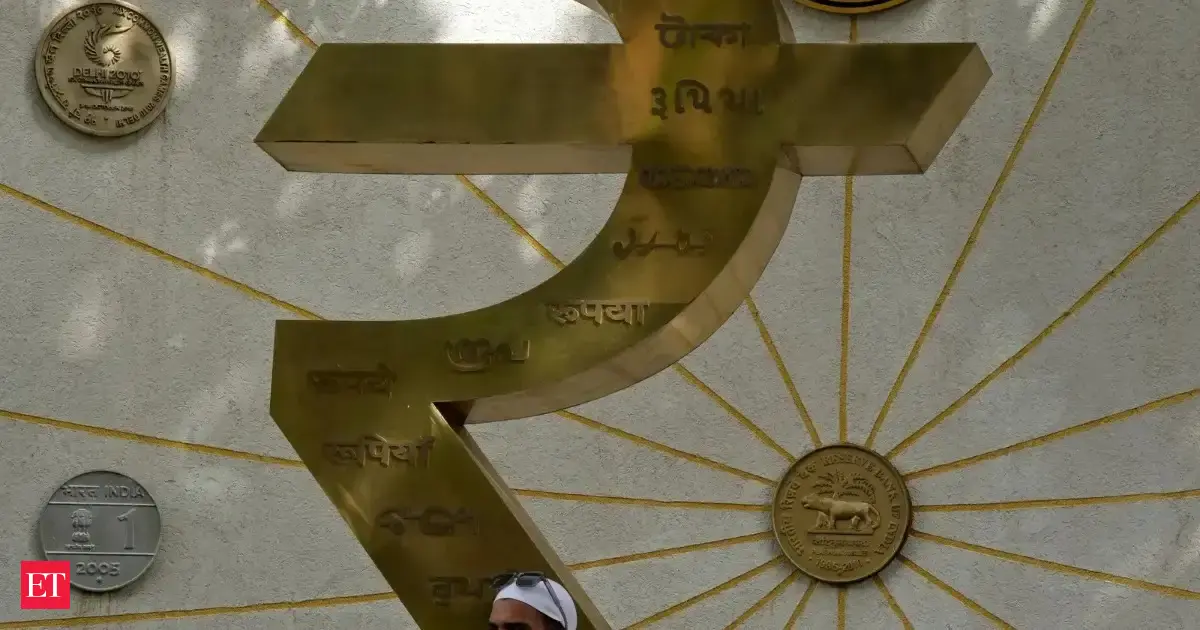
India has relaxed rules for rupee-denominated export payments, enabling exporters to invoice and receive payments in Indian rupees or foreign currencies from non-Asian Clearing Union (ACU) countries. These rupee export realisations will now qualify for trade-policy benefits and count towards export obligations under the Foreign Trade Policy. The move aims to promote wider international use of the rupee, reduce dependence on the US dollar, and support India's push for rupee internationalisation. This policy change is significant for exams as it reflects evolving trade finance mechanisms and India's strategic economic diplomacy.
Revision structure
Monthly events and exam calendar context
Static GK and one-liner notes
Quiz and mock-test revision path
Key points
Exam-ready takeaways
Rupee export realisations now qualify for trade-policy benefits under the Foreign Trade Policy.
Such realisations will count towards fulfilling export obligations of exporters.
The move aims to promote internationalisation of the Indian rupee in global trade.
Asian Clearing Union (ACU) countries are excluded from this rupee payment mechanism.
Detailed analysis
Full exam-oriented breakdown
India's recent decision to ease rules for rupee-denominated export payments marks a strategic milestone in the country's long-standing ambition to internationalise the Indian rupee. This policy shift, announced by the Directorate General of Foreign Trade (DGFT) under the Ministry of Commerce and Industry, allows exporters to invoice and receive payments in Indian rupees or foreign currencies from non-Asian Clearing Union (ACU) countries. Crucially, such rupee export realisations now qualify for trade-policy benefits under the Foreign Trade Policy (FTP) 2023 and count towards fulfilling export obligations — a significant incentive for exporters. The move builds on the Reserve Bank of India's (RBI) July 2022 framework for international trade settlement in rupees, which was introduced amid global financial volatility following the Russia-Ukraine conflict and subsequent Western sanctions on Russian financial institutions. That crisis exposed the vulnerability of over-reliance on the US dollar and SWIFT messaging system, prompting India to explore alternative payment mechanisms. Historically, India has sought to reduce dollar dependence since the 1991 balance of payments crisis, but progress remained incremental. The 2022 RBI circular allowed authorised dealer banks to open Special Rupee Vostro Accounts (SRVAs) for partner countries' banks, enabling rupee settlement. As of early 2024, over 30 countries, including Russia, UAE, Sri Lanka, Mauritius, and several African nations, have operational SRVAs. The exclusion of ACU countries — a regional payment arrangement established in 1974 under UNESCAP comprising India, Iran, Pakistan, Bangladesh, Nepal, Bhutan, Myanmar, and Maldives — is deliberate, as ACU already has a multilateral netting mechanism for settling intra-regional transactions in designated currencies. Key stakeholders include the Ministry of Finance, RBI, DGFT, exporter federations like FIEO and EEPC India, and partner country central banks. For India, the economic significance is profound: reduced transaction costs, insulation from dollar volatility, lower foreign exchange reserve pressure, and enhanced bargaining power in bilateral trade. Politically, it strengthens strategic autonomy — a core tenet of India's foreign policy — and deepens ties with Global South nations. Constitutionally, while no specific Article directly governs trade settlement, Article 246 read with Seventh Schedule (Union List Entries 10, 11, 47) empowers Parliament to legislate on foreign trade, currency, and banking. The Foreign Trade (Development and Regulation) Act, 1992, and the Foreign Exchange Management Act (FEMA), 1999, provide the legal backbone. This initiative aligns with broader themes of economic diplomacy, financial inclusion, and reform of global financial architecture — echoed in India's G20 presidency (2023) push for local currency settlement frameworks. Future implications include potential expansion to ACU members, integration with digital rupee (e₹) for cross-border CBDC pilots, and gradual acceptance of rupee as a reserve currency. However, challenges remain: limited convertibility, lack of deep rupee-denominated financial markets, and partner countries' willingness to hold rupee balances. For aspirants, this is not just a policy update — it's a window into India's evolving role in reshaping the global monetary order.
How to study
Turn news into exam marks
Revise monthly events by exam family instead of reading random updates.
Pair one-liners with mock tests so mistakes become the next revision list.
Keep state job pages, calendar pages and GK packs connected in one path.