
FTSE Russell declared BSE as eligible exchange for its equity indices
GK and monthly revision
BSE cleared as eligible exchange in FTSE Russell equity indices
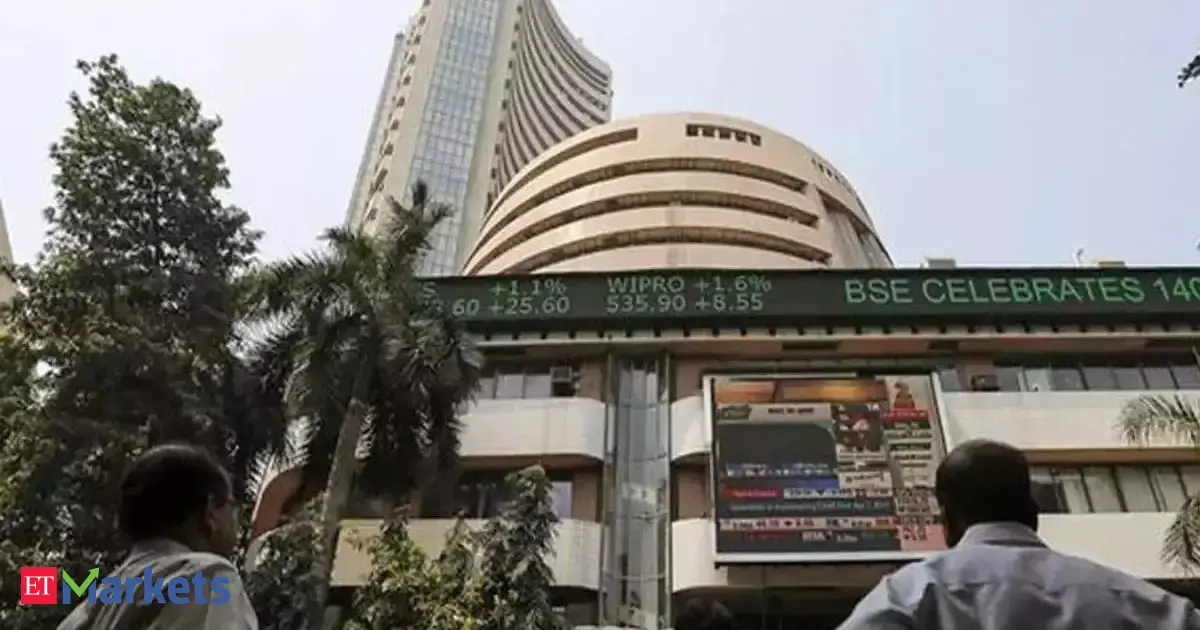
FTSE Russell has designated BSE as an eligible exchange for its equity indices, with BSE main board stocks to be assessed from March 2027. New listings will undergo fast-track screening, while dual-listed companies will have NSE securities preferred. This development enhances BSE's global visibility and could attract foreign portfolio investments, marking a significant milestone for India's capital market infrastructure.
Revision structure
Monthly events and exam calendar context
Static GK and one-liner notes
Quiz and mock-test revision path
Key points
Exam-ready takeaways
BSE main board stocks to be assessed for inclusion from March 2027
New listings on BSE main board to undergo fast-track screening process
For dual-listed companies, NSE securities will be preferred over BSE
NSE-listed stocks already eligible for FTSE Russell indices inclusion
Detailed analysis
Full exam-oriented breakdown
FTSE Russell's declaration of the Bombay Stock Exchange (BSE) as an eligible exchange for its equity indices marks a watershed moment in India's capital market evolution. To understand the gravity of this development, we must first appreciate the historical context. Established in 1875, BSE is Asia's oldest stock exchange and has been the bedrock of India's securities market for nearly 150 years. However, despite its venerable history, BSE had long played second fiddle to the National Stock Exchange (NSE) in terms of trading volumes, technological infrastructure, and global index representation. The NSE, launched in 1994 with screen-based trading, quickly captured market share and became the preferred venue for institutional investors and foreign portfolio investors (FPIs). The key stakeholders in this development are manifold. FTSE Russell, a wholly-owned subsidiary of London Stock Exchange Group (LSEG), is one of the world's leading index providers, with its indices benchmarking trillions of dollars in assets globally. Their decision directly impacts foreign portfolio investors who track FTSE indices — including the FTSE All-World Index and FTSE Emerging Markets Index — as these funds will now have the option to invest in BSE-listed securities. For BSE, led by Managing Director & CEO Sundararaman Ramamurthy, this recognition validates its technological upgrades, regulatory compliance, and market structure reforms undertaken in recent years. The Securities and Exchange Board of India (SEBI), as the market regulator under the SEBI Act, 1992, plays a crucial oversight role ensuring that BSE meets international standards for market integrity, settlement systems, and investor protection. The significance for India's economy is profound. First, this development enhances the global visibility of India's capital markets, potentially attracting incremental foreign portfolio investments. According to industry estimates, FTSE Russell indices track approximately $15-20 trillion in assets globally. Even a small reallocation toward BSE-listed stocks could mean billions of dollars in fresh inflows. Second, it reduces concentration risk — currently, NSE dominates over 90% of equity trading volumes in India. A vibrant BSE provides healthy competition, better price discovery, and resilience against systemic shocks. Third, it aligns with the Government of India's vision under the 'Atmanirbhar Bharat' initiative to develop robust domestic financial infrastructure. From a constitutional and regulatory perspective, this development intersects with several key frameworks. Article 246 of the Constitution places 'Stock Exchanges' under the Union List (Entry 46), giving Parliament exclusive legislative power. The Securities Contracts (Regulation) Act, 1956 (SCRA) and the SEBI Act, 1992 provide the statutory backbone for exchange recognition and regulation. SEBI's 2018 circular on 'Framework for Recognition and Supervision of Stock Exchanges' and subsequent amendments have raised the bar for exchange governance, technology, and risk management — standards that BSE has evidently met to FTSE Russell's satisfaction. The Companies Act, 2013 governs listing requirements, while the Depositories Act, 1996 ensures smooth electronic settlement. Connecting to broader themes, this milestone reflects India's growing integration with global financial markets — a journey that began with economic liberalization in 1991. It complements other recent developments: MSCI's inclusion of India in its Emerging Markets Index (2003), JP Morgan's addition of Indian government bonds to its Emerging Markets Bond Index (2024), and Bloomberg's inclusion in its Emerging Market Local Currency Index (2024). Together, these signal growing confidence in India's market infrastructure, regulatory regime, and macroeconomic stability. Looking ahead, the March 2027 assessment timeline gives BSE a clear runway to prepare. The fast-track screening for new listings is particularly significant — it could make BSE an attractive listing destination for startups and new-age companies seeking global investor access. However, the preference for NSE securities in dual-listed companies (which constitute the vast majority of large-cap stocks) means the immediate impact may be limited to BSE-exclusive listings. The real test will be whether BSE can leverage this recognition to attract quality listings, deepen liquidity, and emerge as a genuine alternative to NSE. For competitive exam aspirants, this development encapsulates the interplay of regulation, technology, global finance, and economic policy — a perfect case study for understanding modern India's financial architecture.
How to study
Turn news into exam marks
Revise monthly events by exam family instead of reading random updates.
Pair one-liners with mock tests so mistakes become the next revision list.
Keep state job pages, calendar pages and GK packs connected in one path.