
Commerce Secretary Rajesh Agrawal to chair joint trade meetings in Argentina and Brazil
GK and monthly revision
India eyes critical minerals, bigger markets in South America trade push
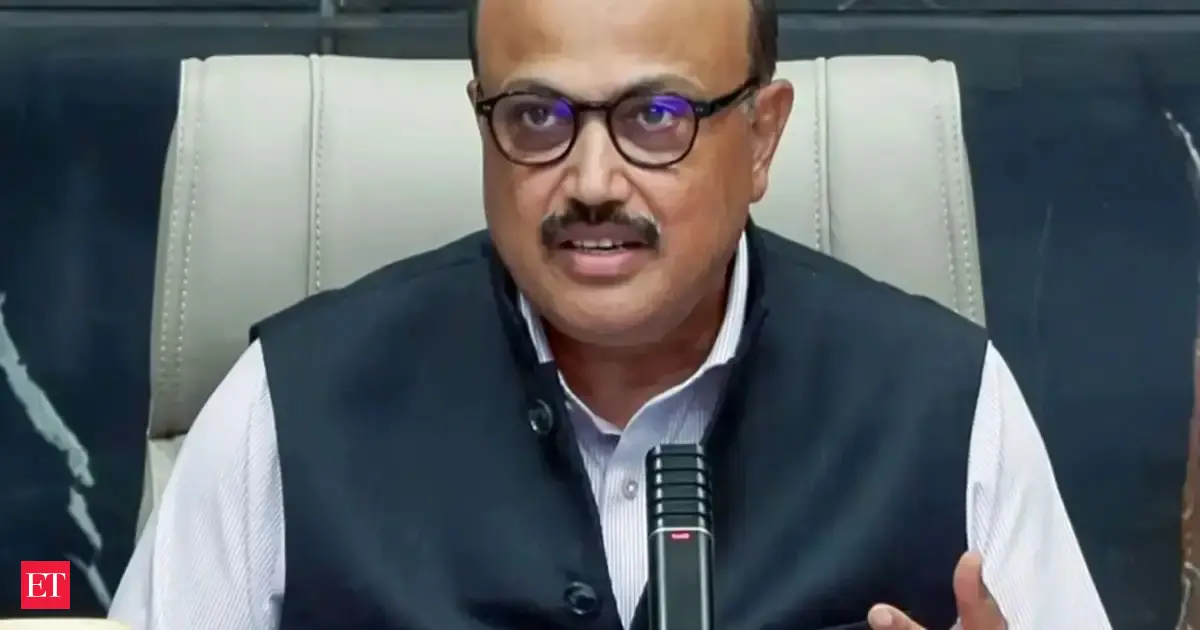
India is intensifying trade engagement with South American nations — Chile, Argentina, and Brazil — to secure critical minerals and expand market access. Commerce Secretary Rajesh Agrawal will lead joint trade meetings in Argentina and Brazil, while talks for a comprehensive trade agreement with Chile are in advanced stages. Discussions also include expanding the existing preferential trade agreement with Mercosur. This strategic push aims to diversify India's export destinations and strengthen bilateral trade, aligning with India's resource security and economic diplomacy goals.
Revision structure
Monthly events and exam calendar context
Static GK and one-liner notes
Quiz and mock-test revision path
Key points
Exam-ready takeaways
Comprehensive trade agreement talks with Chile in advanced stages
Discussions to expand India-Mercosur Preferential Trade Agreement (PTA)
Focus on securing critical minerals like lithium from Chile and Argentina
Objective: Diversify export markets and boost bilateral trade with South America
Detailed analysis
Full exam-oriented breakdown
India's strategic pivot toward South America marks a significant recalibration of its economic diplomacy, driven by the twin imperatives of resource security and market diversification. Historically, India's engagement with Latin America remained peripheral — limited to diplomatic goodwill and modest trade volumes — but the post-pandemic geopolitical landscape has elevated the region's importance. The Commerce Secretary Rajesh Agrawal's scheduled joint trade meetings in Argentina and Brazil, coupled with advanced-stage negotiations for a comprehensive trade agreement with Chile, signal a deliberate institutional push. These developments are not isolated; they build on the 2004 India-Mercosur Preferential Trade Agreement (PTA), which currently covers only 450 tariff lines — a fraction of the potential. Expanding this PTA aligns with India's 'Act East' and 'Neighbourhood First' policies' broader logic, now extended to the Global South. The critical minerals dimension is paramount. Chile holds the world's largest lithium reserves (over 9 million tonnes), while Argentina forms the 'Lithium Triangle' with Bolivia and Chile. As India accelerates its EV transition under the FAME-II scheme and targets 30% EV penetration by 2030, securing lithium supply chains becomes a national security priority. Article 297 of the Constitution vests the Union with control over mineral resources in territorial waters and continental shelf, but international acquisition falls under executive treaty-making power (Article 253), enabling the government to negotiate mineral agreements without parliamentary ratification — though scrutiny via Parliamentary Standing Committees on Commerce and External Affairs remains crucial. Key stakeholders include the Ministry of Commerce & Industry, Ministry of Mines, Khanij Bidesh India Ltd. (KABIL) — the joint venture of NALCO, HCL, and MECL for overseas mineral assets — and diplomatic missions. Brazil, as a BRICS partner and Mercosur's largest economy, offers both mineral potential (niobium, rare earths) and a gateway to the 260-million-strong Mercosur market. Argentina's lithium brine projects in Catamarca and Salta provinces attract Indian PSUs like KABIL, which signed an MoU with Argentina's CAMYEN in 2024. Chile's state-owned Codelco and private SQM dominate lithium production, making a comprehensive trade agreement essential for preferential access. Economically, this push addresses India's export concentration risk — over 50% of exports go to just 10 markets. South America's $3.5 trillion combined GDP and growing middle class offer untapped demand for pharmaceuticals, automobiles, IT services, and textiles. Politically, it reinforces India's leadership of the Global South, complementing its G20 presidency legacy and Voice of Global South Summit initiatives. Socially, technology transfer in mining and renewable energy could foster skill development. Future implications include potential Indian equity stakes in South American mines, a full-fledged India-Mercosur FTA by 2026, and alignment with the India-EU Trade and Technology Council on critical mineral standards. However, challenges persist: logistical distances, regulatory heterogeneity across Mercosur, and competition from China's entrenched Belt and Road presence. Success will depend on sustained high-level engagement, financing mechanisms like EXIM Bank credit lines, and domestic policy coherence between the Critical Minerals Strategy (2023) and trade negotiation mandates.
How to study
Turn news into exam marks
Revise monthly events by exam family instead of reading random updates.
Pair one-liners with mock tests so mistakes become the next revision list.
Keep state job pages, calendar pages and GK packs connected in one path.