
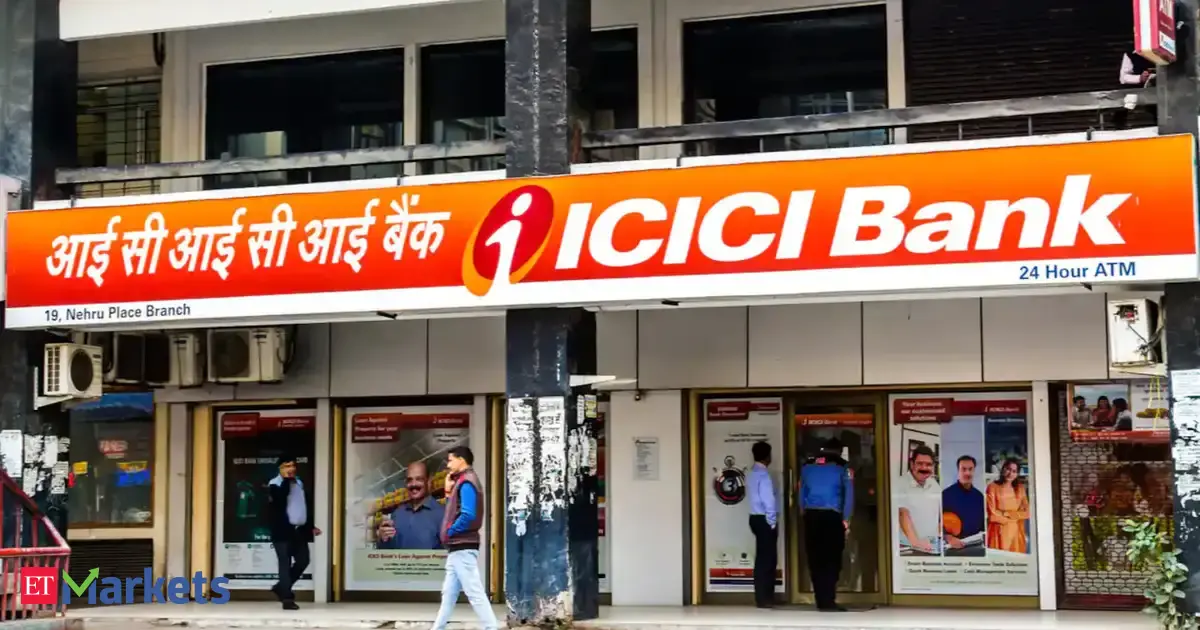
ICICI Bank raised $1 billion through a five-year private dollar bond issuance
GK and monthly revision
ICICI raises $1 billion, Union Bank $600 million through dollar bonds
ICICI Bank raised $1 billion via a five-year private dollar bond, while Union Bank of India secured $600 million in its first international dollar issue in over a decade, aided by RBI's special swap window. UCO Bank also approved a $1 billion fundraising programme. This reflects Indian banks' growing access to global capital markets and RBI's supportive framework for overseas borrowing.
Revision structure
Monthly events and exam calendar context
Static GK and one-liner notes
Quiz and mock-test revision path
Key points
Exam-ready takeaways
Union Bank of India secured $600 million in its first international dollar bond issue in over 10 years
Union Bank's issue benefited from RBI's special dollar-rupee swap window facility
UCO Bank approved a $1 billion fundraising programme for overseas borrowing
These issuances indicate improved global investor confidence in Indian public and private sector banks
Detailed analysis
Full exam-oriented breakdown
The recent fundraising by Indian banks through international dollar bond markets marks a significant milestone in the evolution of India's banking sector and its integration with global capital markets. ICICI Bank, India's largest private sector bank, successfully raised $1 billion through a five-year private placement of dollar-denominated bonds, while Union Bank of India, a major public sector bank, secured $600 million in its first international dollar bond issuance in over a decade. Additionally, UCO Bank's board approved a $1 billion fundraising programme for overseas borrowing, signaling a broader trend among Indian banks to tap into global liquidity pools. This development must be understood against the backdrop of India's evolving external sector framework and the Reserve Bank of India's (RBI) proactive management of foreign exchange reserves and capital flows. The RBI's special dollar-rupee swap window, introduced in 2022 as part of its liquidity management toolkit, played a crucial role in facilitating Union Bank's issuance. This swap window allows banks to borrow dollars from the RBI by providing rupee collateral, effectively hedging currency risk and lowering the cost of foreign currency borrowing. Such mechanisms are authorized under the RBI Act, 1934, particularly Section 17 (which deals with the business of the RBI) and Section 40 (which empowers the RBI to regulate foreign exchange transactions), read with the Foreign Exchange Management Act (FEMA), 1999. The significance of these issuances extends beyond mere fundraising. They reflect improved global investor confidence in Indian banks — both private and public sector — despite global headwinds like rising US interest rates and geopolitical uncertainties. For public sector banks like Union Bank and UCO Bank, which have undergone massive recapitalization and governance reforms since 2017 under the Indradhanush framework and subsequent EASE (Enhanced Access and Service Excellence) reforms, this access to international markets validates their improved asset quality, capital adequacy, and risk management frameworks. Union Bank's first dollar bond in over 10 years is particularly symbolic, as it last accessed international markets in 2013, before the asset quality review (AQR) initiated by the RBI in 2015 exposed deep NPAs in PSBs. From a macroeconomic perspective, such borrowings diversify funding sources for Indian banks, reduce over-reliance on domestic deposits, and support credit growth in a period when domestic liquidity conditions are tight. They also contribute to the internationalization of the Indian rupee, a stated policy objective of the RBI and the Government of India, as evidenced by the July 2022 RBI circular on invoicing international trade in rupees and the 2023 framework for rupee-denominated bonds (masala bonds) and foreign currency borrowing by banks. Constitutionally, while banking falls under the Union List (Entry 45, Seventh Schedule), the regulation of foreign exchange and external borrowing is governed by central legislation — primarily FEMA, 1999, which replaced the archaic FERA, 1973. The RBI's role as the monetary authority and regulator of foreign exchange is derived from the RBI Act, 1934, and the Banking Regulation Act, 1949. These issuances also align with India's commitments under the IMF's Articles of Agreement, particularly Article VIII (avoidance of restrictions on current account transactions) and Article IV (surveillance over exchange rate policies). Looking ahead, this trend is likely to accelerate. With the RBI maintaining a comfortable forex reserve position (over $650 billion as of early 2025) and the government pushing for a $5 trillion economy, Indian banks will increasingly seek offshore funding to meet the credit demands of infrastructure, green energy, and manufacturing sectors under initiatives like PM Gati Shakti and the National Infrastructure Pipeline. However, risks remain — particularly currency mismatch, rollover risk during global financial stress, and exposure to US Federal Reserve policy shifts. The RBI's continued use of macroprudential tools, such as the swap window and limits on net open positions, will be critical in managing these risks. In sum, these bond issuances are not isolated financial events but indicators of a maturing financial system, stronger regulatory architecture, and India's deepening integration with the global economy — themes central to understanding contemporary Indian economic governance.
How to study
Turn news into exam marks
Revise monthly events by exam family instead of reading random updates.
Pair one-liners with mock tests so mistakes become the next revision list.
Keep state job pages, calendar pages and GK packs connected in one path.