US Treasury Secretary Scott Bessent to announce sanctions on Iran at press conference on Monday at 2 p.m. EDT (1800 GMT)
GK and monthly revision
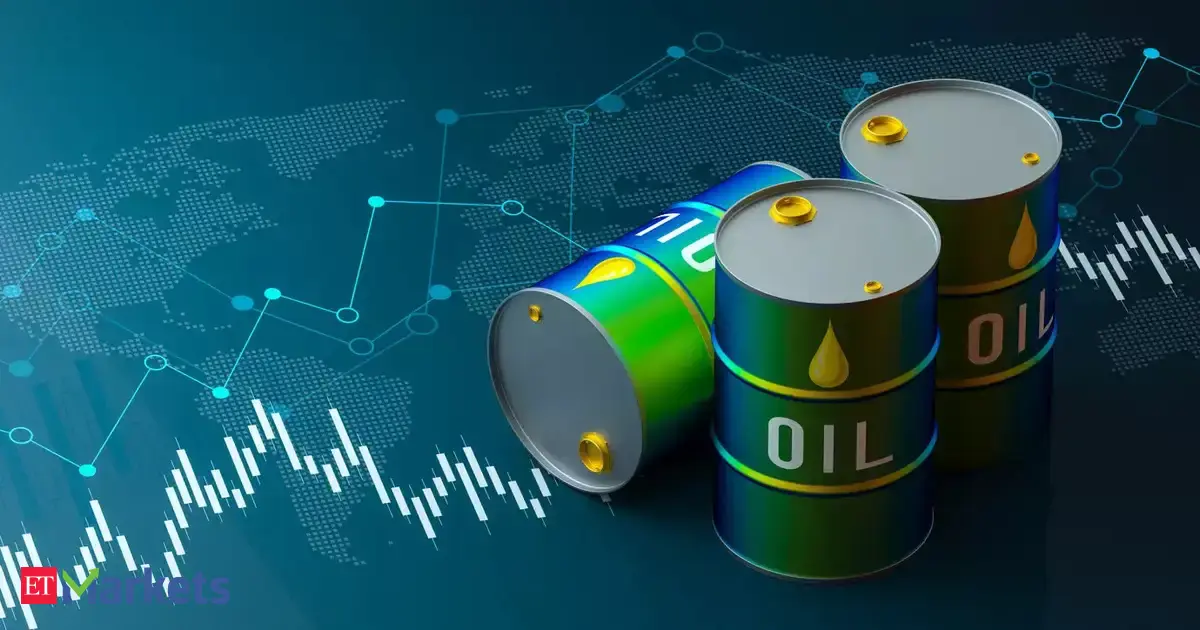
Oil Price Today (August 24): Crude oil slips below $93 ahead of US sanctions announcement on Iran. What are experts saying?
US Treasury Secretary Scott Bessent is set to announce "the toughest sanctions in history" on Iran at a press conference on Monday at 2 p.m. EDT (1800 GMT). President Donald Trump has also threatened sanctions against nations trading with Iran. Crude oil prices slipped below $93 per barrel ahead of the announcement. This development is significant for exams as it impacts global energy security, India's oil import bill, and current account deficit — key topics in economy and international relations.
Revision structure
Monthly events and exam calendar context
Static GK and one-liner notes
Quiz and mock-test revision path
Key points
Exam-ready takeaways
US President Donald Trump threatened sanctions against countries trading with Iran
Crude oil prices slipped below $93 per barrel ahead of the announcement
Sanctions described as "the toughest sanctions in history" by Bessent
Development affects global oil supply, India's energy security, and current account deficit
Detailed analysis
Full exam-oriented breakdown
The announcement by US Treasury Secretary Scott Bessent of "the toughest sanctions in history" on Iran marks a significant escalation in US-Iran tensions, with profound implications for global energy markets and India's strategic interests. To understand this development, we must trace the historical context: the 2015 Joint Comprehensive Plan of Action (JCPOA), commonly known as the Iran nuclear deal, was signed between Iran and the P5+1 nations (US, UK, France, Russia, China, plus Germany) under the Obama administration. The agreement lifted crippling economic sanctions on Iran in exchange for strict limits on its nuclear program, verified by the International Atomic Energy Agency (IAEA). However, in May 2018, the Trump administration unilaterally withdrew from the JCPOA, reimposing sanctions under a "maximum pressure" campaign. This current announcement represents a further tightening of that strategy. The key stakeholders include the United States, which seeks to curb Iran's nuclear ambitions and regional influence; Iran, which views its nuclear program as a sovereign right and deterrent; major oil importers like India, China, Japan, and South Korea; and OPEC+ members, particularly Saudi Arabia and Russia, who may adjust production to stabilize prices. The European Union, a JCPOA signatory, has attempted to preserve the deal through mechanisms like INSTEX (Instrument in Support of Trade Exchanges), but with limited success. For India, the implications are multifaceted. India is the world's third-largest oil consumer and imports over 85% of its crude oil requirements. Iran was historically a major supplier, offering favorable terms like 60-day credit periods and rupee-rial payment mechanisms. After US sanctions, India reduced imports to zero by mid-2019. The current price dip below $93/barrel provides temporary relief to India's oil import bill, which stood at approximately $157.5 billion in FY23. However, sustained sanctions could tighten global supply, pushing prices higher and widening India's Current Account Deficit (CAD), which was 2% of GDP in Q4 FY23. Higher oil prices also fuel domestic inflation, complicating RBI's monetary policy under the Flexible Inflation Targeting Framework (amended RBI Act, 1934, Section 45ZA). Constitutionally, Article 246 read with the Union List (Entry 53) gives Parliament exclusive power over regulation of oilfields and mineral oil resources. The Petroleum and Natural Gas Regulatory Board Act, 2006, and the Hydrocarbon Exploration and Licensing Policy (HELP), 2016, govern domestic exploration. India's Strategic Petroleum Reserves (SPR), managed by Indian Strategic Petroleum Reserves Limited (ISPRL), provide a 9.5-day buffer — insufficient for prolonged disruptions. The government's push for energy diversification — through the National Biofuel Policy (2018), ethanol blending targets (20% by 2025-26), and the International Solar Alliance — aligns with Article 48A (environment protection) and India's Paris Agreement commitments. Geopolitically, this development tests India's strategic autonomy. India maintains ties with both the US (Quad, Indo-Pacific strategy) and Iran (Chabahar Port, connectivity to Afghanistan and Central Asia). The Chabahar Port agreement, signed in 2016 and operationalized in 2018, received a US sanctions waiver due to its importance for Afghan humanitarian aid. However, broader sanctions could jeopardize this corridor. India's vote at the IAEA and UN Security Council on Iran-related resolutions will be closely watched. Future implications include potential Iranian retaliation — such as threats to close the Strait of Hormuz, through which 20% of global oil passes — or acceleration of its nuclear program. OPEC+ may increase output to compensate, but spare capacity is limited. For India, the focus must remain on demand-side management (promoting public transport, EVs under FAME-II), supply-side diversification (investing in Russian Arctic oil, African fields), and strategic storage expansion. Aspirants should track the US press conference outcomes, Iran's response, OPEC+ meetings, and India's diplomatic statements — all critical for UPSC Mains (GS Paper 2, 3), Essay, and Interview.
How to study
Turn news into exam marks
Revise monthly events by exam family instead of reading random updates.
Pair one-liners with mock tests so mistakes become the next revision list.
Keep state job pages, calendar pages and GK packs connected in one path.