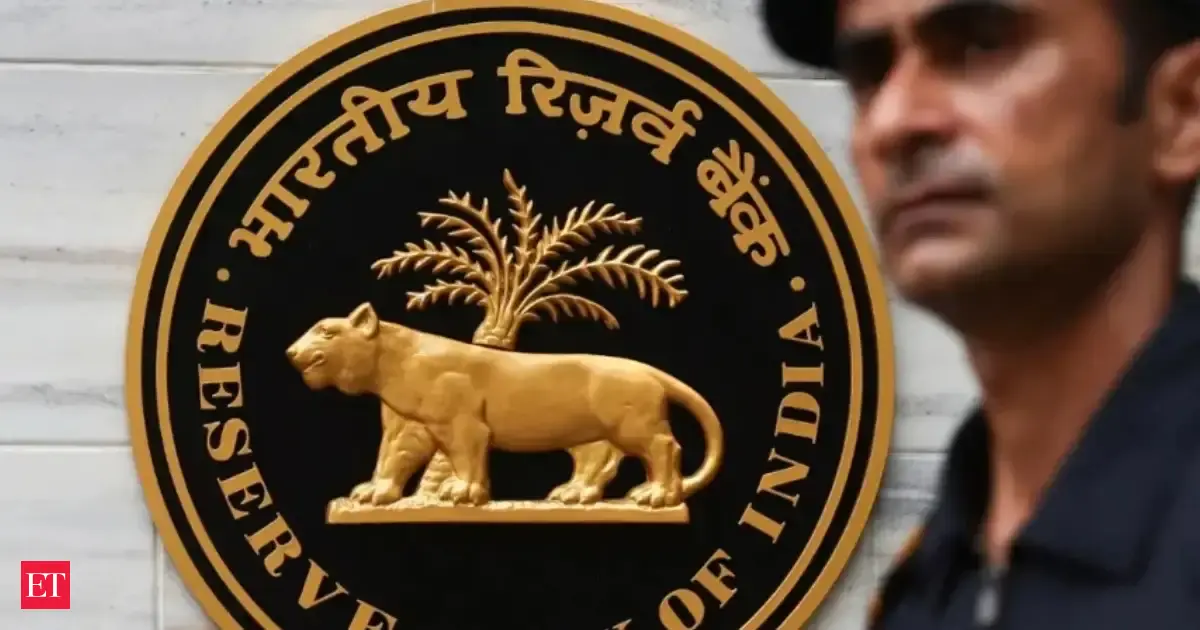
RBI's State of Economy report released in 2024 highlights broad-based rise in food prices despite monsoon recovery
GK and monthly revision
Broad-base rise in food prices despite monsoon recovery, RBI's state of economy report shows
RBI's State of Economy report highlights India's resilient domestic demand and strong economic activity despite broad-based food price inflation. Global risks from West Asia conflicts and US tariffs pose challenges, while India's financial markets show record credit growth and comfortable liquidity. Strong macroeconomic fundamentals provide a buffer against external shocks, making this report crucial for understanding current inflation dynamics and monetary policy context.
Revision structure
Monthly events and exam calendar context
Static GK and one-liner notes
Quiz and mock-test revision path
Key points
Exam-ready takeaways
India's domestic demand improved with strong economic activity and record high credit growth in financial markets
Global economic outlook challenged by West Asia conflicts and US tariff policies
Comfortable liquidity conditions and strong macroeconomic fundamentals provide cushion against global risks
Food inflation impacting inflation targets remains a key concern for monetary policy
Detailed analysis
Full exam-oriented breakdown
The Reserve Bank of India's State of Economy report for 2024 presents a nuanced picture of India's economic landscape, revealing both remarkable resilience and persistent vulnerabilities. At the heart of this report lies a paradox: despite a robust monsoon recovery that typically cools food prices, India is witnessing a broad-based surge in food inflation that threatens to derail the RBI's inflation targeting framework. This development is particularly significant because food and beverages carry a weight of approximately 45.86% in the Consumer Price Index (CPI) combined, making food inflation the single most influential component of headline inflation. The historical context is crucial here. India adopted flexible inflation targeting (FIT) in 2016 through an amendment to the RBI Act, 1934 (Section 45ZA), mandating the RBI to maintain CPI inflation at 4% with a tolerance band of +/- 2%. The Monetary Policy Committee (MPC), established under Section 45ZB of the same Act, has since grappled with supply-side shocks — demonetisation (2016), GST implementation (2017), the COVID-19 pandemic (2020-21), and the Russia-Ukraine conflict (2022) — that repeatedly pushed food prices beyond the upper tolerance limit. The current episode, however, is distinctive because it occurs despite favourable monsoon conditions, suggesting structural factors like supply chain inefficiencies, minimum support price (MSP) hikes, and changing dietary patterns are at play. Key stakeholders include the RBI's MPC headed by the Governor, the Ministry of Agriculture and Farmers' Welfare managing MSP and procurement, the Food Corporation of India (FCI) handling buffer stocks, and state governments implementing the National Food Security Act (NFSA), 2013 which legally entitles 67% of the population to subsidised foodgrains. The NFSA's implementation, combined with the Pradhan Mantri Garib Kalyan Anna Yojana (PMGKAY) extended multiple times since 2020, has expanded the food subsidy bill to over ₹2 lakh crore annually, creating fiscal-inflation trade-offs. On the positive side, the report highlights record credit growth — non-food bank credit grew at 16.3% year-on-year as of March 2024 — reflecting strong investment demand. Comfortable liquidity, with the banking system in surplus mode since September 2023, and robust foreign exchange reserves exceeding $645 billion (as of May 2024) provide a formidable buffer. These fundamentals are rooted in the Fiscal Responsibility and Budget Management (FRBM) Act framework and the government's capital expenditure push (₹11.1 lakh crore in FY25 interim budget), which together strengthen India's macroeconomic credibility. Globally, the West Asia conflict has disrupted shipping routes (Red Sea crisis), increasing freight costs and delivery times, while potential US tariff escalation under a possible Trump administration could impact India's merchandise exports (which stood at $437 billion in FY24). These external risks intersect with domestic food inflation to complicate the MPC's policy calculus — rate cuts, anticipated by markets for late 2024, may be delayed if food inflation persists. Looking ahead, the alignment of monsoon performance (IMD predicts 'above normal' 2024 monsoon), kharif sowing progress, and global commodity trends will determine whether the RBI can pivot to easing. The 16th Finance Commission's recommendations (due 2025) on revenue sharing and the next MPC meeting cycle will be critical watchpoints. For aspirants, this episode exemplifies the tension between growth and stability, federal fiscal dynamics, and the limits of monetary policy in addressing supply-side inflation — themes central to India's economic governance.
How to study
Turn news into exam marks
Revise monthly events by exam family instead of reading random updates.
Pair one-liners with mock tests so mistakes become the next revision list.
Keep state job pages, calendar pages and GK packs connected in one path.