US sanctioned four India-based companies and three individuals for facilitating trade with Iran
GK and monthly revision
Four India-based companies engulfed in Trump's economic offensive against Iran
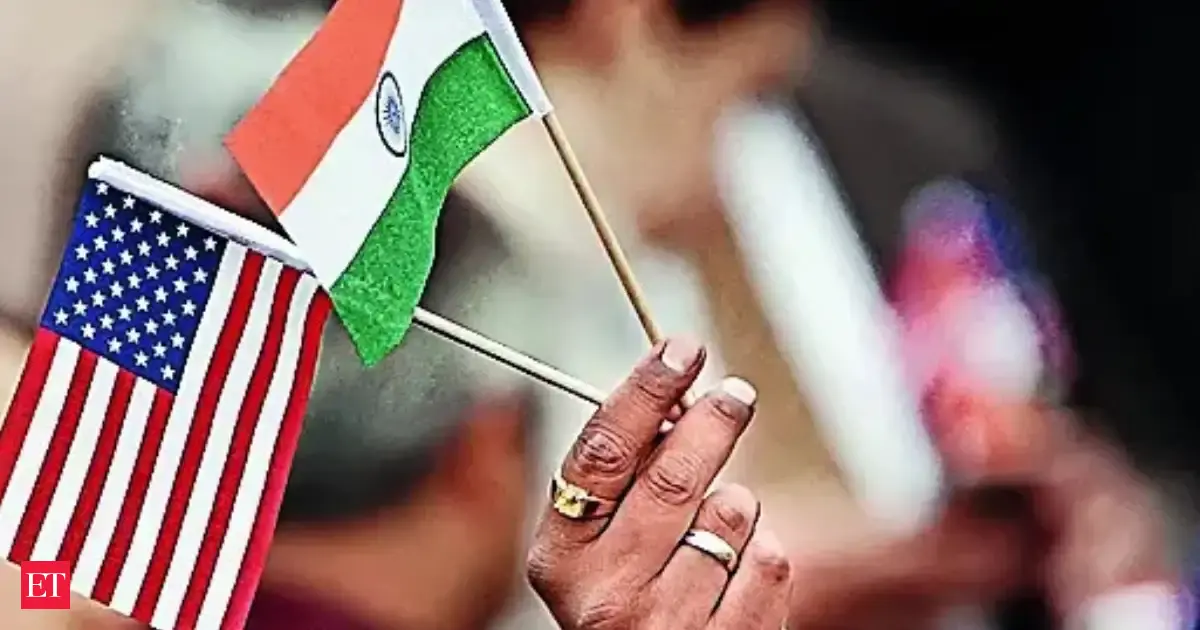
The United States imposed sanctions on four Indian companies and three individuals under "Operation Economic Outcast" for facilitating trade with Iran, escalating pressure on Tehran's economic lifelines. This move increases scrutiny on Indian businesses engaging with Iran, potentially affecting strategic projects like the Chabahar port, which is vital for India's connectivity to Afghanistan and Central Asia. The development highlights the tension between India's strategic autonomy and compliance with US secondary sanctions, a recurring theme in international relations and economic diplomacy.
Revision structure
Monthly events and exam calendar context
Static GK and one-liner notes
Quiz and mock-test revision path
Key points
Exam-ready takeaways
Action part of "Operation Economic Outcast" aimed at severing Iran's economic lifelines
India maintains strategically important ties with Iran, including Chabahar port access
Sanctions increase scrutiny on Indian businesses dealing with Tehran
Highlights India's challenge balancing strategic autonomy with US secondary sanctions pressure
Detailed analysis
Full exam-oriented breakdown
The recent US sanctions on four Indian companies and three individuals under "Operation Economic Outcast" represent a significant escalation in Washington's maximum pressure campaign against Iran, with direct implications for India's strategic autonomy and economic diplomacy. To understand this development, we must trace the historical context: the 2015 Joint Comprehensive Plan of Action (JCPOA) provided sanctions relief to Iran in exchange for nuclear restrictions, but the US unilaterally withdrew in May 2018 under the Trump administration, reimposing stringent secondary sanctions targeting any entity facilitating Iranian oil exports, shipping, or financial transactions. India, as a major crude oil importer, had previously secured waivers to purchase Iranian oil, but these expired in May 2019, forcing New Delhi to zero out imports despite Iran being its third-largest supplier at the time. The key stakeholders in this episode include the US Treasury's Office of Foreign Assets Control (OFAC), which enforces secondary sanctions under executive orders like EO 13846 and EO 13902; the four sanctioned Indian entities — reportedly involved in shipping, trading, and financial facilitation of Iranian petroleum and petrochemical products; and the Government of India, which must navigate its strategic partnership with the US (formalized through frameworks like the 2+2 Dialogue, COMCASA, BECA, and the Quad) while preserving critical interests in Iran. The Chabahar Port project, developed by India Ports Global Limited (IPGL) under a 2016 trilateral agreement with Iran and Afghanistan, stands as the most prominent strategic asset at risk. Chabahar provides India a vital trade corridor bypassing Pakistan to access Afghanistan and Central Asia, aligning with India's "Neighbourhood First" and "Act East" policies. Article 253 of the Constitution empowers Parliament to make laws for implementing international agreements, while Article 73 extends executive power to matters within Parliament's legislative competence — relevant when India enacts domestic legislation to comply with or counter foreign sanctions. Economically, these sanctions create compliance risks for Indian banks, insurers, and shipping firms, potentially disrupting legitimate trade. Politically, they test India's "strategic autonomy" doctrine — articulated by former Foreign Secretary Shyam Saran and embedded in the 2019 National Security Strategy framework — which insists on decision-making based on national interest rather than external pressure. The Ministry of External Affairs has consistently maintained that India follows only UN Security Council sanctions, not unilateral ones, citing its vote against the US embargo at the UNGA in 2012. However, the deepening defence and technology ties with the US — including designation as a Major Defense Partner (2016) and Strategic Trade Authorization Tier-1 status (2018) — create structural incentives for alignment. Broader themes include the tension between sovereign economic choices and extraterritorial application of domestic laws, the weaponization of the dollar-dominated financial system (SWIFT, correspondent banking), and the evolving architecture of minilateral groupings like the Quad and I2U2 (India-Israel-UAE-USA) that shape regional security. Future implications are profound: if sanctions enforcement tightens, Chabahar's viability could be undermined, affecting India's connectivity projects like the International North-South Transport Corridor (INSTC). Conversely, India may accelerate rupee-denominated trade mechanisms, explore barter arrangements, or leverage its G20 presidency (2023) to advocate for reform of unilateral coercive measures. The episode also underscores the need for a robust domestic legal framework — perhaps a "Blocking Statute" akin to the EU's 1996 regulation — to protect Indian entities from extraterritorial sanctions, a proposal debated in policy circles but not yet legislated. For aspirants, this case exemplifies the intersection of international relations, economic policy, and constitutional law in contemporary Indian diplomacy.
How to study
Turn news into exam marks
Revise monthly events by exam family instead of reading random updates.
Pair one-liners with mock tests so mistakes become the next revision list.
Keep state job pages, calendar pages and GK packs connected in one path.