
India and Japan are reviewing the India-Japan Comprehensive Economic Partnership Agreement (CEPA) signed in 2011
GK and monthly revision
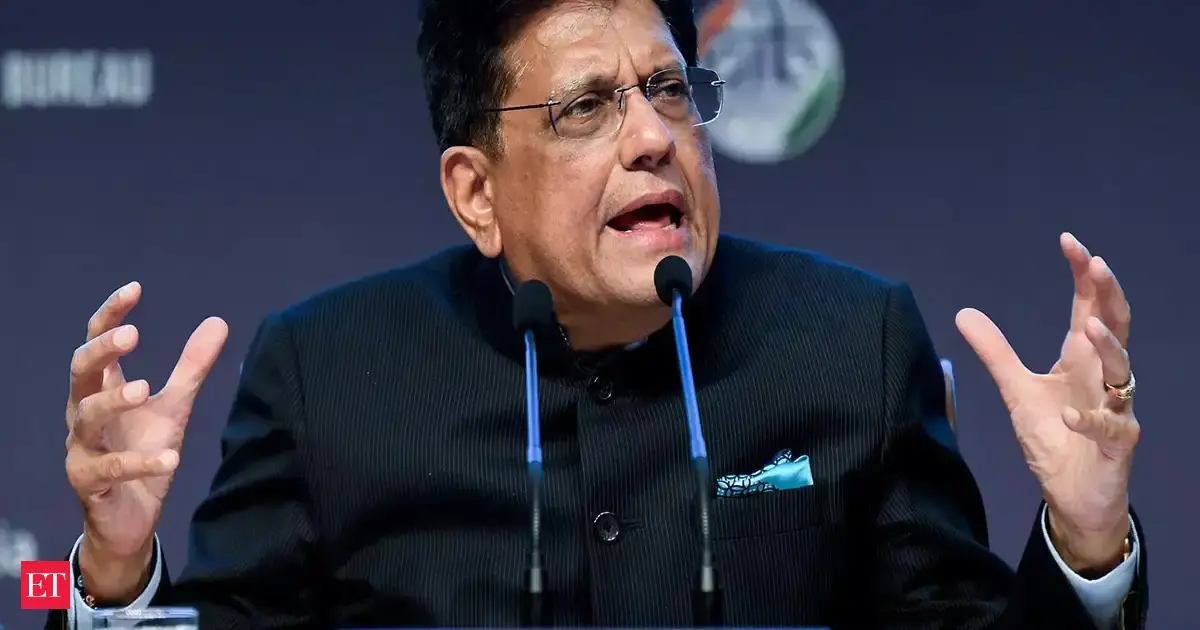
Hoping to work towards further expanding scope of India-Japan trade pact: Piyush Goyal
India and Japan are reassessing their Comprehensive Economic Partnership Agreement (CEPA) to expand trade scope and address market access challenges for Indian exporters. Commerce Minister Piyush Goyal emphasized modernizing the pact to enhance bilateral economic ties and attract Japanese investments in strategic sectors. This aligns with India's Act East Policy and efforts to diversify supply chains amid global uncertainties. The review could lead to deeper cooperation in digital trade, green energy, and critical minerals.
Revision structure
Monthly events and exam calendar context
Static GK and one-liner notes
Quiz and mock-test revision path
Key points
Exam-ready takeaways
Commerce Minister Piyush Goyal confirmed ongoing talks to modernize the trade pact
Focus on addressing non-tariff barriers faced by Indian exporters in Japanese markets
Aim to enhance bilateral investments in strategic sectors like semiconductors, green hydrogen, and digital infrastructure
Part of India's Act East Policy and supply chain diversification strategy with Quad partners
Detailed analysis
Full exam-oriented breakdown
India and Japan are currently undertaking a comprehensive review of their Comprehensive Economic Partnership Agreement (CEPA), which was originally signed on February 16, 2011, and came into force on August 1, 2011. This landmark agreement was India's first comprehensive trade pact with a developed nation and marked a significant milestone in India's Look East Policy, later rechristened as the Act East Policy under Prime Minister Narendra Modi's government in 2014. The CEPA covers trade in goods, services, investment, intellectual property rights, customs procedures, and movement of natural persons, making it one of India's most ambitious trade agreements. The current reassessment, confirmed by Commerce and Industry Minister Piyush Goyal, comes at a critical juncture in global geopolitics and economics. Over the past 13 years since the CEPA's implementation, bilateral trade has grown but remains below potential. In FY 2023-24, India-Japan bilateral trade stood at approximately $21.96 billion, with India facing a trade deficit of around $8 billion. Indian exporters have consistently highlighted non-tariff barriers (NTBs) in the Japanese market, particularly stringent quality standards, complex regulatory procedures, and sanitary and phytosanitary (SPS) measures that act as de facto market access barriers for agricultural products, pharmaceuticals, marine products, and textiles. Key stakeholders in this review process include the Department of Commerce under the Ministry of Commerce and Industry, the Ministry of External Affairs, industry associations like CII, FICCI, and ASSOCHAM, and specific export promotion councils. On the Japanese side, the Ministry of Economy, Trade and Industry (METI) and the Ministry of Foreign Affairs (MOFA) are the primary negotiators. The strategic dimension involves the Quad framework (India, Japan, US, Australia) where both nations are collaborating on supply chain resilience, critical and emerging technologies, and infrastructure development in the Indo-Pacific region. The significance for India is multi-dimensional. Economically, modernizing the CEPA aligns with India's goal of achieving $2 trillion in exports by 2030 (as outlined in the Foreign Trade Policy 2023). Addressing NTBs could unlock significant export potential in sectors where India has competitive advantage - pharmaceuticals (India supplies 20% of global generic medicines), IT services, agricultural products, and textiles. The review also targets enhanced Japanese investment in strategic sectors: semiconductors (where Japan has strengths in materials and equipment), green hydrogen (aligned with India's National Green Hydrogen Mission launched in 2023), and digital infrastructure. Japan is already the 5th largest investor in India with cumulative FDI equity inflows of approximately $40 billion (2000-2023), and deeper integration could accelerate this. Constitutionally, Article 246 read with Entry 41 of the Union List (Seventh Schedule) empowers Parliament to legislate on "trade and commerce with foreign countries." Article 253 enables Parliament to make laws for implementing international agreements. The Foreign Trade (Development and Regulation) Act, 1992, and the Customs Act, 1962, provide the domestic legal framework for implementing trade agreements. The review process also intersects with India's commitments under the WTO, where both India and Japan are members, and the agreement must comply with GATT Article XXIV requirements for regional trade agreements. Broader themes connect this to India's evolving trade strategy: moving from defensive to offensive trade negotiating posture, emphasis on "trusted partners" for supply chain diversification (especially post-COVID and amid China+1 strategies), and integrating trade with technology and security cooperation. The India-Japan partnership is a cornerstone of India's Act East Policy and its vision for a free, open, and inclusive Indo-Pacific. Future implications are profound. A successfully modernized CEPA could serve as a template for India's ongoing negotiations with the UK, EU, and Canada. It could deepen India-Japan cooperation in the Indo-Pacific Economic Framework for Prosperity (IPEF), particularly on supply chains, clean economy, and fair economy pillars. The review may also address digital trade rules, data localization, and e-commerce - areas not comprehensively covered in the 2011 agreement. For exam aspirants, this development represents a live case study in international economic diplomacy, trade policy formulation, and the intersection of economics with strategic geopolitics.
How to study
Turn news into exam marks
Revise monthly events by exam family instead of reading random updates.
Pair one-liners with mock tests so mistakes become the next revision list.
Keep state job pages, calendar pages and GK packs connected in one path.