
India requires over ₹30 lakh crore investment to achieve 500 GW non-fossil fuel capacity target by 2030
GK and monthly revision
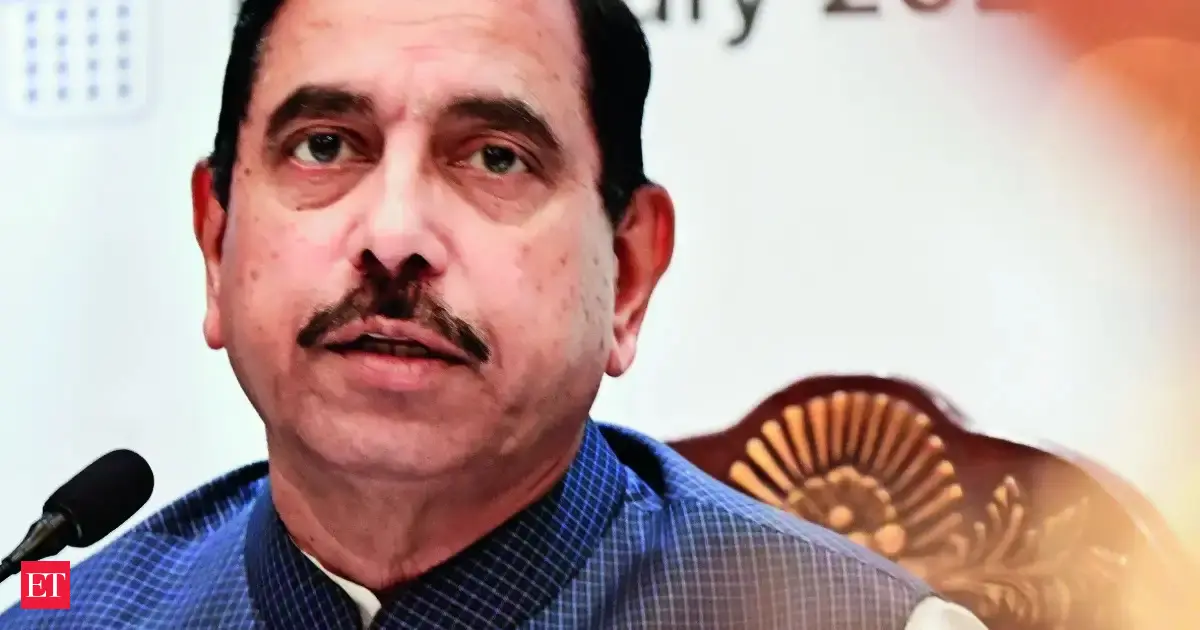
India needs Rs 30 lakh crore to hit 500 GW clean-energy target: Pralhad Joshi
Union Minister Pralhad Joshi stated India requires over ₹30 lakh crore investment to achieve its 500 GW non-fossil fuel capacity target by 2030. The country has already crossed 300 GW of installed non-fossil fuel capacity, with substantial renewable energy growth recorded in the first four months of FY27. Maharashtra is being encouraged to showcase projects and attract global developers at the BRESE 2026 summit. This highlights India's ambitious clean energy transition and the critical role of domestic financial institutions and capital markets in funding green expansion.
Revision structure
Monthly events and exam calendar context
Static GK and one-liner notes
Quiz and mock-test revision path
Key points
Exam-ready takeaways
Country has surpassed 300 GW of installed non-fossil fuel capacity as of FY27
Substantial renewable energy capacity growth recorded in first four months of FY27 (April–July 2026)
Union Minister Pralhad Joshi made the announcement, emphasizing role of domestic financial institutions and capital markets
Maharashtra urged to showcase projects and attract global developers at BRESE 2026 summit
Detailed analysis
Full exam-oriented breakdown
India's ambitious clean energy transition has reached a critical milestone with Union Minister Pralhad Joshi's announcement that the country requires over ₹30 lakh crore in investments to achieve its 500 GW non-fossil fuel capacity target by 2030. This target, originally announced by Prime Minister Narendra Modi at COP26 in Glasgow (November 2021), forms the cornerstone of India's Nationally Determined Contributions (NDCs) under the Paris Agreement. The journey to this point reflects decades of policy evolution — from the Electricity Act, 2003 which first promoted renewable energy, to the National Solar Mission (2010) under the National Action Plan on Climate Change (NAPCC), and the recent Green Energy Corridor schemes. The fact that India has already surpassed 300 GW of installed non-fossil fuel capacity as of FY27 (April 2026–March 2027) demonstrates remarkable progress, considering the total installed capacity was merely 176 GW in March 2020. Key stakeholders in this massive capital mobilization include domestic financial institutions like Power Finance Corporation (PFC), REC Limited, Indian Renewable Energy Development Agency (IREDA), and commercial banks, alongside capital markets through green bonds and infrastructure investment trusts (InvITs). The Reserve Bank of India's (RBI) inclusion of renewable energy under Priority Sector Lending (PSL) guidelines and the Securities and Exchange Board of India's (SEBI) green bond framework have been instrumental. Internationally, the International Solar Alliance (ISA), co-founded by India and France in 2015, and climate finance commitments under the UNFCCC's $100 billion annual goal (though largely unmet) provide the global context. The BRESE 2026 summit in Maharashtra aims to position the state as a renewable energy hub, leveraging its 25 GW+ potential and proactive policies like the Maharashtra Renewable Energy Policy 2020. Constitutionally, this transition aligns with Article 48A (Directive Principle) mandating environmental protection, and Article 51A(g) imposing fundamental duties on citizens to protect the natural environment. The Electricity (Amendment) Act, 2023 and the Energy Conservation (Amendment) Act, 2022 provide the legislative backbone, enabling carbon credit trading and mandatory renewable purchase obligations (RPOs). Economically, the ₹30 lakh crore investment — approximately 10% of India's current GDP — could generate millions of green jobs, reduce crude oil import dependence (currently 85%+), and enhance energy security. Politically, it strengthens India's leadership in the Global South and bargaining power at forums like G20 (where India's 2023 presidency emphasized 'Green Development Pact') and COP negotiations. Future implications are profound: achieving 500 GW by 2030 requires adding ~50 GW annually — nearly double the current pace. This demands solving grid integration challenges, storage solutions (India targets 47 GW battery storage by 2032), land acquisition bottlenecks, and supply chain resilience for critical minerals. The recently launched PM-Surya Ghar: Muft Bijli Yojana (February 2024) for rooftop solar and the National Green Hydrogen Mission (January 2023) with ₹19,744 crore outlay are complementary pillars. For aspirants, this topic interlinks economy (infrastructure financing), environment (climate commitments), governance (center-state coordination for land/permits), and international relations (climate diplomacy) — making it a high-yield area for UPSC, State PSCs, and banking exams alike.
How to study
Turn news into exam marks
Revise monthly events by exam family instead of reading random updates.
Pair one-liners with mock tests so mistakes become the next revision list.
Keep state job pages, calendar pages and GK packs connected in one path.