
Event: Jackson Hole Economic Symposium 2024
GK and monthly revision
US Fed officials keep rate hike in play as inflation clouds Kevin Warsh's first Jackson Hole address
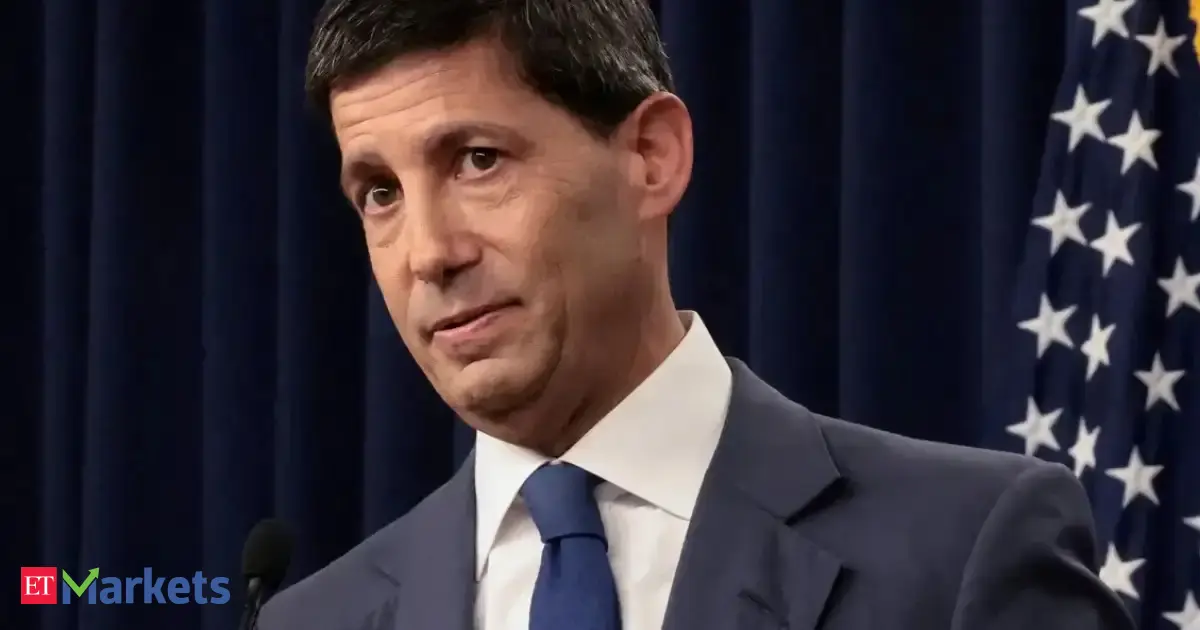
Federal Reserve officials at the Jackson Hole Economic Symposium signaled that further interest rate hikes remain on the table due to persistent inflation concerns. Policymakers warned that entrenched inflationary expectations could undermine the Fed's credibility and require additional monetary tightening. This marked the first Jackson Hole address for Governor Kevin Warsh. The stance highlights ongoing global monetary policy uncertainty, impacting capital flows and emerging market currencies like the Indian rupee.
Revision structure
Monthly events and exam calendar context
Static GK and one-liner notes
Quiz and mock-test revision path
Key points
Exam-ready takeaways
Key concern: Stubbornly high inflation prompting possible further rate hikes
Risk highlighted: Inflationary mindsets embedding in economy threatening Fed credibility
Notable participant: Governor Kevin Warsh's first Jackson Hole address
Market impact: Investors awaiting further data on monetary policy outlook
Detailed analysis
Full exam-oriented breakdown
The Jackson Hole Economic Symposium, hosted annually by the Federal Reserve Bank of Kansas City since 1978, has evolved into the world's most influential central banking forum where monetary policy trajectories are often signaled. The 2024 edition carried particular weight as it marked Governor Kevin Warsh's inaugural address at this prestigious gathering, occurring against a backdrop of what Federal Reserve Chair Jerome Powell has termed "stubbornly high inflation" — a persistent challenge that has defied earlier predictions of a swift return to the 2% target. The Federal Open Market Committee (FOMC), comprising the Board of Governors and regional Federal Reserve Bank presidents, has maintained the federal funds rate at a 23-year high of 5.25%-5.50% since July 2023, following 11 rate hikes totaling 525 basis points since March 2022 — the most aggressive tightening cycle since the Volcker era of the early 1980s. The core concern articulated at Jackson Hole centers on the risk of "inflationary mindsets embedding themselves within the economy" — a reference to the dangerous phenomenon of de-anchored inflation expectations. When households and firms begin to expect persistently high inflation, they adjust wage demands and pricing behavior accordingly, creating a self-fulfilling spiral that becomes exponentially harder to break. This dynamic was painfully evident in the 1970s when the Fed's premature pivot allowed inflation to re-accelerate, ultimately requiring Paul Volcker's draconian 20% interest rates to restore credibility — a historical lesson that current policymakers, including Warsh, are acutely aware of. The Fed's dual mandate, established by the Federal Reserve Reform Act of 1977, requires balancing maximum employment with price stability, but the current environment presents a stark asymmetry: the costs of overtightening (recession) are visible and immediate, while the costs of undertightening (entrenched inflation) are delayed but potentially catastrophic for institutional credibility. For India, the implications are profound and multi-dimensional. The Reserve Bank of India (RBI), operating under the flexible inflation targeting framework mandated by the 2016 amendment to the RBI Act, 1934 (Section 45ZA), targets 4% CPI inflation with a ±2% tolerance band. As of August 2024, India's retail inflation stands at 3.54% — within target but vulnerable to external shocks. A prolonged higher-for-longer US rate regime exerts pressure through multiple channels: (1) Capital outflows as yield differentials narrow, pressuring the rupee — which depreciated approximately 1.5% against the dollar in Q2 2024; (2) Imported inflation via costlier crude oil (India imports 85% of its oil) and commodities priced in dollars; (3) Constrained RBI policy space — the Monetary Policy Committee (MPC), constituted under Section 45ZB of the RBI Act, may need to maintain higher repo rates (currently 6.50%) longer than domestic conditions warrant; (4) Portfolio investment volatility — FPI flows turned net negative in several months of 2024, impacting equity markets and the current account deficit. Constitutionally, while monetary policy falls under the Union List (Entry 38, Seventh Schedule), the RBI's operational autonomy was reinforced by the 2016 inflation targeting framework, which established statutory accountability through the MPC's requirement to publish a report to Parliament if inflation breaches the tolerance band for three consecutive quarters. The Finance Ministry's coordination with RBI through the Financial Stability and Development Council (FSDC) becomes critical during such external shocks. Internationally, this dynamic underscores the "trilemma" of international finance — India cannot simultaneously maintain free capital mobility, independent monetary policy, and a stable exchange rate. The government's capital account management measures, including the voluntary retention route for FPIs in government bonds and the rupee trade settlement mechanism with 18+ countries, represent attempts to navigate this trilemma. Looking ahead, three scenarios merit attention: (a) If US inflation data (CPI/PCE) continues to surprise on the upside, the Fed may hike once more in late 2024, delaying the global easing cycle and prolonging rupee pressure; (b) A soft landing in the US — disinflation without recession — would allow coordinated global easing by early 2025, benefiting emerging markets; (c) A US hard landing would trigger risk-off flows, hurting Indian equities but potentially lowering oil prices. For aspirants, this episode illustrates the interconnectedness of global monetary policy, the importance of central bank credibility (a concept central to modern macroeconomics), and the policy dilemmas facing emerging market economies — themes that recur across UPSC GS Paper III, RBI Grade B, and banking examinations.
How to study
Turn news into exam marks
Revise monthly events by exam family instead of reading random updates.
Pair one-liners with mock tests so mistakes become the next revision list.
Keep state job pages, calendar pages and GK packs connected in one path.