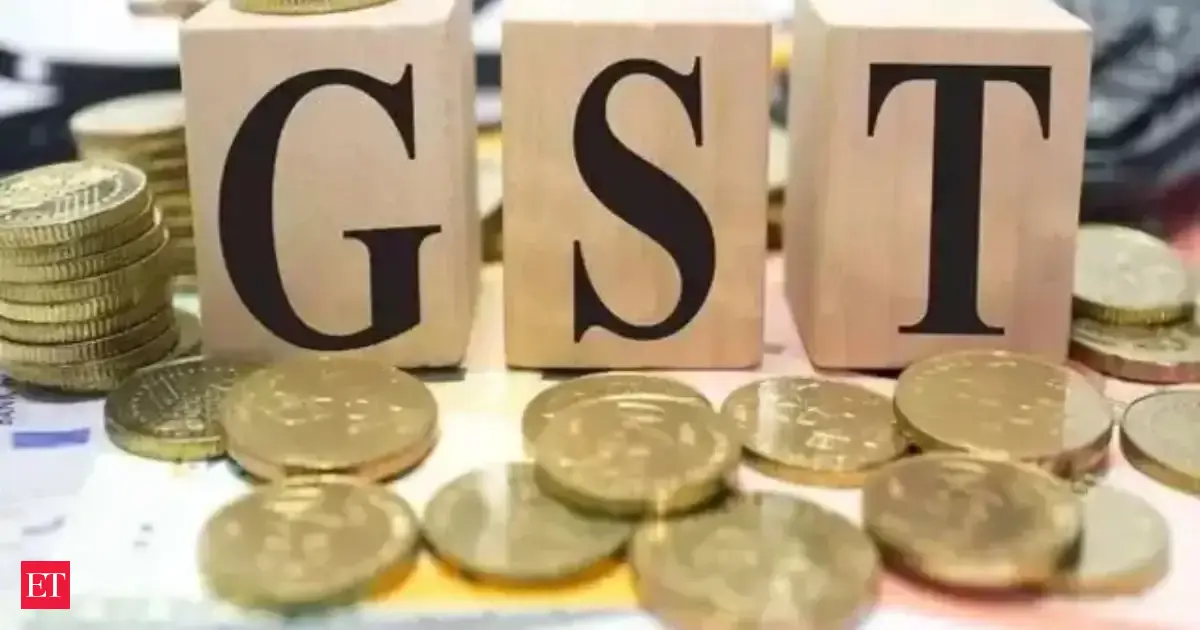
GST Council's 57th meeting scheduled for September 12, 2024
GK and monthly revision
GST Council to hold 57th meet on Sept 12
The GST Council will convene its 57th meeting on September 12 after nearly a year, focusing on key reforms like easier input tax credit access for buyers, simplified corporate guarantee treatment, and enabling small businesses to register across multiple states. These proposals aim to resolve working capital and compliance cost issues, making it a significant development in indirect tax administration for competitive exams.
Revision structure
Monthly events and exam calendar context
Static GK and one-liner notes
Quiz and mock-test revision path
Key points
Exam-ready takeaways
Key agenda: Easier input tax credit (ITC) access for buyers
Proposal for simplified treatment of corporate guarantees under GST
Small businesses may be allowed multi-state registration for compliance ease
Meeting held after nearly one year since the last council gathering
Detailed analysis
Full exam-oriented breakdown
The upcoming 57th meeting of the GST Council on September 12, 2024, marks a pivotal moment in India's indirect tax reform journey, coming after a nearly year-long hiatus since the last council gathering. This extended gap itself signals the complexity of achieving consensus in India's unique federal fiscal architecture, where the GST Council — a constitutional body established under Article 279A of the Constitution through the 101st Constitutional Amendment Act, 2016 — serves as the apex decision-making forum for Goods and Services Tax matters. Chaired by the Union Finance Minister and comprising state finance ministers, the Council embodies the spirit of cooperative federalism, requiring a three-fourths majority of weighted votes for decisions, with the Centre holding one-third weightage and states collectively holding two-thirds. The agenda for this meeting reflects persistent structural challenges in GST implementation since its historic launch on July 1, 2017. The proposal to ease Input Tax Credit (ITC) access for buyers addresses a long-standing pain point where genuine taxpayers suffer due to vendor non-compliance, a issue that has triggered numerous litigations and working capital blockages. Currently, Section 16 of the CGST Act, 2017, mandates that ITC can only be claimed if the supplier has deposited tax and filed returns, creating a dependency chain that penalizes compliant buyers. The Council's consideration of delinking buyer eligibility from supplier defaults — potentially through self-assessment mechanisms or provisional credit — could significantly unlock working capital for MSMEs and large enterprises alike. Similarly, the proposed simplification of corporate guarantee treatment under GST aims to resolve valuation ambiguities that have plagued inter-company transactions, especially in conglomerates. Currently, guarantees provided by parent companies to subsidiaries without consideration face taxability disputes under Schedule I of the CGST Act, leading to inconsistent advance rulings. A standardized valuation mechanism — possibly based on actual cost or a deemed value — would reduce litigation and compliance burden. The third major proposal, allowing small businesses to register in multiple states under a single PAN, directly targets the compliance nightmare faced by MSMEs operating across state borders. Under current rules, separate GSTINs are mandatory for each state of operation (Section 22 of CGST Act), forcing small entities to maintain multiple returns, audits, and reconciliations. A unified multi-state registration framework, if implemented with centralized return filing, could be a game-changer for ease of doing business, aligning with the government's broader 'Viksit Bharat' vision. These reforms collectively address the 'unfinished agenda' of GST — moving beyond rate rationalization to structural fixes in credit flow, valuation certainty, and compliance architecture. Economically, they promise to reduce the tax compliance cost-to-GDP ratio, currently among the highest for emerging economies, and improve India's ranking in World Bank's Ease of Doing Business parameters. Politically, the Council's ability to deliver consensus after a year demonstrates the maturity of India's fiscal federalism, even amid Centre-state tensions on other fronts. Looking ahead, the meeting's outcomes could set the stage for the next phase of GST reforms: inclusion of petroleum products and electricity under GST, a long-standing demand requiring constitutional amendment and revenue neutrality calculations. For aspirants, this development is a live case study in cooperative federalism, tax policy design, and administrative reform — core themes in UPSC GS Paper III, State PSC economics, and banking awareness. The September 12 meeting isn't just a routine bureaucratic exercise; it's a stress test of India's most ambitious tax reform, with implications for federal relations, investor confidence, and the trajectory of India's $5 trillion economy ambition.
How to study
Turn news into exam marks
Revise monthly events by exam family instead of reading random updates.
Pair one-liners with mock tests so mistakes become the next revision list.
Keep state job pages, calendar pages and GK packs connected in one path.