Monthly Economic Report released by Finance Ministry in August 2026
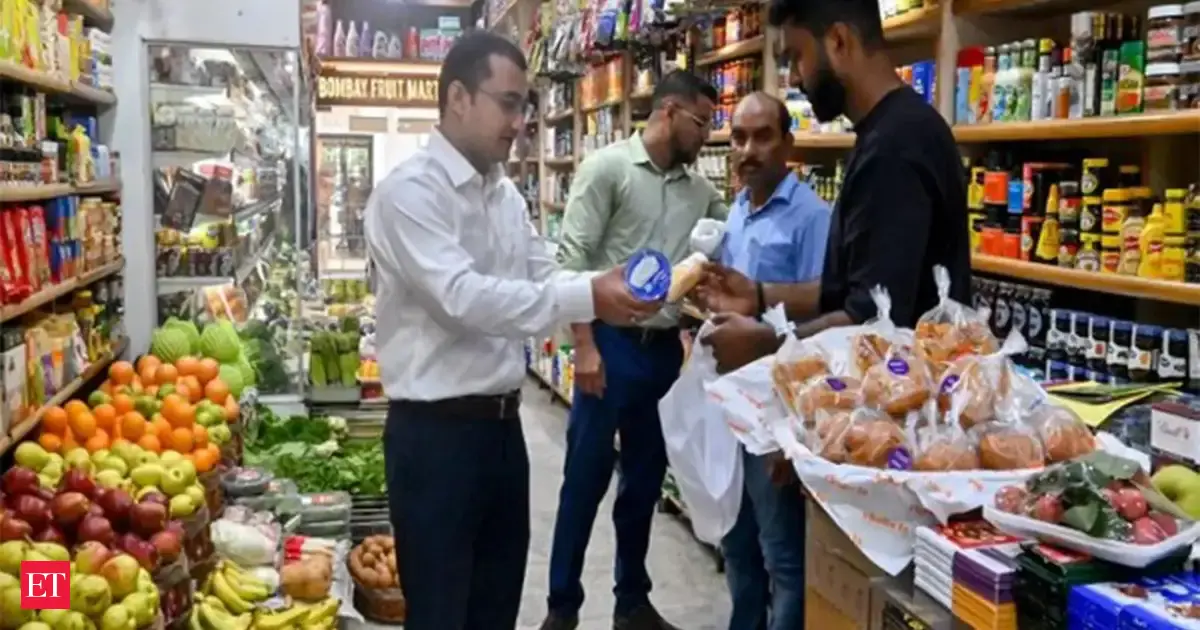
GK and monthly revision
Food inflation composition shifts as protein-rich items, processed foods drive price pressures: Finance Ministry Report
The Finance Ministry's Monthly Economic Report for August 2026 highlights a structural shift in India's food inflation, with protein-rich items, processed foods, and edible oils now driving price pressures. Persistent El Nino conditions further threaten crop yields and food prices. This shift from traditional cereal-led inflation to protein and processed food-driven inflation has implications for monetary policy, agricultural planning, and household consumption patterns. The report is critical for understanding current inflation dynamics and policy responses.
Revision structure
Monthly events and exam calendar context
Static GK and one-liner notes
Quiz and mock-test revision path
Key points
Exam-ready takeaways
Food inflation composition shifted to protein-rich items, processed foods, edible oils as major contributors
El Nino conditions persisting, raising risks for crop yields and food prices
Shift from traditional cereal-led inflation to protein/processed food-driven inflation
Report relevant for monetary policy, agricultural planning, and inflation targeting framework
Detailed analysis
Full exam-oriented breakdown
India's food inflation narrative is witnessing a profound structural transformation, as highlighted in the Finance Ministry's Monthly Economic Report for August 2026. Traditionally, food inflation in India has been predominantly cereal-centric — driven by fluctuations in rice and wheat prices due to monsoon variability, procurement policies, and buffer stock management under the National Food Security Act (NFSA), 2013. However, the latest report signals a decisive shift: protein-rich items (pulses, milk, eggs, meat, fish), processed foods, and edible oils have emerged as the new inflation drivers. This transition reflects deeper changes in dietary patterns, income elasticity of demand, and supply-side rigidities in non-cereal agriculture. The background to this shift lies in sustained per capita income growth and urbanization. As household incomes rise, Engel's Law predicts a decline in the share of cereals in food expenditure and a corresponding rise in demand for high-value proteins and convenience foods. The 2022-23 Household Consumption Expenditure Survey (HCES) data, though not fully published, indicates that protein items now constitute a larger share of the food basket than a decade ago. Meanwhile, processed food consumption has surged due to changing lifestyles, female labor force participation, and the proliferation of quick-commerce and food delivery platforms. Key stakeholders include the Ministry of Agriculture and Farmers' Welfare, which must recalibrate crop diversification strategies under the National Food Security Mission (NFSM) — originally focused on rice, wheat, and pulses — to incentivize oilseeds, millets, and livestock. The Department of Consumer Affairs monitors prices under the Essential Commodities Act, 1955 (amended 2020), while the Reserve Bank of India (RBI), under the Flexible Inflation Targeting Framework (FITF) mandated by the RBI Act, 1934 (amended 2016), must assess whether this new inflation composition is supply-driven (requiring structural fixes) or demand-driven (requiring monetary tightening). The Monetary Policy Committee (MPC), headed by the RBI Governor, targets 4% CPI inflation with a ±2% band — a framework enshrined in the 2016 amendment to the RBI Act. The persistence of El Niño conditions, as noted in the August 2026 report, compounds supply risks. El Niño typically weakens the Indian southwest monsoon, affecting kharif sowing of oilseeds (soybean, groundnut), pulses (tur, urad), and coarse cereals. The India Meteorological Department (IMD) had flagged a 70% probability of El Niño continuing through 2026, raising concerns about yield losses. This climate-agriculture nexus links directly to Article 48A of the Constitution (Directive Principles), which mandates the State to protect and improve the environment and safeguard forests and wildlife — increasingly interpreted to include climate-resilient agriculture. Significance for India is multi-dimensional. Economically, protein and processed food inflation is stickier than cereal inflation due to longer production cycles (livestock, oilseeds) and limited import substitutability (India imports ~60% of edible oil needs). Politically, it affects the cost of living for urban and rural households alike, with implications for electoral outcomes. Socially, it threatens nutritional security — the NFSA guarantees 5 kg of foodgrains per person per month, but does not cover protein diversity. The Poshan Abhiyaan (National Nutrition Mission) and PM-POSHAN (mid-day meal scheme) must adapt to ensure protein adequacy. Broader themes include the need for a second Green Revolution — this time focused on protein and oilseeds — leveraging technology (precision farming, dairy genomics), market reforms (e-NAM, contract farming under the Farmers' Produce Trade and Commerce Act, 2020), and climate-smart agriculture. Internationally, India's edible oil import dependence (mainly from Indonesia, Malaysia, Argentina, Brazil, Ukraine) exposes it to geopolitical supply shocks, as seen during the Russia-Ukraine war. Future implications are clear: monetary policy alone cannot tame supply-side protein inflation. The government must expand the NFSM to include oilseeds and millets (declared International Year of Millets in 2023), strengthen the Operation Flood model for dairy, and invest in cold chain infrastructure for perishables. The 16th Finance Commission (constituted 2023, report due 2025) may recommend grants for nutrition-sensitive agriculture. Ultimately, managing this new inflation regime requires coordination across the RBI, Ministry of Agriculture, Ministry of Food Processing Industries, and state governments — a true test of cooperative federalism under Article 263 (Inter-State Council).
How to study
Turn news into exam marks
Revise monthly events by exam family instead of reading random updates.
Pair one-liners with mock tests so mistakes become the next revision list.
Keep state job pages, calendar pages and GK packs connected in one path.