
Paddy procurement target for KMS 2026-27 set at 708.64 lakh tonnes by the Centre
GK and monthly revision
Govt sets paddy procurement target at 708.64 lakh tons in KMS 2026-27, lower than actuals of last 3 yrs
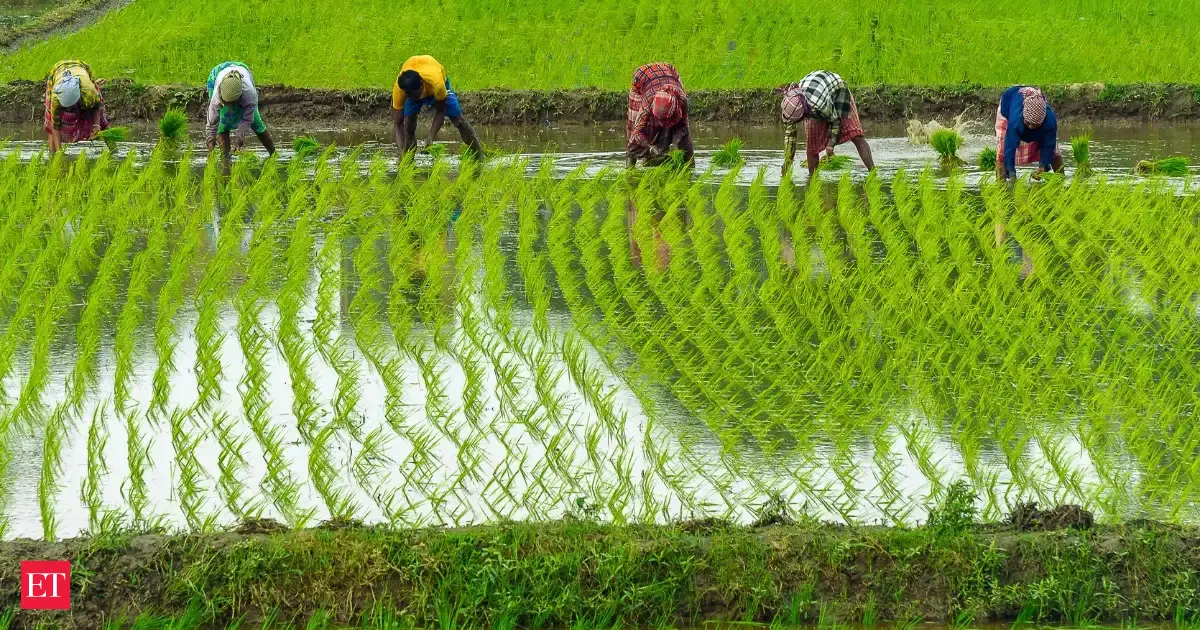
The Centre has set a paddy procurement target of 708.64 lakh tonnes for Kharif Marketing Season 2026-27, which is lower than actual procurement in the previous three seasons. The government will implement improved rice specifications with stricter broken-grain norms from this season. Coarse grain procurement estimates have been increased for 2026-27, reflecting a diversification push. The government continues to focus on expanding storage capacity and adopting technology in foodgrain management.
Revision structure
Monthly events and exam calendar context
Static GK and one-liner notes
Quiz and mock-test revision path
Key points
Exam-ready takeaways
Target is lower than actual procurement levels achieved in the previous three Kharif seasons
Improved rice specifications with tighter broken-grain norms to be implemented from KMS 2026-27
Coarse grain procurement estimates increased for the 2026-27 season
Government continues push for enhanced storage capacity and technology adoption in foodgrain management
Detailed analysis
Full exam-oriented breakdown
The Centre's announcement of a paddy procurement target of 708.64 lakh tonnes for the Kharif Marketing Season (KMS) 2026-27 marks a significant policy signal in India's food security architecture. This target, notably lower than the actual procurement figures of the preceding three seasons — which consistently exceeded 750 lakh tonnes and touched a record 850+ lakh tonnes in KMS 2023-24 — reflects a calibrated shift rather than a retreat. The decision emerges from a confluence of factors: comfortable buffer stocks in the Central Pool (exceeding 400 lakh tonnes of rice as of early 2025), evolving dietary patterns, fiscal prudence under the FRBM Act framework, and a strategic push toward crop diversification under the National Food Security Act (NFSA), 2013, which mandates foodgrain entitlements for over 80 crore beneficiaries. Key stakeholders include the Food Corporation of India (FCI) and state procurement agencies (like Punjab's Pungrain, Haryana's Hafed, and Telangana's Civil Supplies Corporation), which execute procurement at Minimum Support Price (MSP) under the decentralized procurement (DCP) scheme. Farmers, particularly in Punjab, Haryana, Telangana, Chhattisgarh, and Odisha, are directly affected — MSP operations remain their primary income hedge. The Centre's move to tighten broken-grain norms (from 25% to 20% for common rice, per revised Uniform Specifications) aims to align domestic grain quality with global standards and reduce storage losses, a long-standing CAG concern. This also responds to WTO compatibility requirements under the Agreement on Agriculture, where India's procurement is often scrutinized as 'trade-distorting' support. The increased coarse grain (millets, maize, barley) procurement estimate for 2026-27 — aligned with the International Year of Millets (2023) legacy and the Shree Anna initiative — signals a structural pivot. Article 47 of the Constitution (Directive Principles) urges the State to raise nutrition levels; coarse grains, with higher micronutrient density and climate resilience, serve this better than water-intensive paddy. The push for storage augmentation — via the PEG (Private Entrepreneurs Guarantee) scheme, silo modernization, and integration with the National Logistics Policy (2022) — addresses the chronic mismatch between procurement and scientific storage, reducing wastage (estimated at 10-15% annually). Technology adoption — blockchain for supply chain transparency, AI-based quality assaying (e.g., e-PRO platform), and Aadhaar-seeded beneficiary databases — enhances targeting efficiency under NFSA. Economically, lower paddy targets may ease subsidy burden (food subsidy FY25 BE: ₹2.05 lakh crore), but risk political backlash in procurement-heavy states. Socially, it nudges farmers toward sustainable cropping — critical as Punjab's water table depletes at 0.5m/year. Internationally, quality upgrades bolster India's rice export credibility (world's largest exporter, 21 MMT in 2023-24). Future implications: expect MSP hikes to moderate, DCP expansion to non-traditional states (UP, Bihar, WB), and deeper integration of PM-KISAN with procurement data. For aspirants, this isn't just a number — it's a window into India's evolving food governance, balancing constitutional welfare (Art. 21, 47), fiscal discipline (Art. 112, FRBM), and federal cooperation (Art. 263, Inter-State Council).
How to study
Turn news into exam marks
Revise monthly events by exam family instead of reading random updates.
Pair one-liners with mock tests so mistakes become the next revision list.
Keep state job pages, calendar pages and GK packs connected in one path.