
India-Russia bilateral trade reached $70 billion in 2024, tripling since 2022
GK and monthly revision
Roubles and rupees: Russia says no more hurdles in payments with India
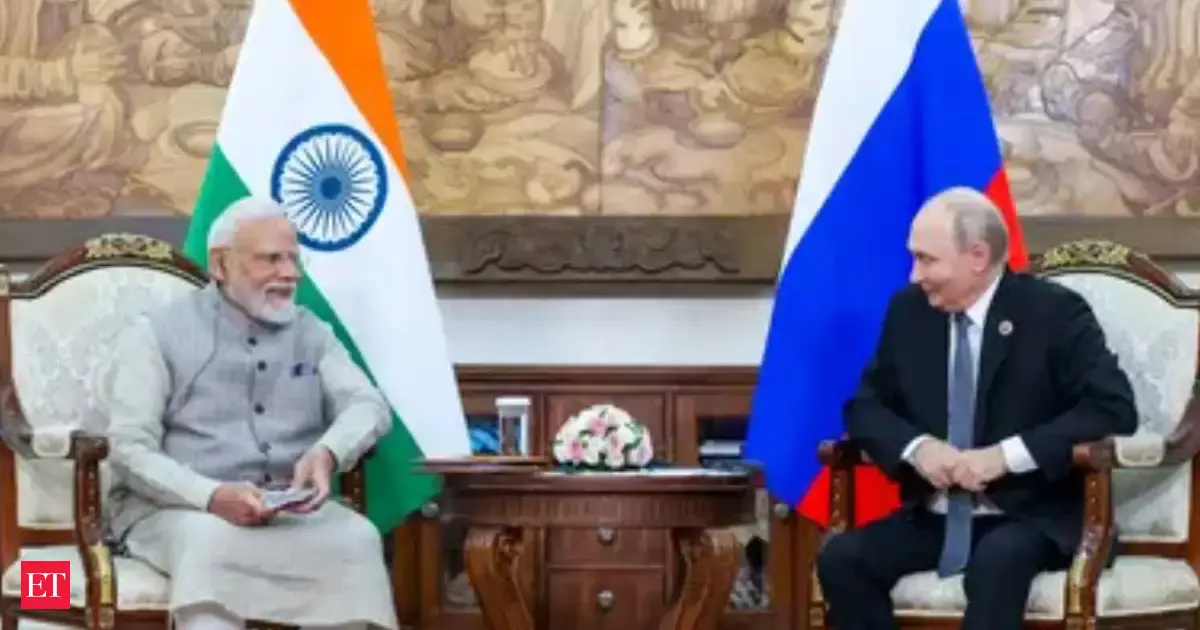
Russia and India have established a robust bilateral payment system using roubles and rupees, covering 96% of trade transactions. Bilateral trade surged to $70 billion in 2024, tripling from 2022 levels. This mechanism resolves earlier issues of rupee overhang and trade imbalances faced by Russian businesses. The development signifies deepening economic cooperation and de-dollarization efforts, crucial for UPSC Economy and International Relations.
Revision structure
Monthly events and exam calendar context
Static GK and one-liner notes
Quiz and mock-test revision path
Key points
Exam-ready takeaways
96% of bilateral trade transactions now settled in rupees and roubles via local currency mechanism
Russian businesses previously faced rupee overhang and trade imbalance challenges
Banks of both nations actively servicing the growing economic partnership
System represents significant de-dollarization step in India-Russia strategic partnership
Detailed analysis
Full exam-oriented breakdown
The India-Russia bilateral payment system using roubles and rupees represents a watershed moment in international economic relations, particularly for aspirants preparing for UPSC and other competitive examinations. This development didn't emerge overnight but evolved through decades of strategic partnership dating back to the 1971 Indo-Soviet Treaty of Peace, Friendship and Cooperation. The turning point came in February 2022 when Western sanctions on Russia following the Ukraine conflict disrupted traditional SWIFT-based dollar transactions, compelling both nations to accelerate their de-dollarization efforts. The Reserve Bank of India (RBI) had already laid groundwork in July 2022 by introducing the Rupee Vostro Account mechanism, allowing Indian banks to open special rupee accounts for correspondent banks from partner countries. Russia became the first major economy to operationalize this framework at scale. Key stakeholders include the RBI and Bank of Russia as primary regulators, commercial banks like SBI, Canara Bank, UCO Bank on the Indian side and Sberbank, VTB Bank on the Russian side, along with energy giants Rosneft, Gazprom and Indian Oil Corporation driving trade volumes. The mechanism works through a rupee-rouble exchange rate determined by market forces, with Indian importers paying in rupees to Russian exporters' Vostro accounts, and Russian importers paying in roubles to Indian exporters' accounts. This elegantly solves the "rupee overhang" problem where Russian sellers accumulated excess rupees they couldn't repatriate or convert, by creating two-way trade flows - India's oil imports balanced by pharmaceutical, agricultural and engineering exports to Russia. For India, the significance is multidimensional. Economically, it insulates bilateral trade from dollar volatility and US secondary sanctions, ensuring energy security as Russia became India's largest oil supplier in 2023-24 (surpassing Iraq and Saudi Arabia) with crude imports worth over $45 billion. Politically, it demonstrates strategic autonomy - a core tenet of India's foreign policy under Article 51 of the Constitution (Directive Principles) promoting international peace and security. The mechanism aligns with India's G20 presidency theme of "Vasudhaiva Kutumbakam" and its push for reforming global financial architecture. Socially, stable energy prices translate to controlled inflation, benefiting vulnerable sections under Article 21 (Right to Life). Constitutionally, this falls under Union List entries: Entry 10 (Foreign Affairs), Entry 47 (Banking), Entry 48 (Insurance), and Entry 93 (Offences against laws with respect to matters in Union List). The Foreign Exchange Management Act (FEMA), 1999 provides the legal framework for such cross-border payment innovations. The RBI's master directions under Section 10(4) and 11(1) of FEMA enable the Vostro account mechanism. Broader themes include de-dollarization as a global trend - BRICS nations (Brazil, Russia, India, China, South Africa) discussed a common currency at the 2023 Johannesburg Summit, while ASEAN and GCC countries explore local currency settlements. This challenges the dollar's "exorbitant privilege" and Triffin dilemma. For governance, it showcases India's institutional capacity to innovate financial infrastructure rapidly. In international relations, it reinforces the "Special and Privileged Strategic Partnership" with Russia while balancing QUAD and Indo-Pacific engagements. Future implications are profound. The model may extend to India-Iran (Chabahar port), India-UAE (rupee-dirham mechanism launched 2023), and BRICS+ expansion. RBI's Project Nexus for instant cross-border payments could integrate this. However, challenges remain: exchange rate volatility, limited rupee internationalization (only 1.6% of global forex turnover), and potential US pressure under CAATSA. For exam aspirants, this case study perfectly illustrates the intersection of economy, diplomacy, and constitutional federalism - a must-master topic for GS Paper II (International Relations) and GS Paper III (Economy).
How to study
Turn news into exam marks
Revise monthly events by exam family instead of reading random updates.
Pair one-liners with mock tests so mistakes become the next revision list.
Keep state job pages, calendar pages and GK packs connected in one path.