

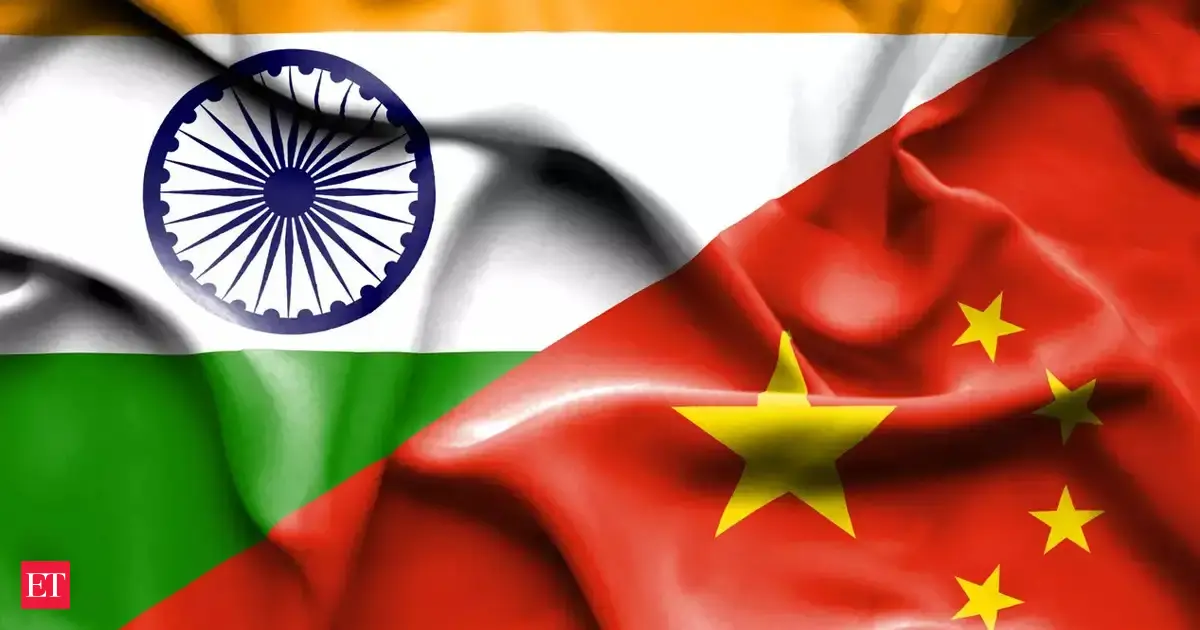
China has filed a case against India at the World Trade Organization (WTO).
GK and monthly revision
China files WTO case against India over ICT tariffs, solar subsidies
China has initiated a dispute at the World Trade Organization (WTO) against India, challenging New Delhi's tariffs on Information and Communications Technology (ICT) products and its photovoltaic (solar) subsidies. Beijing claims these measures grant India's domestic industries an unfair advantage and violate WTO rules. This development is crucial for understanding international trade disputes, India-China economic relations, and the role of the WTO in global commerce for competitive exams.
Revision structure
Monthly events and exam calendar context
Static GK and one-liner notes
Quiz and mock-test revision path
Key points
Exam-ready takeaways
The dispute challenges India's tariffs on Information and Communications Technology (ICT) products.
The case also targets India's photovoltaic (solar) subsidies.
Beijing claims these Indian measures grant its domestic industries an unfair advantage.
China alleges that India's practices violate established WTO rules.
Detailed analysis
Full exam-oriented breakdown
The recent move by China to file a case against India at the World Trade Organization (WTO) is a significant development, highlighting the growing economic tensions and protectionist tendencies in global trade. This dispute centers on India's tariffs on Information and Communications Technology (ICT) products and its subsidies for the photovoltaic (solar) sector, measures Beijing claims grant unfair advantages to India's domestic industries and violate established WTO rules. **Background Context: India's Strategic Push for Self-Reliance** India's economic policy over the past decade has increasingly leaned towards fostering domestic manufacturing and reducing import dependence, encapsulated by flagship initiatives like 'Make in India' (launched in 2014) and 'Atmanirbhar Bharat Abhiyan' (Self-Reliant India Campaign, launched in 2020). These policies aim to boost local production, create jobs, and enhance India's position in global supply chains. To achieve these goals, India has implemented various measures, including raising customs duties on certain imported goods and offering incentives and subsidies to domestic manufacturers. The ICT sector, encompassing products like smartphones, telecom equipment, and electronic components, and the renewable energy sector, particularly solar power, are strategic areas where India seeks to build indigenous capabilities. India's substantial trade deficit with China, which stood at approximately $80 billion in FY23, further fuels its drive to reduce reliance on Chinese imports and promote local alternatives. **The Core of the Dispute: ICT Tariffs and Solar Subsidies** China's complaint at the WTO specifically targets two areas. Firstly, India's tariffs on ICT products, which Beijing argues are inconsistent with India's commitments under the WTO's Information Technology Agreement (ITA). The ITA, signed by India, mandates zero tariffs on a wide range of IT products. India has, however, progressively increased tariffs on certain ICT goods, citing the need to protect nascent domestic industries and generate revenue. Secondly, China challenges India's subsidies for the photovoltaic (solar) sector. These subsidies, often in the form of domestic content requirements or financial incentives, are designed to encourage local manufacturing of solar cells and modules, aligning with India's ambitious renewable energy targets. China contends that these subsidies distort trade, as they favor Indian-made solar products over imports, including those from China, which is a global leader in solar manufacturing. WTO rules, particularly the Agreement on Subsidies and Countervailing Measures (ASCM), aim to regulate the use of subsidies and prohibit those that cause adverse effects to other members' industries. **Key Stakeholders and Their Interests** Several key players are involved in this complex dispute. **India**, through its government, aims to protect and nurture its domestic ICT and solar manufacturing sectors, reduce its trade deficit, and achieve economic self-reliance. Indian manufacturers in these sectors stand to benefit from the tariffs and subsidies, as they face less competition from cheaper imports. **China**, on the other hand, represents its powerful ICT and solar industries, which are major global exporters. Chinese companies are keen to maintain access to the large Indian market and view India's measures as protectionist barriers hindering fair trade. The **World Trade Organization (WTO)** acts as the arbiter, tasked with upholding the rules-based multilateral trading system. Its Dispute Settlement Body (DSB) will examine the complaints, facilitate consultations, and potentially establish a panel to adjudicate the dispute based on WTO agreements like the General Agreement on Tariffs and Trade (GATT) and the ASCM. For both nations, consumers are also indirect stakeholders, potentially facing higher prices for goods due to tariffs or benefiting from a more robust domestic industrial base in the long run. **Significance for India: A Balancing Act** This WTO challenge carries significant implications for India. Economically, a ruling against India could force it to roll back tariffs and subsidies, potentially exposing its nascent industries to intense international competition, particularly from Chinese giants. This could undermine the 'Make in India' and 'Atmanirbhar Bharat' objectives. Strategically, this dispute tests India's commitment to multilateral trade rules while pursuing its national industrial policy goals. It also highlights the delicate balance between fostering domestic growth and adhering to international trade obligations. Politically, the case adds another layer of complexity to already strained India-China bilateral relations, which have seen increased friction on various fronts. The outcome will also influence India's future policy space regarding industrial promotion and protection. **Constitutional and Policy Framework** While the Indian Constitution does not directly address international trade tariffs or subsidies, its Directive Principles of State Policy (DPSP) provide a guiding framework for state actions. Article 39, for instance, directs the state to secure a social order for the promotion of the welfare of the people, aiming to minimize inequalities in income and endeavor to eliminate inequalities in status, facilities, and opportunities. Article 51, relating to the promotion of international peace and security, encourages respect for international law and treaty obligations, which implicitly includes WTO commitments. However, the specific policies like the Production Linked Incentive (PLI) schemes, the phased manufacturing program for electronics, and various solar energy promotion schemes are operational mechanisms implementing the broader objectives of 'Make in India' and 'Atmanirbhar Bharat.' The Customs Act, 1962, provides the legal framework for imposing tariffs. **Future Implications: The Road Ahead** The WTO dispute settlement process is often lengthy, involving consultations, panel formation, and potentially appeals. A favorable ruling for China could compel India to amend its policies, potentially leading to increased imports of ICT and solar products. Conversely, if India successfully defends its measures, it could set a precedent for developing nations to use similar policies for industrial growth. Regardless of the outcome, this case underscores the ongoing tension between national industrial policy ambitions and the global rules-based trading system. It will also influence India's approach to future trade agreements and its engagement with the WTO, potentially pushing for reforms that grant more policy space to developing economies for strategic sectors. The resolution of this dispute will be keenly watched by other nations grappling with similar challenges of balancing domestic growth with international trade commitments, shaping the future trajectory of global trade governance.
How to study
Turn news into exam marks
Revise monthly events by exam family instead of reading random updates.
Pair one-liners with mock tests so mistakes become the next revision list.
Keep state job pages, calendar pages and GK packs connected in one path.