

India and Oman are working to implement their Free Trade Agreement (FTA).
GK and monthly revision
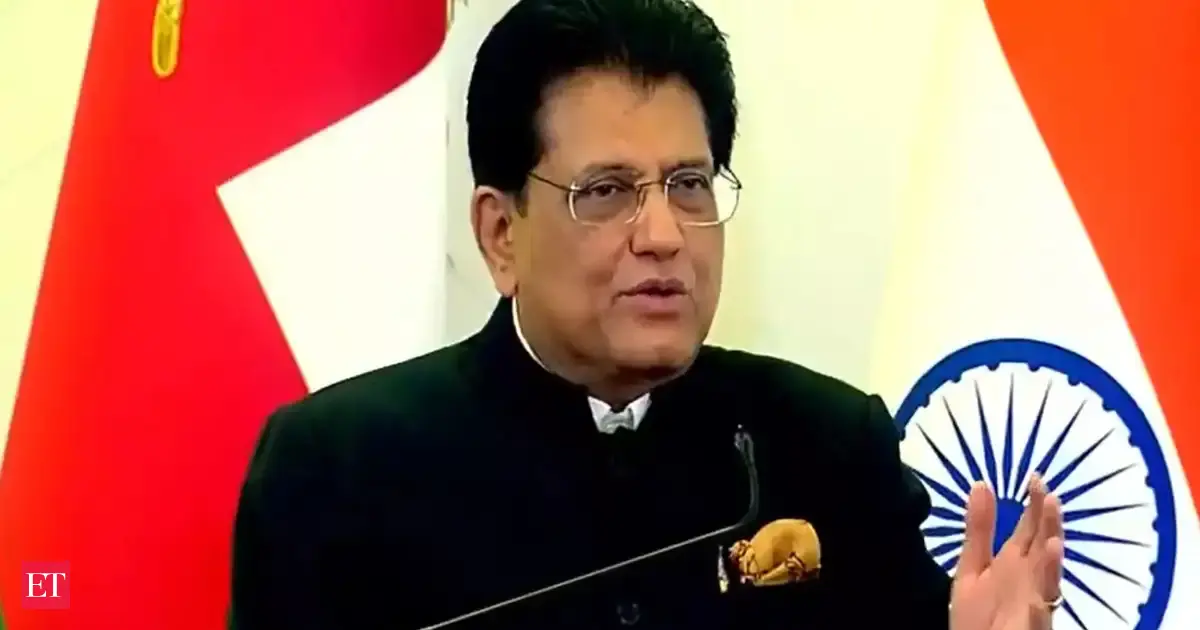
India, Oman trade pact likely to be operationalised within 3 months: Piyush Goyal
India and Oman are set to operationalize their Free Trade Agreement (FTA) within three months, a significant development in bilateral economic ties. This pact will grant India zero-duty access on over 98% of its exports to Oman, fostering opportunities for Indian businesses in key sectors like steel, energy, education, and healthcare. For competitive exams, this highlights India's strategic trade policy, economic diplomacy, and the strengthening of international relations.
Revision structure
Monthly events and exam calendar context
Static GK and one-liner notes
Quiz and mock-test revision path
Key points
Exam-ready takeaways
The Free Trade Agreement (FTA) is expected to be operationalized within 3 months.
India will gain zero-duty access on over 98% of its exports to Oman under the new pact.
Key sectors for Indian businesses in Oman include steel, energy, education, and healthcare.
Union Minister Piyush Goyal announced the timeline, with Omani firms expressing interest in joint ventures with Indian companies like Amul.
Detailed analysis
Full exam-oriented breakdown
India's economic diplomacy is actively seeking to expand its global footprint through strategic trade agreements. The recent announcement by Union Minister Piyush Goyal regarding the impending operationalization of the Free Trade Agreement (FTA) with Oman within three months marks a significant milestone in this endeavor. This move is not merely a bilateral trade pact; it's a testament to India's 'Look West' policy and its deepening engagement with the Gulf Cooperation Council (GCC) region. **Background Context and Historical Ties:** India and Oman share a centuries-old relationship, rooted in ancient maritime trade routes and cultural exchanges. Historical records indicate robust trade links between the Indian subcontinent and the Arabian Peninsula, with Oman serving as a crucial gateway. In modern times, Oman has been a reliable partner for India, particularly in energy security and defense cooperation. India's 'Look West' policy, a strategic extension of its foreign policy, aims to strengthen ties with the West Asian and North African (WANA) region, focusing on economic, political, and security cooperation. This policy recognizes the region's importance for India's energy needs, remittances from the Indian diaspora, and as a potential market for Indian goods and services. While bilateral trade has grown steadily, a comprehensive FTA was long seen as a mechanism to unlock its full potential. **What Happened:** The announcement signifies the final stages of negotiations and ratification processes for the India-Oman FTA, officially known as the Comprehensive Economic Partnership Agreement (CEPA) or similar nomenclature. The core of this agreement is to grant India zero-duty access on over 98% of its exports to Oman. This substantial reduction in tariffs will make Indian products more competitive in the Omani market. The agreement is also designed to open doors for Indian businesses in key Omani sectors such as steel, energy, education, and healthcare. Conversely, Omani firms have expressed keen interest in joint ventures with Indian companies, exemplified by the mention of Amul, indicating a two-way street for investment and collaboration. **Key Stakeholders Involved:** On the Indian side, the **Ministry of Commerce and Industry**, led by Union Minister Piyush Goyal, has been instrumental in negotiating and pushing for this agreement. Indian **exporters** and **businesses** in sectors like steel, energy, pharmaceuticals, education, and healthcare stand to gain immensely from reduced tariffs and market access. Companies like **Amul** represent the broader Indian corporate interest in expanding their international presence. On the Omani side, the **Ministry of Commerce, Industry and Investment Promotion** and various Omani **businesses** are key stakeholders. The agreement benefits Omani consumers through access to a wider range of competitively priced Indian goods and services, while Omani investors gain opportunities for collaboration and capital deployment in India. **Significance for India:** This FTA holds multi-faceted significance for India. Economically, it is poised to **boost India's exports**, potentially reducing any existing trade deficit and contributing to the 'Make in India' initiative by fostering domestic manufacturing for export. The zero-duty access on 98% of exports is a major advantage, making Indian goods more attractive. Strategically, it **strengthens India's 'Look West' policy** and deepens its engagement with the GCC bloc, of which Oman is a key member. Oman's geographical proximity to the Strait of Hormuz, a critical global oil transit choke point, also lends strategic importance to this partnership, enhancing maritime security cooperation. Politically, it solidifies **bilateral relations**, fostering goodwill and mutual trust, which can translate into broader geopolitical alignment and cooperation on regional and international issues. The agreement also provides an opportunity for **diversification of India's economic engagements** in the Gulf, moving beyond traditional energy imports to a more comprehensive partnership involving services, technology, and manufacturing. **Constitutional Provisions and Broader Themes:** From a constitutional perspective, international agreements like FTAs are primarily handled by the Executive branch. However, **Article 253** of the Indian Constitution empowers Parliament to make any law for implementing any treaty, agreement, or convention with any other country or any decision made at any international conference, association, or other body. This article provides the legal framework for domestic implementation of international commitments. The India-Oman FTA aligns with India's broader **Foreign Trade Policy**, which aims to enhance India's global trade and integrate it further into the world economy. It also reflects India's commitment to multilateral trading systems while pursuing beneficial bilateral and regional trade agreements. This initiative is a prime example of **economic diplomacy**, where foreign policy objectives are pursued through economic instruments, strengthening trade ties to achieve strategic goals. **Future Implications:** The operationalization of this FTA is expected to lead to a substantial increase in bilateral trade volume between India and Oman. It could position Oman as a **gateway for Indian goods and services** to other regional markets in the Middle East and potentially parts of Africa. For India, it sets a precedent and builds momentum for concluding other pending FTAs, including a broader FTA with the entire GCC bloc, and with other significant partners like the UK and the EU. Increased investment flows in both directions, enhanced people-to-people contact, and deeper collaboration in emerging sectors like renewable energy and digital technologies are also likely outcomes. This pact underscores India's proactive approach to securing its economic future through robust international partnerships, navigating a complex global trade landscape with agility and strategic foresight.
How to study
Turn news into exam marks
Revise monthly events by exam family instead of reading random updates.
Pair one-liners with mock tests so mistakes become the next revision list.
Keep state job pages, calendar pages and GK packs connected in one path.