

The Rajasthan High Court refused to issue directions for immediate student union elections.
GK and monthly revision
Rajasthan High Court refuses to order immediate student union elections
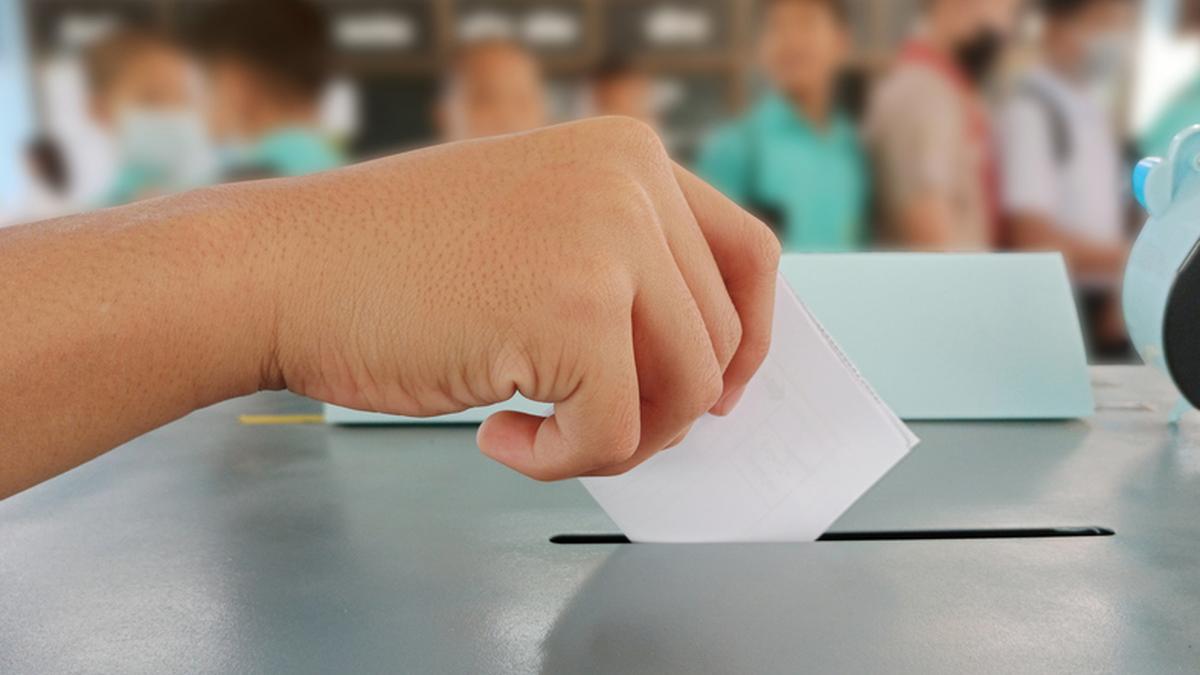
The Rajasthan High Court refused to order immediate student union elections, citing the state government's argument about potential academic disruption during the National Education Policy rollout. Petitioners had contended that student representation is a "core democratic entitlement." This decision highlights the balance between democratic rights and administrative priorities in educational institutions, relevant for understanding judicial review and policy implementation challenges.
Revision structure
Monthly events and exam calendar context
Static GK and one-liner notes
Quiz and mock-test revision path
Key points
Exam-ready takeaways
Petitioners argued that student representation constitutes a "core democratic entitlement."
The State government contended that polls would disrupt academics during the National Education Policy (NEP) rollout.
The decision underscores the conflict between democratic rights and administrative concerns in educational settings.
The National Education Policy (NEP) rollout was a key reason cited by the state for opposing immediate elections.
Detailed analysis
Full exam-oriented breakdown
The Rajasthan High Court's recent refusal to order immediate student union elections brings to the fore a fascinating and often debated conflict: the balance between democratic rights, academic stability, and administrative priorities. This decision, while specific to Rajasthan, holds broader implications for governance, education policy, and youth participation in India. To understand the gravity of this decision, we must delve into its background. Student union elections have a long and storied history in India, often serving as a crucial training ground for future political leaders. From the pre-independence era, where student movements played a significant role in the freedom struggle, to post-independence politics, student bodies have been instrumental in articulating youth aspirations and grievances. However, these elections have also been plagued by issues of violence, excessive expenditure, and disruption of academic calendars. To address these concerns, the Supreme Court, in 2006, accepted the recommendations of the J.M. Lyngdoh Committee. These recommendations provided a comprehensive framework for conducting student union elections, aiming to ensure transparency, fairness, and minimize disruption. Key provisions included eligibility criteria for candidates, expenditure limits, and a code of conduct. In the present case, petitioners approached the Rajasthan High Court, arguing that student representation is a "core democratic entitlement" and that students should not be deprived of their right to elect their representatives. This argument is firmly rooted in the fundamental rights enshrined in the Indian Constitution, particularly Article 19(1)(a), which guarantees freedom of speech and expression, and Article 19(1)(c), which ensures the right to form associations or unions. Student unions are a direct manifestation of these rights within educational institutions, allowing students to voice concerns, participate in decision-making, and learn democratic processes firsthand. The State government of Rajasthan, however, presented a counter-argument centered on administrative practicality and academic priorities. It contended that holding elections would disrupt academics, especially during the crucial rollout of the National Education Policy (NEP) 2020. The NEP 2020 is a transformative policy aimed at overhauling India's education system, focusing on holistic, multidisciplinary education, flexibility, and skill development. The government's stance suggests that the successful and uninterrupted implementation of such a landmark policy takes precedence over immediate electoral processes, at least for the time being. The High Court, after considering both arguments, chose not to intervene, effectively upholding the state's discretion in managing educational affairs. Key stakeholders in this issue include the students (and petitioners) who advocate for their democratic rights and representation, viewing student unions as essential for their voice and welfare. The State government, as the administrative authority, prioritizes academic continuity and policy implementation, seeing potential disruptions as detrimental to educational goals. Educational institutions themselves are caught in the middle, tasked with balancing student demands with directives from the state. Finally, the Rajasthan High Court, as a judicial body, plays a critical role in interpreting laws and balancing competing interests, exercising its power of judicial review under Article 226 of the Constitution. This decision holds significant implications for India. Politically, it sparks a debate on the extent of democratic participation permissible within educational institutions and whether academic calendars should ever supersede democratic processes. Socially, it impacts youth engagement and political socialization, potentially dampening the spirit of student activism if elections are consistently postponed. For governance, it highlights the delicate balance administrators must strike between upholding fundamental rights and ensuring efficient policy implementation. The National Education Policy 2020, a flagship reform, underscores the government's commitment to transforming education, and the perceived need for a stable environment for its rollout is a significant factor. Looking ahead, this decision could set a precedent, encouraging other states to postpone student elections citing similar reasons, especially in the context of implementing major reforms. It might also intensify the debate around the utility and format of student union elections, potentially leading to calls for alternative forms of student representation or a re-evaluation of the Lyngdoh Committee recommendations in contemporary contexts. The future implications involve a continuous dialogue between student bodies, government, and the judiciary to find a harmonious balance that respects democratic rights while safeguarding academic excellence and administrative efficiency. The core challenge remains: how to foster democratic values and participation among youth without compromising the primary objective of educational institutions – learning and academic growth.
How to study
Turn news into exam marks
Revise monthly events by exam family instead of reading random updates.
Pair one-liners with mock tests so mistakes become the next revision list.
Keep state job pages, calendar pages and GK packs connected in one path.