

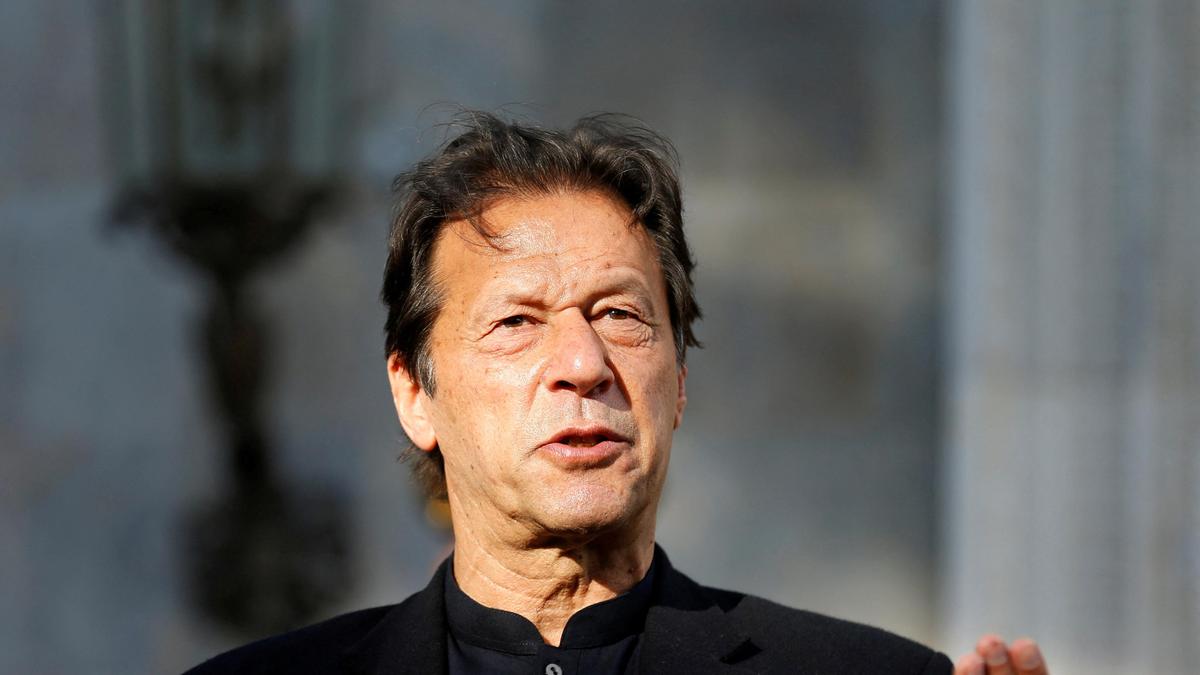
Former Pakistan Prime Minister Imran Khan and his wife Bushra Bibi were sentenced to 17 years.
GK and monthly revision
Former Pak PM Imran Khan, wife Bushra Bibi sentenced to 17 years in Toshakhana corruption case
Former Pakistan Prime Minister Imran Khan and his wife Bushra Bibi have been sentenced to 17 years in the Toshakhana corruption case. The case involves alleged fraud in state gifts received from the Saudi Government in 2021. This legal development is significant for understanding political accountability and legal processes in neighboring countries, serving as a crucial point for international relations and current affairs sections in competitive exams.
Revision structure
Monthly events and exam calendar context
Static GK and one-liner notes
Quiz and mock-test revision path
Key points
Exam-ready takeaways
The sentencing relates to the Toshakhana corruption case.
The case involves alleged fraud concerning state gifts received by the former first couple.
The state gifts were reportedly received from the Saudi Government.
The alleged fraudulent receipt of gifts occurred in the year 2021.
Detailed analysis
Full exam-oriented breakdown
The sentencing of former Pakistan Prime Minister Imran Khan and his wife Bushra Bibi to 17 years in the Toshakhana corruption case marks a significant development in Pakistan's tumultuous political landscape. This case, centered on alleged fraud concerning state gifts received from the Saudi Government in 2021, brings to the forefront critical issues of political accountability, governance, and the rule of law in a country grappling with persistent instability. **Background Context: What is Toshakhana?** To understand the gravity of the Toshakhana case, one must first grasp the concept of 'Toshakhana'. Derived from Persian, meaning 'treasure house', Toshakhana in Pakistan is a department under the Cabinet Division that stores valuable gifts received by heads of state, parliamentarians, bureaucrats, and other government officials from foreign dignitaries. The rules governing Toshakhana dictate that all such gifts must be reported and deposited. Officials have the option to retain gifts, but only after paying a certain percentage of their assessed value. This system is designed to prevent conflicts of interest, ensure transparency, and prevent public officials from profiting illicitly from their office. The Toshakhana rules, while not a constitutional article, are a critical policy framework for maintaining public trust and accountability. **What Happened in the Toshakhana Case?** The allegations against Imran Khan and Bushra Bibi revolve around the alleged misdeclaration and illegal sale of state gifts. Specifically, the case alleges that Khan and his wife received valuable gifts from the Saudi Government in 2021, which included luxury watches, jewelry, and other expensive items. Instead of depositing these gifts in the Toshakhana or buying them at their assessed value as per rules, they were allegedly undervalued, undeclared, and then sold for personal profit. The Election Commission of Pakistan (ECP) initiated proceedings, leading to Khan's disqualification from holding public office in October 2022, citing corrupt practices. Subsequently, the National Accountability Bureau (NAB) investigated the matter, resulting in charges and ultimately, the recent sentencing by a trial court. The conviction includes charges of misusing state assets and unlawful enrichment, leading to a 17-year jail term for both individuals. **Key Stakeholders Involved:** Several entities play crucial roles in this saga. **Imran Khan and Bushra Bibi** are the central figures, accused and convicted of violating state gift protocols. The **Election Commission of Pakistan (ECP)** was instrumental in initiating the proceedings, asserting its role as a constitutional body responsible for ensuring fair elections and accountability of public representatives. The **National Accountability Bureau (NAB)**, Pakistan's anti-corruption watchdog, conducted the investigation and brought the charges, highlighting its mandate to combat corruption. The **Judiciary of Pakistan**, specifically the trial court, delivered the verdict, underscoring its role in upholding the rule of law. The **Pakistan Government/State** is the entity whose rules and assets were allegedly compromised. While not directly involved in the prosecution, the **Saudi Government** was the donor of the gifts, making it an external stakeholder in the origin of the controversy. **Why This Matters for India:** Events in Pakistan invariably have implications for India. **Regional Stability** is a primary concern; political instability, legal battles, and public unrest in Pakistan can spill over into India's security calculations, particularly concerning border management and counter-terrorism efforts. The case also offers insights into **Governance and Anti-Corruption** mechanisms in a neighboring country. For India, which also has strict protocols for government officials receiving gifts (e.g., under the Conduct Rules for Central Civil Services, and the Foreign Contribution (Regulation) Act for organizations), this case serves as a comparative study on the challenges of ensuring accountability. Furthermore, such internal political turmoil can affect **India-Pakistan Diplomatic Relations**, influencing the tenor of bilateral engagements and regional cooperation initiatives. Economically, instability hinders potential trade and regional economic integration, impacting India's 'Neighborhood First' policy. **Historical Context and Broader Themes:** The Toshakhana controversy is not new to Pakistani politics. Past leaders, including Nawaz Sharif and Asif Ali Zardari, have faced similar allegations regarding the retention or sale of state gifts. This recurring theme underscores a broader challenge of **political corruption and accountability** within Pakistan's political elite. It highlights the struggle between entrenched power structures and efforts to enforce transparency and the rule of law. The case also links to broader themes of **democratic governance** and the **role of institutions** (judiciary, election commission, anti-corruption bodies) in a democratic setup. The legal battles of Imran Khan, including this conviction and others, are often viewed through the lens of political victimization by his supporters, further deepening political polarization and distrust in institutions. **Future Implications:** The conviction carries significant implications for Imran Khan's political future, potentially disqualifying him from holding public office for a considerable period, thereby impacting his party, Pakistan Tehreek-e-Insaf (PTI). This could further intensify Pakistan's already volatile political climate, potentially leading to increased protests and instability. For the country, it reinforces the narrative of accountability for political leaders, though the highly politicized nature of such trials in Pakistan often leads to questions about fairness and due process. The outcome could set a precedent for future handling of state gifts and the prosecution of high-profile corruption cases, potentially bolstering the authority of anti-corruption bodies or, conversely, being seen as a tool for political maneuvering. The long-term impact on Pakistan's democratic evolution and its institutional credibility remains to be seen.
How to study
Turn news into exam marks
Revise monthly events by exam family instead of reading random updates.
Pair one-liners with mock tests so mistakes become the next revision list.
Keep state job pages, calendar pages and GK packs connected in one path.