

Political parties in Kerala have demanded an extension of the Special Summary Revision (SIR) schedule.
GK and monthly revision
Kerala SIR: Citing inaccuracies in ASD list, political parties demand extension of SIR schedule
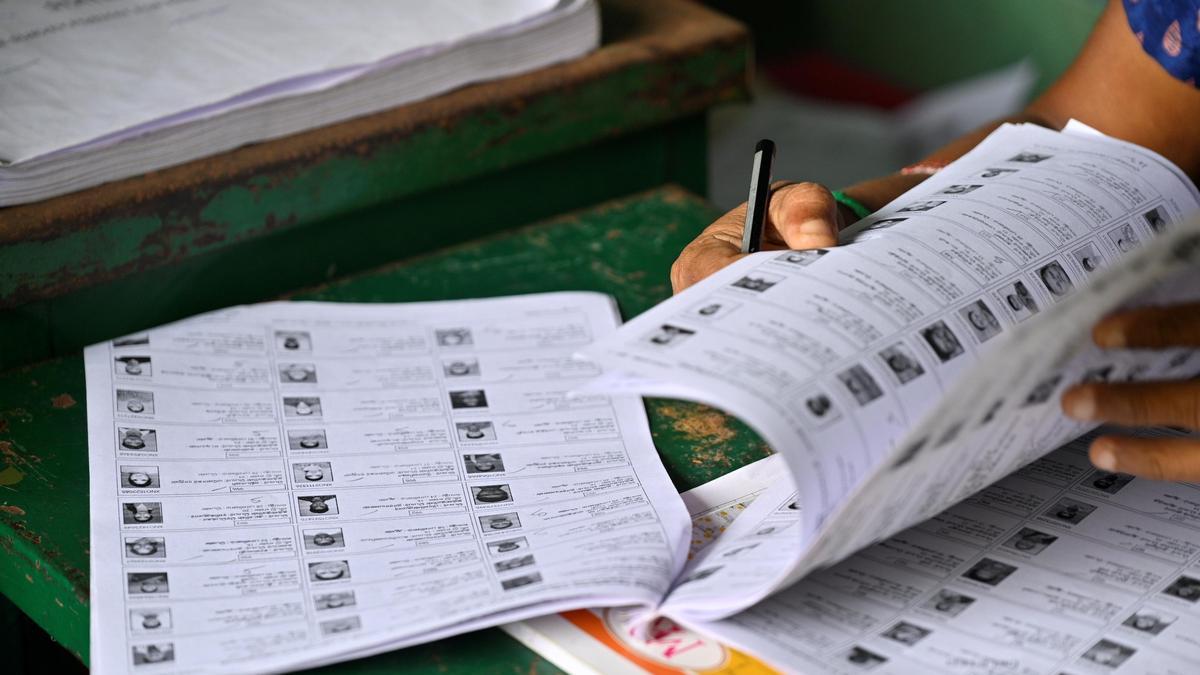
Political parties in Kerala have demanded an extension of the Special Summary Revision (SIR) schedule. This demand arises from alleged inaccuracies in the Absentee, Shifted, or Dead (ASD) voters list, impacting electoral roll integrity. The Supreme Court has directed the Election Commission of India (ECI) to sympathetically consider such representations, highlighting the importance of accurate voter lists for fair elections and ECI's role in electoral administration.
Revision structure
Monthly events and exam calendar context
Static GK and one-liner notes
Quiz and mock-test revision path
Key points
Exam-ready takeaways
The demand is primarily due to alleged inaccuracies identified in the Absentee, Shifted, or Dead (ASD) voters list.
The Supreme Court of India asked the Election Commission of India (ECI) to take a sympathetic view on representations seeking more time for electoral processes.
The Special Summary Revision (SIR) is a crucial process undertaken by the ECI to update and purify electoral rolls.
The ECI is the constitutional body responsible for the superintendence, direction, and control of elections in India.
Detailed analysis
Full exam-oriented breakdown
The recent demand by political parties in Kerala for an extension of the Special Summary Revision (SIR) schedule, prompted by alleged inaccuracies in the Absentee, Shifted, or Dead (ASD) voters list, shines a critical light on the foundational aspects of India's democratic process: the integrity of its electoral rolls. This issue, further amplified by the Supreme Court's directive to the Election Commission of India (ECI) to sympathetically consider such representations, underscores the continuous efforts required to ensure free, fair, and credible elections. **Background Context and What Happened:** Electoral rolls are the bedrock of any democratic election. Their accuracy is paramount to ensure that every eligible citizen can cast their vote and to prevent fraudulent voting. The ECI, a constitutional body, conducts a periodic exercise known as Special Summary Revision (SSR) to update these rolls. This process involves adding new eligible voters (e.g., those turning 18), deleting deceased voters, and making corrections to existing entries. A crucial component of this revision is the identification of Absentee, Shifted, or Dead (ASD) voters. The ECI undertakes a rigorous house-to-house verification or uses data from civil registration systems to compile this list. The objective is to purify the electoral roll, removing duplicate or ineligible entries, thereby enhancing its accuracy. In Kerala, political parties have raised concerns about significant inaccuracies in the ASD list prepared during the ongoing SIR. They allege that many legitimate voters have been wrongly categorized as absent, shifted, or dead, potentially leading to their disenfranchisement. Such errors, if unaddressed, can undermine public trust in the electoral system and even impact election outcomes. Consequently, they demanded an extension of the SIR schedule, seeking more time to verify the lists and submit corrections. The Supreme Court's intervention, asking the ECI to take a "sympathetic view" of these representations, highlights the judiciary's role in safeguarding electoral integrity and ensuring due process. **Key Stakeholders Involved:** 1. **Election Commission of India (ECI):** As per Article 324 of the Indian Constitution, the ECI is vested with the superintendence, direction, and control of the preparation of electoral rolls for, and the conduct of, all elections to Parliament and to the Legislature of every State. Its primary responsibility is to ensure free and fair elections, which hinges on accurate voter lists. The ECI's decisions on schedule extensions and list verification are crucial. 2. **Political Parties:** They are direct participants in the electoral process. Their role extends beyond contesting elections to ensuring the fairness of the process itself. By scrutinizing electoral rolls and raising concerns, they act as watchdogs, representing the interests of their voters and upholding democratic principles. 3. **Supreme Court of India:** The apex judicial body plays a vital role in interpreting constitutional provisions and electoral laws. Its directive to the ECI, while not a direct order to extend, serves as a strong recommendation, emphasizing the importance of fairness and adequate opportunity for stakeholders. 4. **Voters/Citizens:** Ultimately, the accuracy of electoral rolls directly impacts the citizens' fundamental right to vote, enshrined under Article 326 (adult suffrage). Inaccuracies can lead to eligible voters being denied their franchise or even fraudulent votes being cast. **Why This Matters for India and Historical Context:** The integrity of electoral rolls is fundamental to the health of Indian democracy. Inaccuracies can lead to voter disenfranchisement, where eligible citizens are unable to vote, or to electoral fraud, where ineligible persons cast votes. Both scenarios erode public trust in the democratic process and can lead to political instability. India has a long history of electoral reforms aimed at purifying voter rolls and enhancing election credibility. From the introduction of Electoral Photo Identity Cards (EPICs) in 1993 to the more recent push for Aadhaar-Voter ID linkage (though voluntary and with privacy concerns), the ECI has continuously sought methods to improve roll accuracy. Past elections have seen controversies related to duplicate entries, deletion of genuine voters, and the inclusion of 'bogus' voters, necessitating continuous vigilance and reform. **Future Implications and Constitutional References:** This incident could lead to the ECI reviewing and potentially refining its procedures for preparing ASD lists, possibly incorporating more robust verification mechanisms or increasing transparency in the deletion process. It also highlights the need for continuous engagement between the ECI and political parties to resolve such issues proactively. The debate around the accuracy of electoral rolls often resurfaces before major elections, including the upcoming Lok Sabha elections, making this issue particularly pertinent. Constitutionally, Article 324 grants the ECI broad powers to ensure free and fair elections. This includes the power to prepare and revise electoral rolls. The **Representation of the People Act, 1950**, specifically deals with the preparation and revision of electoral rolls, while the **Representation of the People Act, 1951**, governs the conduct of elections and related matters. The recent **Election Laws (Amendment) Act, 2021**, which allows for the voluntary linkage of Aadhaar with voter ID, was also aimed at purifying electoral rolls by preventing duplicate entries, though it raised privacy concerns. The Supreme Court's involvement underscores its role as the guardian of the Constitution, ensuring that statutory bodies like the ECI operate within the framework of law and uphold democratic principles.
How to study
Turn news into exam marks
Revise monthly events by exam family instead of reading random updates.
Pair one-liners with mock tests so mistakes become the next revision list.
Keep state job pages, calendar pages and GK packs connected in one path.