

The 'One Health' approach recognizes the intrinsic interconnectedness of human health, animal health, and environmental health.
GK and monthly revision
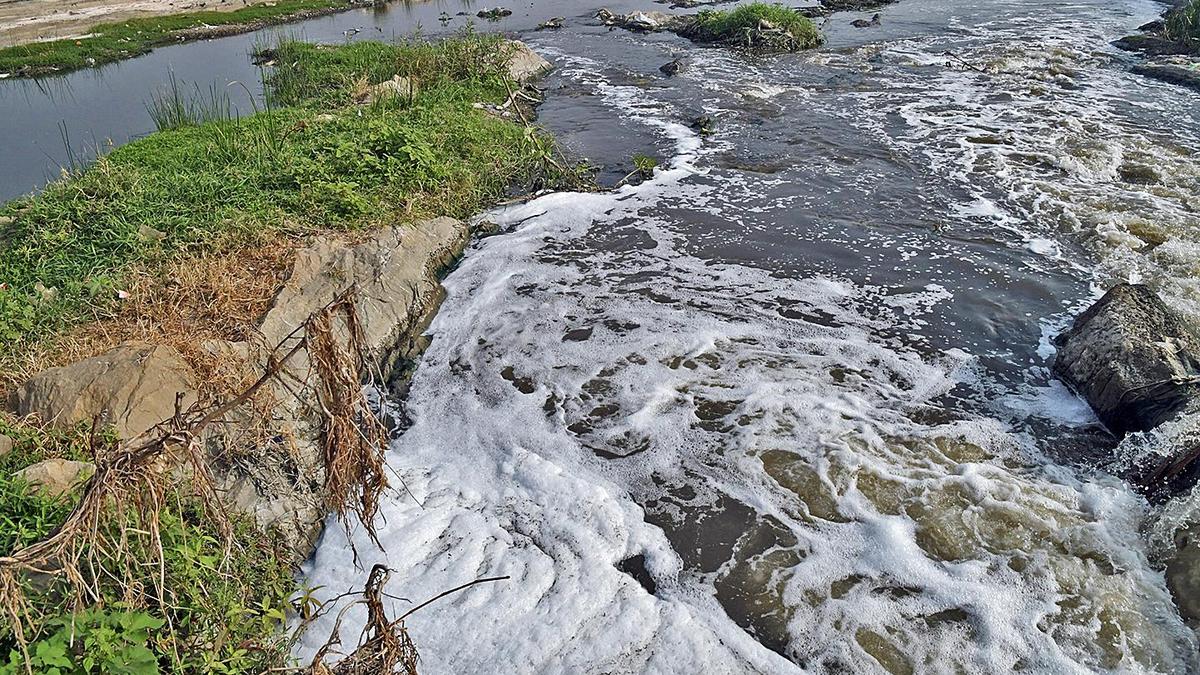
How untreated effluent discharge into rivers leads to downstream One Health impacts
The article highlights the critical 'One Health' approach, emphasizing the interconnectedness of human, animal, and environmental health. It details how untreated industrial waste and urban sewage discharge into the Cauvery river leads to fish contamination. This pollution causes significant downstream effects in food chains, ultimately impacting human health and underscoring the need for integrated environmental management for exam relevance.
Revision structure
Monthly events and exam calendar context
Static GK and one-liner notes
Quiz and mock-test revision path
Key points
Exam-ready takeaways
The Cauvery river is specifically cited as being contaminated by untreated effluent discharge.
Primary sources of contamination include untreated industrial waste and urban sewage.
This pollution directly leads to the contamination of fish populations within the Cauvery river.
Contaminated fish result in downstream effects in food chains, eventually impacting human health through consumption.
Detailed analysis
Full exam-oriented breakdown
The concept of 'One Health' serves as a crucial framework for understanding the intricate web connecting human, animal, and environmental well-being. This interdisciplinary approach, recognized globally, posits that the health of one domain is intrinsically linked to the others, emphasizing collaborative efforts across various disciplines. In the Indian context, the contamination of vital river systems, such as the Cauvery, by untreated industrial waste and urban sewage offers a stark illustration of this interconnectedness, with profound implications for public health, ecological balance, and economic stability. Historically, India's rapid industrialization and urbanization post-independence, particularly from the 1970s onwards, led to significant environmental challenges. The focus on economic growth often overshadowed environmental protection, resulting in inadequate waste management infrastructure. Many industries, driven by cost considerations, discharged effluents directly into rivers without proper treatment. Simultaneously, the burgeoning urban populations generated vast quantities of domestic sewage, much of which also found its way into water bodies due to insufficient sewage treatment plant (STP) capacity. The Cauvery, a lifeline for millions across Karnataka and Tamil Nadu, has borne the brunt of such practices, becoming a repository for pollutants from cities and industrial clusters along its banks. What precisely happens is a cascade of detrimental effects. Untreated industrial effluents often contain heavy metals (like lead, mercury, cadmium), toxic chemicals, and persistent organic pollutants. Urban sewage contributes high levels of organic matter, nutrients (nitrogen, phosphorus), and pathogenic microorganisms. When discharged into the Cauvery, these pollutants alter the river's physico-chemical properties, reducing dissolved oxygen levels and making it uninhabitable for sensitive aquatic species. Fish, being an integral part of the riverine ecosystem and a critical food source, absorb these contaminants. This bioaccumulation and biomagnification mean that as pollutants move up the food chain, their concentration increases, eventually reaching human consumers through the consumption of contaminated fish. This direct pathway from environmental pollution to animal health and then to human health perfectly encapsulates the 'One Health' challenge. Several key stakeholders are involved in this complex issue. At the governmental level, the **Ministry of Environment, Forest and Climate Change (MoEFCC)**, the **Central Pollution Control Board (CPCB)**, and **State Pollution Control Boards (SPCBs)** are tasked with setting environmental standards, monitoring compliance, and enforcing regulations under acts like the **Water (Prevention and Control of Pollution) Act, 1974**, and the **Environment (Protection) Act, 1986**. Local **Urban Local Bodies (ULBs)** and **Municipal Corporations** are responsible for managing urban sewage and solid waste. **Industries** are direct polluters, obligated to install and operate Effluent Treatment Plants (ETPs). **Farmers and fishermen** represent communities whose livelihoods are directly threatened by contaminated water and dwindling fish stocks. Finally, the **public** as consumers face health risks and also bear the responsibility of proper waste disposal, while **environmental NGOs and activists** play a crucial role in advocacy and raising awareness. This issue holds immense significance for India. From a public health perspective, contaminated food chains lead to increased incidence of water-borne diseases, heavy metal poisoning, and long-term health complications, placing a significant burden on healthcare systems. Environmentally, it results in biodiversity loss, ecosystem degradation, and reduced availability of clean water for agriculture and drinking. Economically, the loss of fisheries impacts livelihoods, particularly for marginalized communities, and the cost of environmental remediation and healthcare can be staggering. Socially, it exacerbates inequalities, as poorer communities often bear the disproportionate impact of pollution. The right to a clean environment is implicitly recognized under **Article 21 (Right to Life)** of the Indian Constitution, and **Article 48A (Protection and improvement of environment and safeguarding of forests and wild life)**, a Directive Principle of State Policy, mandates the state to protect and improve the environment. Furthermore, **Article 51A(g)** lists the fundamental duty of every citizen to protect and improve the natural environment. Broader themes like sustainable development, environmental governance, and public health policy are intrinsically linked. India's commitment to **Sustainable Development Goals (SDGs)**, particularly SDG 6 (Clean Water and Sanitation), SDG 3 (Good Health and Well-being), and SDG 14 (Life Below Water), is directly challenged by such pollution. The **Namami Gange Programme** and the **National River Conservation Plan (NRCP)** are examples of national efforts, though their effectiveness is often debated due to implementation gaps and enforcement challenges. The 'Polluter Pays Principle,' enshrined in Indian environmental jurisprudence, aims to hold polluters accountable, but its application requires robust regulatory oversight. Looking ahead, the future implications are critical. Without concerted efforts, India faces escalating health crises, increased water scarcity due to unusable water sources, and irreversible damage to its natural ecosystems. The 'One Health' approach demands a paradigm shift towards integrated water resource management, stricter enforcement of environmental laws, investment in advanced waste treatment technologies, and fostering public awareness and participation. Climate change further complicates the scenario, potentially altering river flows and concentrating pollutants. A proactive, collaborative, and scientifically informed approach, integrating policies across health, environment, and economic sectors, is essential to mitigate these risks and ensure a healthy future for India's rivers and its people.
How to study
Turn news into exam marks
Revise monthly events by exam family instead of reading random updates.
Pair one-liners with mock tests so mistakes become the next revision list.
Keep state job pages, calendar pages and GK packs connected in one path.