

The Supreme Court praised the Kerala Governor and Chief Minister for resolving the Vice-Chancellor appointment row.
GK and monthly revision
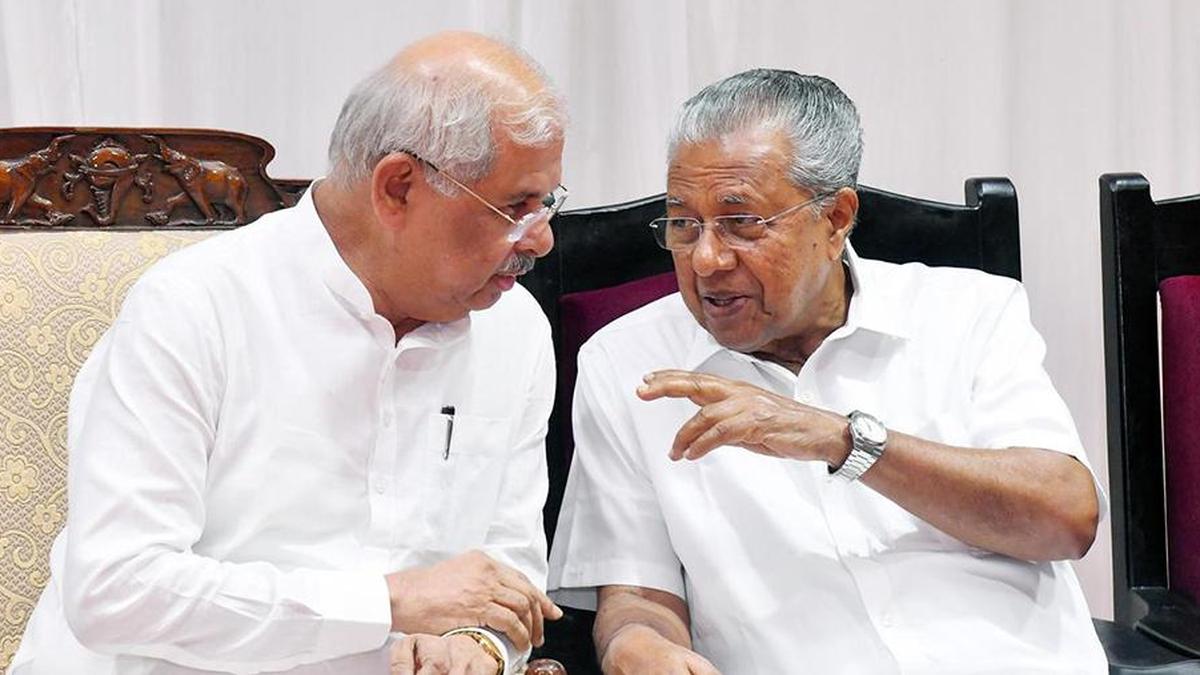
Kerala Vice-Chancellors appointment row: Supreme Court praises Kerala Governor, CM for ending ‘saga’
The Supreme Court lauded the Kerala Governor and Chief Minister for amicably resolving a protracted dispute over the appointment of Vice-Chancellors in state universities. This development signifies the importance of cooperation between constitutional functionaries for effective governance and smooth functioning of higher education institutions. For competitive exams, it highlights the roles of the Governor, CM, and the Supreme Court in state administration and higher education matters, especially in resolving constitutional or administrative deadlocks.
Revision structure
Monthly events and exam calendar context
Static GK and one-liner notes
Quiz and mock-test revision path
Key points
Exam-ready takeaways
Dr. Ciza Thomas was appointed as Vice-Chancellor of APJ Abdul Kalam Technological University.
Dr. Saji Gopinathan was appointed as Vice-Chancellor of Kerala University of Digital Sciences, Innovation and Technology.
The resolution ended a 'saga' concerning appointments in state universities in Kerala.
The case highlights the roles of the Governor and Chief Minister in state university administration.
Detailed analysis
Full exam-oriented breakdown
The Supreme Court's commendation of the Kerala Governor and Chief Minister for resolving the protracted dispute over Vice-Chancellor (VC) appointments in state universities marks a significant moment in Indian federalism and higher education governance. This development, which saw the appointment of Dr. Ciza Thomas to APJ Abdul Kalam Technological University and Dr. Saji Gopinathan to Kerala University of Digital Sciences, Innovation and Technology, brings to an end a 'saga' of constitutional friction and administrative deadlock. **Background Context:** For years, the appointment of Vice-Chancellors in state universities has been a contentious issue, particularly in states where the Governor, who serves as the ex-officio Chancellor of state universities, belongs to a different political ideology than the elected state government. The dispute in Kerala escalated significantly when Governor Arif Mohammed Khan, citing violations of University Grants Commission (UGC) regulations and Supreme Court pronouncements, invalidated several VC appointments and demanded resignations. The core of the conflict often lies in the selection process: while state university acts typically outline the procedure, the Supreme Court, in landmark judgments such as *Prof. (Dr.) Sreejith P.S. v. Dr. Rajasree M.S.* (2022) concerning APJ Abdul Kalam Technological University, has consistently held that appointments must strictly adhere to UGC regulations, particularly regarding the composition of the Search-cum-Selection Committee and the panel of names recommended. The Kerala government, on its part, accused the Governor of overstepping his constitutional bounds and interfering in the state's autonomy in higher education. This created an environment of uncertainty for academic leadership and institutional stability. **Key Stakeholders Involved:** 1. **The Governor (Chancellor):** As the constitutional head of the state (Article 153) and ex-officio Chancellor of state universities (as per State University Acts), the Governor holds significant power in approving or rejecting VC appointments. This role often places them at the center of disputes with elected governments. 2. **The Chief Minister and State Government:** The elected executive (Article 163) is responsible for formulating and implementing higher education policies. They often seek to influence VC appointments to align with their vision for state universities, sometimes leading to accusations of political interference. 3. **The Supreme Court of India:** The apex judicial body plays a crucial role in interpreting constitutional provisions and statutory laws, ensuring adherence to the rule of law. Its pronouncements on UGC norms and appointment procedures have been instrumental in guiding and, at times, resolving these disputes. 4. **University Grants Commission (UGC):** A statutory body established under the UGC Act, 1956, it is responsible for the coordination, determination, and maintenance of standards in university education. Its regulations regarding VC qualifications and appointment procedures are binding on all universities receiving grants from it. 5. **The Universities:** The institutions themselves are key stakeholders, as the quality of their leadership directly impacts academic standards, research output, and overall governance. **Significance for India:** This resolution carries immense significance for India's federal structure and the governance of its vast higher education system. Firstly, it underscores the importance of **cooperative federalism**, demonstrating that even in the face of deep disagreements, constitutional functionaries can find common ground for the larger public good. Article 254 (Inconsistency between laws made by Parliament and laws made by the Legislatures of States) and the principle of harmonious construction often come into play when state laws conflict with central regulations like those of the UGC. Secondly, it highlights the delicate balance between **state autonomy** in education (a concurrent subject) and the need to uphold national standards set by bodies like the UGC. The Supreme Court's consistent emphasis on UGC norms reinforces the idea of a unified standard across Indian universities. Thirdly, the 'saga' itself brought to the fore concerns about **academic autonomy and political interference** in university administration, issues that plague many state universities across the country. Stable and merit-based leadership is crucial for academic excellence and institutional integrity. **Historical Context and Future Implications:** Conflicts between Governors and state governments are not new in Indian political history, often revolving around issues like assent to bills (Article 200), summoning/proroguing legislatures, or discretionary powers. The VC appointment row is a modern manifestation of this recurring tension, amplified by the judiciary's increasing role in upholding academic standards. States like West Bengal and Tamil Nadu have also witnessed similar standoffs, with legislative attempts to curb the Governor's powers as Chancellor. The amicable resolution in Kerala could serve as a positive precedent, encouraging dialogue and mutual respect between constitutional offices rather than prolonged legal battles. In the future, this might lead to clearer, more standardized national guidelines for VC appointments, potentially reducing ambiguities that fuel disputes. It also reinforces the judiciary's role as a vital check and balance, ensuring that appointments adhere to established legal and academic norms, thereby safeguarding the quality and integrity of higher education in India.
How to study
Turn news into exam marks
Revise monthly events by exam family instead of reading random updates.
Pair one-liners with mock tests so mistakes become the next revision list.
Keep state job pages, calendar pages and GK packs connected in one path.