

Pakistan's Deputy PM and Foreign Minister Ishaq Dar made the accusation against India.
GK and monthly revision
Pakistan accuses India of attempting to undermine Indus treaty
Pakistan's Deputy PM and Foreign Minister Ishaq Dar accused India of attempting to undermine the Indus Waters Treaty, following Pakistan's request for clarification on Chenab river flow variations. This development highlights ongoing tensions over water sharing between the two nations, crucial for competitive exams covering international relations, geography, and bilateral agreements. The treaty's provisions and history are key exam topics.
Revision structure
Monthly events and exam calendar context
Static GK and one-liner notes
Quiz and mock-test revision path
Key points
Exam-ready takeaways
The accusation relates to India's alleged attempt to undermine the Indus Waters Treaty.
Pakistan sought clarification from India regarding variations in the flow of the Chenab river.
The Indus Waters Treaty is a vital water-sharing agreement between India and Pakistan.
The Indus Waters Treaty was brokered by the World Bank and signed in 1960.
Detailed analysis
Full exam-oriented breakdown
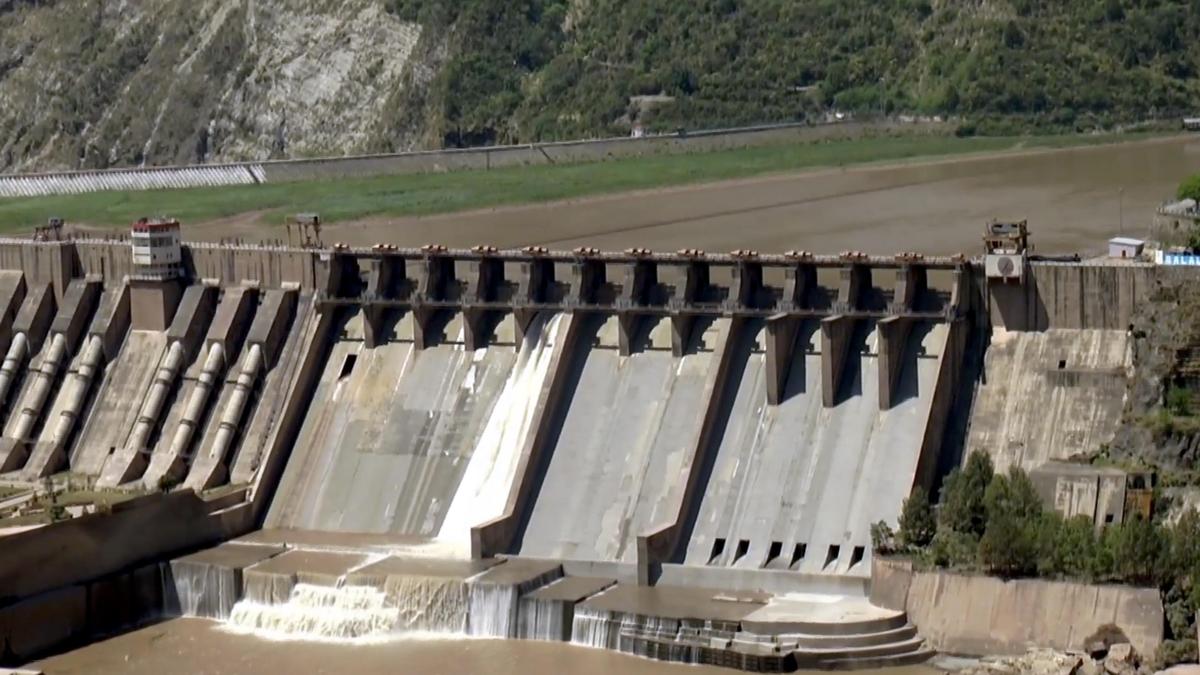
The recent accusation by Pakistan's Deputy Prime Minister and Foreign Minister, Ishaq Dar, that India is attempting to undermine the Indus Waters Treaty (IWT) following concerns over Chenab river flow variations, brings to the forefront the enduring complexities of India-Pakistan relations, particularly concerning shared natural resources. This development is not merely a diplomatic spat; it underscores the delicate balance of a treaty that has remarkably survived decades of conflict and tension, making it a critical topic for competitive exam aspirants. **Background Context: The Lifeline of Peace – Indus Waters Treaty** To understand the current situation, one must delve into the genesis of the Indus Waters Treaty. Signed on September 19, 1960, in Karachi by India's Prime Minister Jawaharlal Nehru and Pakistan's President Ayub Khan, with the World Bank acting as a mediator, the IWT is one of the most successful water-sharing agreements globally. Its necessity arose from the partition of British India in 1947, which arbitrarily divided the Indus basin, leaving the headwaters in India and much of the agricultural land dependent on them in Pakistan. This created a potential flashpoint, as India controlled the upstream flow of rivers vital to Pakistan's agrarian economy. The treaty ingeniously divided the six rivers of the Indus system into 'Eastern Rivers' (Sutlej, Beas, Ravi) and 'Western Rivers' (Indus, Jhelum, Chenab). India was given exclusive use of the Eastern Rivers, while Pakistan gained unrestricted use of the Western Rivers. Crucially, India was permitted to construct 'run-of-the-river' hydroelectric projects on the Western Rivers, provided they did not significantly impede flow or store water beyond specific limits. This provision, however, has been a recurring source of contention, as Pakistan often views India's hydroelectric projects on these rivers with suspicion, fearing water scarcity downstream. **The Recent Accusation: Variations in Chenab Flow** The immediate trigger for Pakistan's recent accusation is its request for clarification from India regarding variations in the flow of the Chenab river. While the specifics of these variations and India's response are yet to be fully public, Pakistan's concern typically revolves around India's construction or operation of hydropower projects on the Western Rivers. India has several such projects on the Chenab, including Salal, Baglihar, and Dul Hasti. Pakistan's stance often stems from a perception that India might be exceeding its permissible usage or altering natural flow patterns, thereby impacting its agricultural and power generation needs. **Key Stakeholders Involved** The primary stakeholders are, of course, **India** and **Pakistan**, represented by their respective governments, Foreign Ministries, and Indus Waters Commissioners. India's Central Water Commission and Ministry of Water Resources play a crucial role in managing its river projects and treaty compliance. Pakistan's Water and Power Development Authority (WAPDA) is equally significant on their side. The **World Bank** remains an important stakeholder, as it brokered the treaty and has a role in dispute resolution mechanisms, acting as an impartial arbiter if bilateral negotiations fail. The farmers and populations dependent on these rivers in both countries are also indirect, yet vital, stakeholders, whose livelihoods are directly impacted by water availability. **Why This Matters for India** For India, this issue carries significant geopolitical, economic, and strategic implications. **Geopolitically**, maintaining the sanctity of the IWT is crucial for India's image as a responsible international actor and for regional stability. While bilateral relations are often strained, the IWT has been a rare point of consistency. Undermining it could lead to increased international pressure and further sour relations. **Economically**, India has a legitimate right under the IWT to develop run-of-the-river hydropower projects on the Western Rivers. These projects are vital for meeting its growing energy demands and for regional development, particularly in states like Jammu & Kashmir. Any obstruction or prolonged dispute settlement process can delay these crucial infrastructure projects. **Strategically**, water is a critical resource. India aims to utilize its treaty-sanctioned rights to the fullest, ensuring water security and energy independence, without violating the spirit of the agreement. This also involves balancing its developmental needs with its international commitments. **Historical Context and Future Implications** Historically, disputes under the IWT are not new. The Baglihar Dam project on the Chenab river (commissioned in 2008) saw a prolonged dispute that eventually involved a neutral expert appointed by the World Bank. Similarly, the Kishenganga Hydropower Project on the Jhelum (commissioned in 2014) also faced arbitration. These instances demonstrate the treaty's robust dispute resolution mechanisms, which Pakistan often invokes. However, Pakistan's current phrasing of 'attempting to undermine' rather than 'violating' suggests a broader concern about India's intent or cumulative actions. In the future, climate change adds another layer of complexity. Glacial melt and changing precipitation patterns could significantly impact river flows, potentially exacerbating water stress and increasing the frequency of such disputes. India will need to continue its diplomatic efforts, transparently share data, and adhere to the treaty's provisions while asserting its legitimate rights. Bilateral dialogue and, if necessary, recourse to the treaty's arbitration mechanisms will be critical in managing these ongoing tensions. **Related Constitutional Articles, Acts, and Policies** While the Indus Waters Treaty is an international agreement, its implementation and India's approach are guided by domestic frameworks. **Article 253** of the Indian Constitution grants Parliament the power to make any law for implementing any international treaty, agreement, or convention. This provides the constitutional backing for India to adhere to and legislate for the IWT. The **Indus Waters Treaty (Administration of Protocol of Exchange) Act, 1968**, is a specific Indian law that facilitates the exchange of data and information as mandated by the treaty. Furthermore, India's **National Water Policy** (most recently, 2012) emphasizes integrated water resource management, which, in the context of transboundary rivers, necessitates adherence to international treaties. India's various hydropower policies and environmental impact assessment norms also shape how projects on these rivers are conceived and executed, ensuring compliance with both domestic laws and international obligations.
How to study
Turn news into exam marks
Revise monthly events by exam family instead of reading random updates.
Pair one-liners with mock tests so mistakes become the next revision list.
Keep state job pages, calendar pages and GK packs connected in one path.