

BJP MP Nishikant Dubey filed a breach of privilege notice.
GK and monthly revision
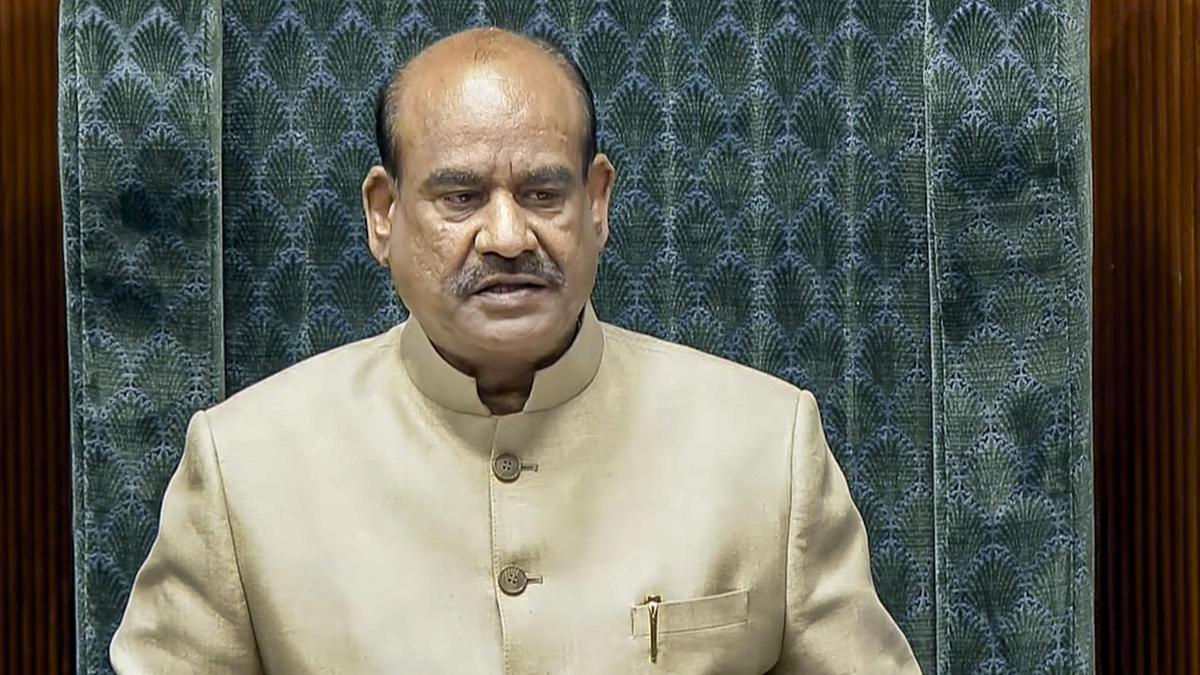
Speaker Birla examining breach of privilege notice by BJP MP against eight Congress members
Lok Sabha Speaker Om Birla is currently examining a breach of privilege notice filed by BJP MP Nishikant Dubey against eight Congress members. This development highlights the importance of parliamentary privileges and the Speaker's role in upholding them. For competitive exams, understanding parliamentary procedures, breach of privilege, and the Speaker's powers is crucial, especially for Polity sections.
Revision structure
Monthly events and exam calendar context
Static GK and one-liner notes
Quiz and mock-test revision path
Key points
Exam-ready takeaways
The notice was filed against eight Congress members.
The Congress members named include Hibi Eden, Dean Kuriakose, S Murasoli, K Gopinath, Sashikant Senthil, Shafi Parambil, S Venkateshan, and Jothimani.
Lok Sabha Speaker Om Birla is examining the breach of privilege notice.
Breach of privilege pertains to rights and immunities granted to Members of Parliament to ensure the effective discharge of their duties.
Detailed analysis
Full exam-oriented breakdown
The news regarding Lok Sabha Speaker Om Birla examining a breach of privilege notice filed by BJP MP Nishikant Dubey against eight Congress members offers a crucial lens into the functioning of India's parliamentary democracy. Understanding this incident requires delving into the constitutional framework governing parliamentary conduct and the significant role played by the Speaker. **Background Context: The Essence of Parliamentary Privileges** Parliamentary privileges are special rights, immunities, and exemptions enjoyed by the Members of Parliament (MPs) collectively and individually, without which they cannot discharge their functions effectively. These privileges are essential for maintaining the dignity, authority, and independent functioning of Parliament. They ensure that MPs can speak and act freely in the House without fear of external interference or legal repercussions for their official duties. While these privileges are fundamental, they are not absolute and must be exercised responsibly. Any act that obstructs or impedes the House or its members in the performance of their duties, or which tends to bring the authority of the House into disrepute, is considered a 'breach of privilege' and can also amount to 'contempt of the House'. Historically, the concept of parliamentary privileges in India is largely derived from the British House of Commons, as explicitly mentioned in the original Article 105(3) of the Constitution. **What Happened: A Specific Instance of Alleged Misconduct** BJP MP Nishikant Dubey filed a breach of privilege notice against eight Congress members: Hibi Eden, Dean Kuriakose, S Murasoli, K Gopinath, Sashikant Senthil, Shafi Parambil, S Venkateshan, and Jothimani. While the specific grounds for the notice are not detailed in the summary, such notices are typically filed when an MP believes that another member's actions or words have either obstructed their parliamentary duties, shown disrespect to the House or its proceedings, or brought the institution into disrepute. The significant aspect here is that Lok Sabha Speaker Om Birla is currently *examining* the notice. This means he is assessing whether there is a prima facie case of breach of privilege before deciding on the next course of action, which could range from dismissing the notice to referring it to the Privileges Committee for further investigation. **Key Stakeholders and Their Roles** 1. **Lok Sabha Speaker (Om Birla):** The Speaker is the principal presiding officer of the Lok Sabha and the guardian of the privileges and dignity of the House. He is the final interpreter of the Constitution within the House and the Rules of Procedure and Conduct of Business. In matters of privilege, the Speaker holds significant authority to admit or dismiss a privilege motion, or refer it to the Privileges Committee. His decision is crucial in upholding parliamentary decorum. 2. **BJP MP Nishikant Dubey:** As the complainant, he initiated the process by filing the notice, exercising his right as an MP to bring alleged breaches of privilege to the Speaker's attention. 3. **Eight Congress Members:** These are the members against whom the notice has been filed. Their conduct is under scrutiny, and they will have the opportunity to present their defence if the matter proceeds. 4. **Privileges Committee:** This standing committee of Parliament (15 members in Lok Sabha) investigates cases of breach of privilege referred to it by the Speaker or the House. It examines the facts, hears the parties involved, and makes recommendations to the House, which can then decide on appropriate action, including punishment. **Significance for India: Upholding Democratic Institutions** This incident is highly significant for India's democratic framework. Firstly, it underscores the importance of maintaining decorum and discipline within Parliament. Disruptions and unruly behaviour, if unchecked, can undermine the effectiveness of legislative proceedings and public trust in democratic institutions. Secondly, it highlights the Speaker's critical role as an impartial arbiter, responsible for protecting both the privileges of individual members and the collective dignity of the House. Thirdly, it reinforces the principle that while MPs enjoy certain immunities, these are not absolute and come with responsibilities. A robust system for addressing breaches of privilege ensures accountability within the legislative body. The proper functioning of Parliament is vital for effective governance, policy-making, and holding the executive accountable. **Constitutional Provisions and Procedures** Parliamentary privileges are primarily enshrined in **Article 105** of the Indian Constitution for the Union Parliament and **Article 194** for State Legislatures. Article 105(1) grants freedom of speech in Parliament, and Article 105(2) states that no member shall be liable to any proceedings in any court in respect of anything said or any vote given by him in Parliament or any committee thereof. Article 105(3) (as amended by the 44th Amendment Act, 1978) states that the powers, privileges, and immunities of each House of Parliament, and of the members and the committees of each House, shall be such as may from time to time be defined by Parliament by law, and, until so defined, shall be those of that House and of its members and committees immediately before the coming into force of Section 21 of the Constitution (Forty-fourth Amendment) Act, 1978. In essence, they are still largely based on those of the British House of Commons, as Parliament has not yet enacted a comprehensive law to codify them. The **Rules of Procedure and Conduct of Business in Lok Sabha**, specifically **Rules 222 to 228**, detail the procedure for dealing with questions of privilege. A member wishing to raise a question of privilege must give notice in writing to the Speaker. **Future Implications** The Speaker's decision will set a precedent for future conduct. If a prima facie case is established, the matter could be referred to the Privileges Committee. The committee's recommendations, after due inquiry, could lead to various actions, including admonition, suspension from the House, or even expulsion, depending on the gravity of the breach. This process, while sometimes protracted, is crucial for maintaining parliamentary discipline. It also influences the dynamic between the ruling party and the opposition, potentially leading to heightened political tensions or, ideally, a renewed commitment to respectful debate within the legislative framework. The outcome will be closely watched for its implications on the balance between freedom of expression and the necessity of orderly parliamentary proceedings in India's vibrant democracy.
How to study
Turn news into exam marks
Revise monthly events by exam family instead of reading random updates.
Pair one-liners with mock tests so mistakes become the next revision list.
Keep state job pages, calendar pages and GK packs connected in one path.