

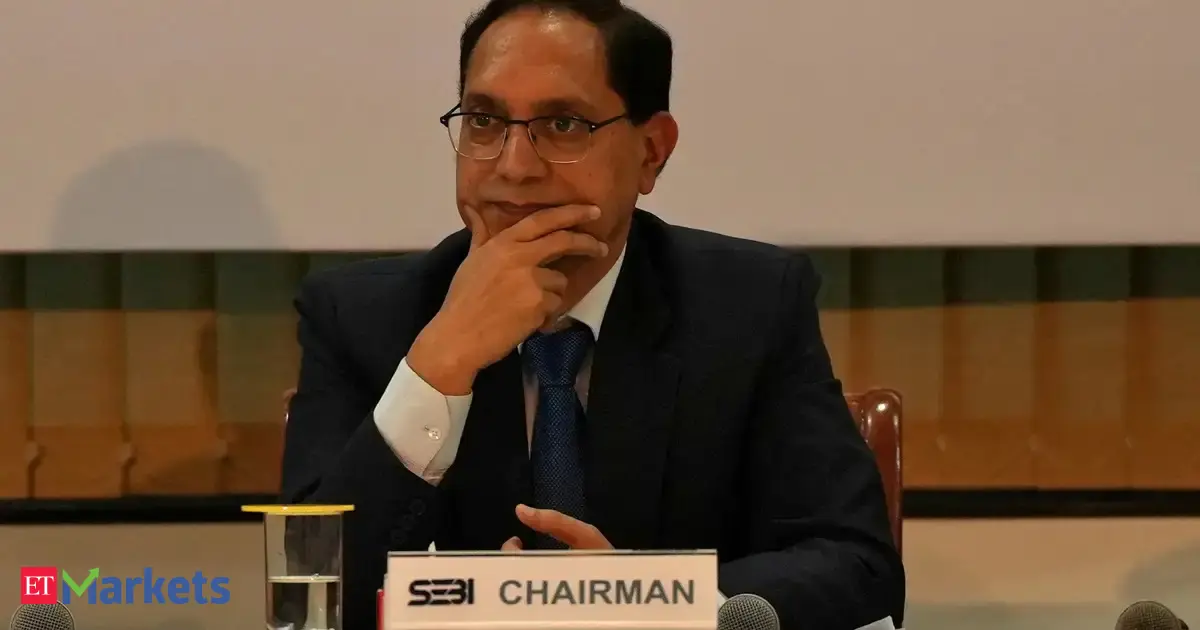
SEBI Chairman Tuhin Kanta Pandey proposed a review of India's Electronic Gold Receipts (EGR) framework.
GK and monthly revision
Gold EGR framework may need a review to revive India’s price-setter ambition: Sebi Chairman
SEBI Chairman Tuhin Kanta Pandey has called for a review of India's Electronic Gold Receipts (EGR) framework, citing its failure to gain desired market traction. This initiative is critical as EGRs were introduced to position India as a global gold price discovery hub. The proposed review aims to strengthen India's ambition to become a significant price-setter in the international gold market, impacting commodity market regulation and financial instruments for competitive exams.
Revision structure
Monthly events and exam calendar context
Static GK and one-liner notes
Quiz and mock-test revision path
Key points
Exam-ready takeaways
The EGR framework's primary objective is to help India emerge as a global gold price discovery hub.
The framework has not achieved the desired market traction since its introduction.
SEBI is the regulatory authority responsible for overseeing the Electronic Gold Receipts (EGR) market.
The proposed review aims to strengthen India's ambition to become a significant gold price-setter.
Detailed analysis
Full exam-oriented breakdown
India's deep-rooted cultural affinity for gold, spanning millennia, has historically made it one of the largest consumers and importers of the precious metal globally. This immense demand, however, has primarily been met through the physical market, leading to several challenges: a fragmented and often opaque market, issues of purity and storage, high transaction costs, and a significant drain on foreign exchange reserves due to imports, contributing to the Current Account Deficit (CAD). To address these issues and formalize the gold market, the Securities and Exchange Board of India (SEBI) introduced the framework for Electronic Gold Receipts (EGRs) in 2021. The background to EGRs lies in India's broader ambition to leverage its massive gold holdings and consumption for economic growth and financial market sophistication. Earlier initiatives like the Gold Monetization Scheme (GMS) and Sovereign Gold Bond (SGB) Scheme, both launched in 2015, aimed to mobilize idle household gold and reduce physical demand, respectively. EGRs represent a further step towards creating a transparent, regulated, and efficient electronic marketplace for gold, akin to dematerialized shares. **What Happened:** SEBI Chairman Tuhin Kanta Pandey recently highlighted that the Electronic Gold Receipts (EGR) framework has not achieved the desired market traction since its introduction. He emphasized the framework's original objective: to position India as a global gold price discovery hub. Recognizing the untapped potential and the current underperformance, the Chairman has called for a comprehensive review of the EGR framework. This review aims to identify the hurdles impeding its wider adoption and to refine the mechanisms to strengthen India's ambition of becoming a significant price-setter in the international gold market. A key aspect underlined by Pandey is the need for greater investor awareness regarding regulated gold products, implying that a lack of understanding or trust might be contributing to the low uptake. **Key Stakeholders Involved:** 1. **SEBI (Securities and Exchange Board of India):** As the primary regulator of India's securities and commodity derivatives markets, SEBI is the architect and overseer of the EGR framework. Its role involves framing regulations, ensuring market integrity, and now, reviewing and refining the framework. 2. **Ministry of Finance:** Provides overarching policy guidance and plays a crucial role in economic policy decisions that impact the gold market, including import duties and financial market development. 3. **Stock Exchanges (e.g., BSE, NSE):** These are the platforms where EGRs are listed and traded, providing the necessary infrastructure for electronic transactions. Their active participation and promotion are vital for market liquidity. 4. **Vault Managers:** SEBI-approved entities responsible for the secure storage of physical gold that backs the EGRs. They ensure the integrity and fungibility of the underlying asset. 5. **Investors (Retail and Institutional):** The ultimate users of the EGR framework. Their participation, driven by awareness, trust, and ease of use, is crucial for the success of the initiative. 6. **Bullion Dealers and Jewellers:** Traditional participants in the physical gold market. Their integration into the EGR ecosystem could significantly boost its reach and liquidity. **Significance for India:** This initiative holds immense significance for India. Economically, a successful EGR framework can lead to the formalization and greater transparency of the gold market, reducing the dominance of the informal sector. By offering an alternative to physical gold, it can potentially curb demand for gold imports, thereby easing pressure on the Current Account Deficit and strengthening the Indian Rupee. More importantly, establishing India as a global gold price discovery hub would give it significant influence in international bullion markets, moving from a price-taker to a price-setter. This aligns with India's broader goal of becoming a major global financial hub. For consumers, EGRs offer a regulated, transparent, and secure way to invest in gold, ensuring purity and easy liquidity without the hassles of physical storage. **Historical Context and Related Policies:** The journey towards formalizing India's gold market has seen several policy interventions. The Gold Monetization Scheme (GMS) of 2015 aimed to mobilize idle gold from households and institutions by allowing them to deposit gold with banks and earn interest. The Sovereign Gold Bond (SGB) Scheme, also from 2015, offered an alternative to holding physical gold by issuing bonds denominated in grams of gold, providing interest and capital gains linked to gold prices. EGRs are distinct as they offer a direct, dematerialized trading instrument for physical gold, allowing for both investment and eventual physical delivery, unlike SGBs which are purely financial instruments. The regulatory framework for commodity derivatives in India has evolved, with the Forward Markets Commission (FMC) merging with SEBI in 2015, bringing commodity markets under SEBI's robust regulatory ambit, as per the **SEBI Act, 1992**, and the **Securities Contracts (Regulation) Act, 1956 (SCRA)**, which defines 'securities' broadly enough to include such instruments. **Future Implications:** The review of the EGR framework could lead to significant policy adjustments. This might include simplifying the conversion process between physical gold and EGRs, reducing transaction costs, enhancing liquidity through market-making incentives, and launching extensive investor awareness campaigns. A successful revamp could attract greater participation from retail and institutional investors, leading to a more liquid and efficient market. If India truly emerges as a price discovery hub, it could attract international investors and traders, further solidifying its position in global finance. However, challenges remain, including overcoming the cultural preference for physical gold, ensuring the robustness of vaulting infrastructure, and competing effectively with existing gold investment avenues. The success of this review will be crucial in determining whether India can transform its traditional gold market into a modern, globally influential financial asset class.
How to study
Turn news into exam marks
Revise monthly events by exam family instead of reading random updates.
Pair one-liners with mock tests so mistakes become the next revision list.
Keep state job pages, calendar pages and GK packs connected in one path.