

Polio (Poliomyelitis) is currently nearing global eradication, marking a significant public health achievement.
GK and monthly revision
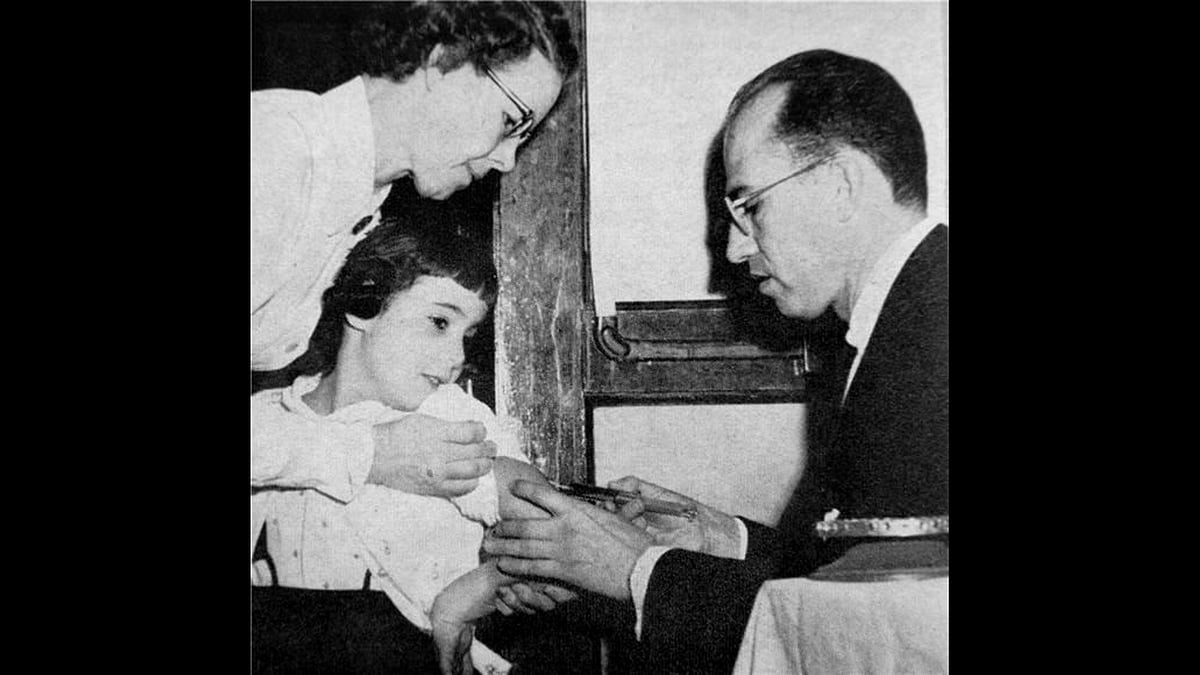
The world risks forgetting one of humanity’s greatest triumphs as polio nears global eradication − 70 years after Jonas Salk developed the vaccine
The world is nearing global eradication of polio, a monumental public health triumph achieved approximately 70 years after Jonas Salk developed its vaccine. This success, built on collective science and public trust, serves as a crucial reminder of vaccination's power. It holds significance for competitive exams by highlighting historical scientific achievements and contemporary challenges like vaccine skepticism.
Revision structure
Monthly events and exam calendar context
Static GK and one-liner notes
Quiz and mock-test revision path
Key points
Exam-ready takeaways
The first effective polio vaccine was developed by American medical researcher Jonas Salk.
Jonas Salk developed his polio vaccine approximately 70 years ago, placing its introduction around 1954.
The fight against polio is cited as "one of humanity's greatest triumphs" in disease control.
The article highlights the importance of "collective science and public trust" in vaccination, especially amid growing vaccine skepticism.
Detailed analysis
Full exam-oriented breakdown
The near global eradication of polio stands as one of humanity's most profound public health achievements, a testament to collective scientific endeavor, international cooperation, and sustained public trust. Polio, or poliomyelitis, is a highly infectious viral disease that primarily affects young children. It invades the nervous system and can cause irreversible paralysis in a matter of hours. Historically, polio epidemics swept across continents, leaving millions dead or permanently disabled, instilling widespread fear and anxiety among parents worldwide. The sight of children in iron lungs became a grim symbol of its devastating power. The turning point arrived in the mid-20th century with the pioneering work of American medical researcher Jonas Salk. In 1954, Salk developed the first effective inactivated polio vaccine (IPV), which was then successfully tested and introduced, marking a monumental breakthrough. This was followed by Albert Sabin's development of the Oral Polio Vaccine (OPV) in the early 1960s, which was easier to administer and provided longer-lasting immunity, making it ideal for mass vaccination campaigns. These vaccines transformed the fight against polio from a desperate struggle to a realistic eradication effort. Building on this scientific triumph, the Global Polio Eradication Initiative (GPEI) was launched in 1988 by the World Health Organization (WHO), Rotary International, UNICEF, and the U.S. Centers for Disease Control and Prevention (CDC). Later, the Bill & Melinda Gates Foundation also became a significant partner. The GPEI's ambitious goal was to wipe out polio worldwide, mirroring the success of smallpox eradication. This involved massive, coordinated immunization campaigns, surveillance to detect new cases, and rapid response to outbreaks. The success has been phenomenal, with a more than 99% reduction in polio cases globally since 1988. Key stakeholders in this global effort include international organizations like the WHO, UNICEF, and Rotary International, which provide funding, technical guidance, and logistical support. National governments, particularly in endemic and high-risk countries, are crucial for implementing vaccination programs, mobilizing healthcare workers, and ensuring last-mile delivery. Local health workers, volunteers, and community leaders play an indispensable role in reaching every child, overcoming geographical barriers, and addressing vaccine hesitancy. Parents and communities, through their participation and trust in vaccination, are the ultimate beneficiaries and critical partners. For India, the story of polio eradication is particularly significant. Once considered one of the most challenging countries to eradicate polio due to its vast population, high birth rate, poor sanitation, and migratory populations, India's success is a beacon of hope for global public health. The country launched the Pulse Polio Immunization (PPI) program in 1995, administering OPV doses to millions of children under five during national immunization days. Through relentless efforts, including house-to-house campaigns and robust surveillance, India recorded its last case of wild poliovirus on January 13, 2011, and was officially certified polio-free by the WHO in March 2014. This achievement showcased India's administrative capacity and political will to tackle complex public health challenges. Economically, it reduced the burden of healthcare costs associated with treating polio patients and rehabilitation, while socially, it saved countless children from paralysis and improved the overall health and productivity of the population. This monumental achievement aligns with several constitutional provisions in India. **Article 21** of the Indian Constitution, guaranteeing the 'Right to Life and Personal Liberty,' implicitly includes the right to health and a clean environment. State-sponsored immunization programs, therefore, contribute directly to fulfilling this fundamental right by protecting citizens from preventable diseases. Furthermore, **Article 47** of the Directive Principles of State Policy mandates that the State shall regard the raising of the level of nutrition and the standard of living of its people and the improvement of public health as among its primary duties. The Pulse Polio program and broader immunization efforts are direct manifestations of this constitutional directive. The National Health Policy also emphasizes disease eradication and universal access to immunization as key objectives. Looking ahead, the future implications of this near eradication are profound but also challenging. As the world approaches complete eradication, the focus shifts to the two remaining endemic countries, Pakistan and Afghanistan, where conflict, geographical barriers, and vaccine skepticism continue to hinder efforts. There's also the ongoing challenge of circulating vaccine-derived poliovirus (cVDPV), which can emerge in under-immunized populations where the attenuated live virus in OPV can revert to a virulent form. This necessitates continued surveillance and the eventual phased withdrawal of OPV in favor of IPV. The growing global trend of vaccine skepticism, as noted in the article, poses a significant threat not only to polio eradication but to public health achievements against other diseases. The polio story serves as a powerful reminder of what is at stake and the critical importance of public trust in science and health authorities for future global health security.
How to study
Turn news into exam marks
Revise monthly events by exam family instead of reading random updates.
Pair one-liners with mock tests so mistakes become the next revision list.
Keep state job pages, calendar pages and GK packs connected in one path.