

A total of 42.74 lakh voters were deleted from the Madhya Pradesh draft electoral roll.
GK and monthly revision
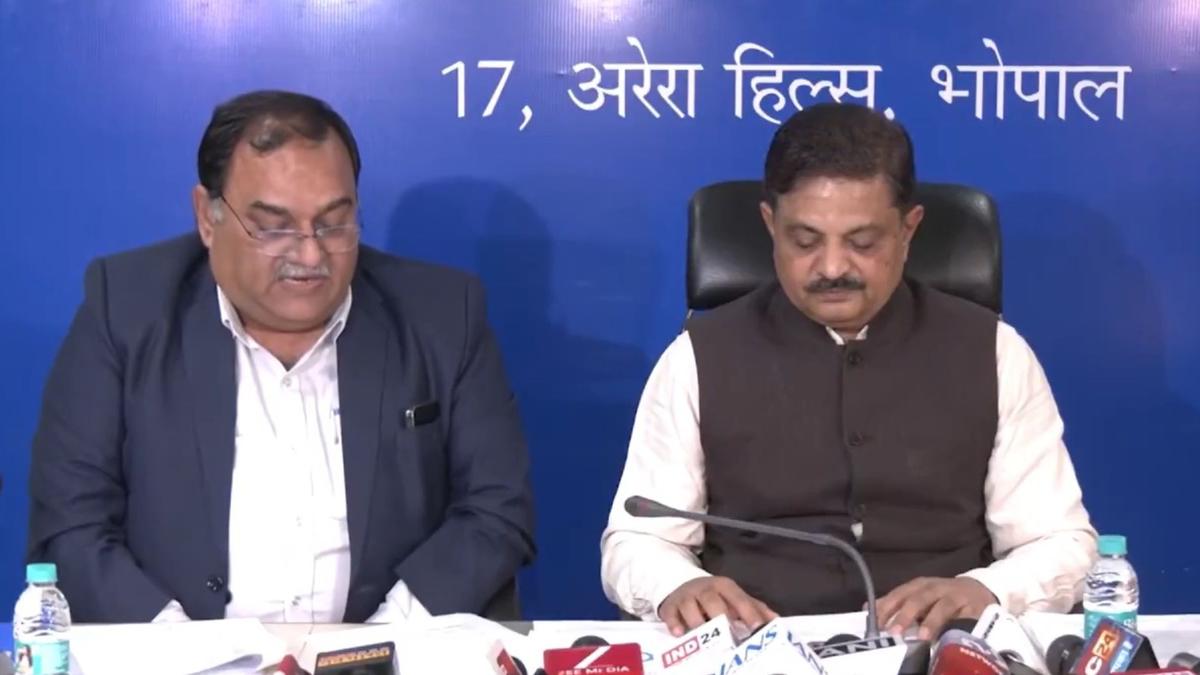
42.7 lakh voters deleted from Madhya Pradesh draft roll after SIR
The Election Commission deleted 42.74 lakh voters from Madhya Pradesh's draft electoral roll following a Systematic Information Review (SIR). This massive deletion, comprising 8.46 lakh dead, 31.51 lakh absent/migrated, and 2.77 lakh duplicate entries, highlights efforts to ensure electoral roll purity. This is crucial for maintaining the integrity of the democratic process and is relevant for understanding electoral reforms and the Election Commission's functions for competitive exams.
Revision structure
Monthly events and exam calendar context
Static GK and one-liner notes
Quiz and mock-test revision path
Key points
Exam-ready takeaways
Out of the deletions, 8.46 lakh voters were identified as deceased.
31.51 lakh deletions were due to voters being absent or having migrated from their registered constituencies.
2.77 lakh deletions were made for individuals registered as voters in more than one place (duplicate entries).
The deletions were carried out by the Election Commission of India following a Systematic Information Review (SIR) process in Madhya Pradesh.
Detailed analysis
Full exam-oriented breakdown
The recent deletion of a staggering 42.74 lakh voters from Madhya Pradesh's draft electoral roll by the Election Commission of India (ECI) following a Systematic Information Review (SIR) is a significant development underscoring the continuous efforts to maintain the purity and integrity of India's democratic process. This massive exercise, identifying 8.46 lakh deceased voters, 31.51 lakh absent/migrated voters, and 2.77 lakh duplicate entries, reflects the ECI's commitment to ensuring that electoral rolls accurately represent the eligible voting population. **Background Context and What Happened:** An accurate electoral roll is the bedrock of free and fair elections. Without it, the principle of 'one person, one vote' is compromised, leading to potential electoral fraud, manipulation, and diminished public trust. Historically, Indian elections have faced challenges related to 'bogus voters,' 'dead voters,' and duplicate entries, which could be exploited by unscrupulous elements to swing election outcomes. The ECI, mandated by the Constitution, periodically undertakes intensive revision of electoral rolls. The Systematic Information Review (SIR) is one such comprehensive process, leveraging technology and field verification to identify discrepancies. In Madhya Pradesh, ahead of upcoming elections, this review meticulously cross-referenced data, conducted door-to-door surveys, and processed objections and claims to clean up the draft roll. The sheer volume of deletions — over 4.2 million — highlights the scale of inaccuracies that had accumulated and the rigorousness of the ECI's recent drive. **Key Stakeholders Involved:** The primary stakeholder is the **Election Commission of India (ECI)**, an autonomous constitutional body established under **Article 324** of the Constitution. Its core responsibility is the superintendence, direction, and control of the preparation of electoral rolls for, and the conduct of, all elections to Parliament and to the Legislature of every State, and of elections to the offices of President and Vice-President. The **Chief Electoral Officer (CEO)** of Madhya Pradesh and district election officers, working under the ECI's guidance, were instrumental in executing the SIR process. **Political parties** are also crucial stakeholders, often scrutinizing electoral rolls and raising objections or suggestions, as their electoral fortunes are directly tied to the accuracy of these rolls. Finally, the **citizens/voters** are the ultimate beneficiaries and, at times, victims if legitimate voters are wrongfully deleted or if their votes are diluted by fraudulent entries. The **state government** provides administrative support and resources for the ECI's functions. **Why This Matters for India:** This exercise holds immense significance for Indian democracy. Firstly, it **upholds the integrity of elections** by preventing impersonation and multiple voting, thereby ensuring that election results truly reflect the will of the people. Secondly, it contributes to **fairness and equity**, as a clean electoral roll ensures that every legitimate vote carries its intended weight. Thirdly, it leads to **efficient resource allocation**, as printing ballot papers, deploying polling staff, and arranging security for non-existent voters is a colossal waste of public funds. From a governance perspective, accurate demographic data from electoral rolls can also aid in better policy formulation and service delivery. The deletions in Madhya Pradesh send a strong message about the ECI's proactive approach to electoral reforms and its zero-tolerance policy towards electoral malpractice. This enhances public trust in the institutions of democracy. **Historical Context and Future Implications:** Efforts to purify electoral rolls are not new. The introduction of Electors Photo Identity Cards (EPICs) in 1993 was a landmark step to prevent impersonation. Various amendments to the **Representation of the People Act, 1950**, which governs the preparation and revision of electoral rolls, and the **Representation of the People Act, 1951**, which deals with the conduct of elections, have continuously sought to strengthen the electoral process. The ECI has consistently pushed for reforms, including the linkage of Aadhaar with voter IDs, though this has faced privacy concerns and legal challenges, leading to it being made voluntary through the **Election Laws (Amendment) Act, 2021**. The future implications of such drives are manifold. We can expect more frequent and technologically advanced electoral roll purifications across states, potentially using AI and data analytics to identify anomalies. This may lead to greater transparency and accountability. However, a critical challenge remains: ensuring that legitimate voters are not inadvertently deleted and that robust grievance redressal mechanisms are in place. The ECI must balance the need for roll purity with the fundamental right to vote, ensuring that the process is inclusive and accessible, especially for marginalized and migrant populations. The success of such initiatives will further solidify India's reputation as a vibrant and mature democracy. **Related Constitutional Articles, Acts, or Policies:** * **Article 324**: Grants the ECI its powers of superintendence, direction, and control over elections. It is the bedrock of ECI's autonomy and authority. * **Representation of the People Act, 1950**: This Act provides for the preparation of electoral rolls, the qualifications of voters, and the delimitation of constituencies. * **Representation of the People Act, 1951**: This Act deals with the actual conduct of elections, administrative machinery for elections, qualifications and disqualifications for membership of Parliament and State Legislatures, corrupt practices, and election disputes. * **Electoral Registration Rules, 1960**: These rules provide the detailed procedure for the preparation and revision of electoral rolls, including the process for claims and objections. * **Election Laws (Amendment) Act, 2021**: This Act allows for the linking of Aadhaar numbers with electoral roll data on a voluntary basis and provides for multiple qualifying dates for voter registration.
How to study
Turn news into exam marks
Revise monthly events by exam family instead of reading random updates.
Pair one-liners with mock tests so mistakes become the next revision list.
Keep state job pages, calendar pages and GK packs connected in one path.