

India announced a relief package of $450 million for Sri Lanka.
GK and monthly revision
India announces $450 million relief package for Sri Lanka’s post-cyclone recovery
India has announced a substantial $450 million relief package for Sri Lanka to aid its post-cyclone recovery efforts. This move, articulated by External Affairs Minister Jaishankar, underscores India's commitment to supporting its neighbours during crises and strengthens bilateral ties. For competitive exams, this highlights India's 'Neighbourhood First' policy and disaster diplomacy, crucial for questions on international relations and current affairs.
Revision structure
Monthly events and exam calendar context
Static GK and one-liner notes
Quiz and mock-test revision path
Key points
Exam-ready takeaways
The aid is specifically designated for Sri Lanka's post-cyclone recovery efforts.
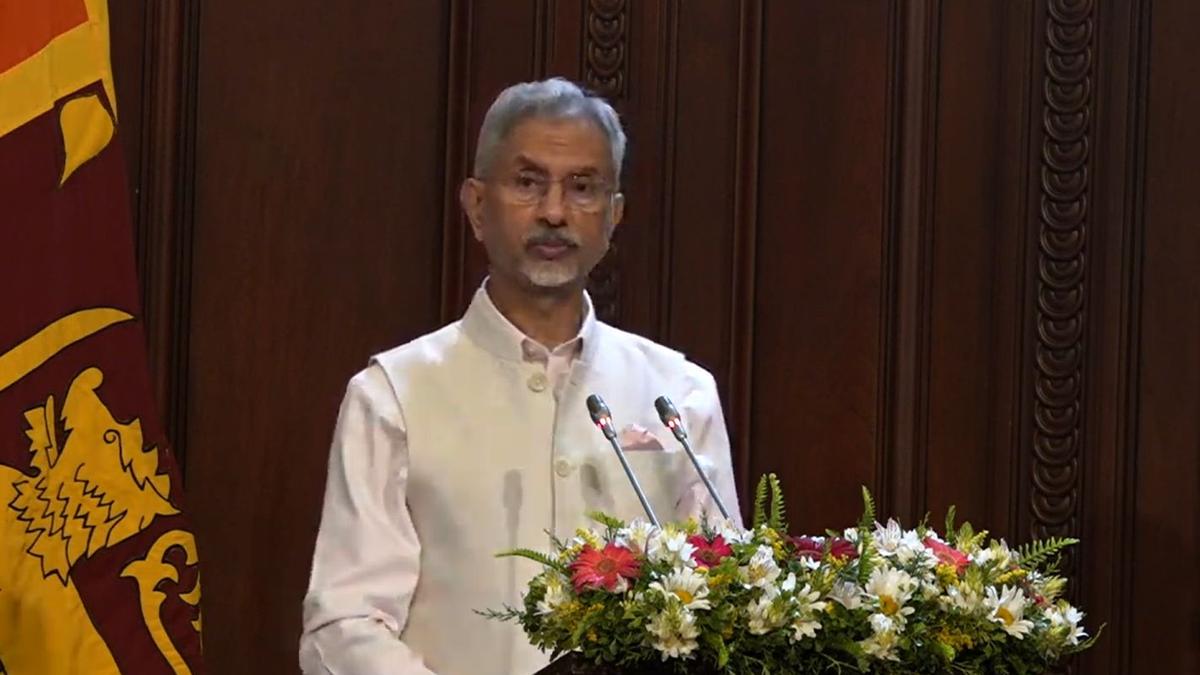
External Affairs Minister Jaishankar made the announcement, emphasizing India's support.
The initiative reflects India's 'Neighbourhood First' policy and disaster diplomacy.
This financial assistance aims to bolster Sri Lanka's resilience against natural disasters.
Detailed analysis
Full exam-oriented breakdown
India's announcement of a substantial $450 million relief package for Sri Lanka's post-cyclone recovery efforts is a significant development, underscoring the deep-rooted bilateral ties and India's proactive 'Neighbourhood First' policy. This aid, articulated by External Affairs Minister S. Jaishankar, reaffirms India's commitment to standing with its neighbours during times of crisis and reinforces its role as a reliable partner in the Indian Ocean Region. **Background Context and What Happened:** Sri Lanka, an island nation strategically located in the Indian Ocean, shares millennia-old cultural, religious, and economic ties with India. However, it has faced significant challenges in recent years, most notably the severe economic crisis of 2022, which led to shortages of essential goods, high inflation, and political instability. During that period, India emerged as a crucial first responder, providing nearly $4 billion in financial assistance, including credit lines for food, fuel, and medicines, currency swaps, and deferred import payments. This demonstrated India's unwavering support for Sri Lanka's stability and recovery. The current relief package of $450 million specifically targets post-cyclone recovery. While the specific cyclone causing this latest need for assistance isn't detailed in the immediate context, Sri Lanka is vulnerable to natural disasters, including cyclones, floods, and droughts, which frequently impact its infrastructure, agriculture, and livelihoods. This latest aid package aims to bolster Sri Lanka's resilience and help rebuild affected areas, ensuring a quicker return to normalcy for its citizens. **Key Stakeholders Involved:** * **Government of India:** Primarily through the Ministry of External Affairs and financial institutions like the EXIM Bank, India is the donor, demonstrating its foreign policy objectives and humanitarian commitment. External Affairs Minister S. Jaishankar's statement is crucial in conveying India's political will. * **Government of Sri Lanka:** As the recipient, the Sri Lankan government is responsible for the effective utilization of the funds for recovery efforts, ensuring transparency and accountability. Various Sri Lankan ministries and disaster management agencies will be involved in implementing the relief programs. * **The People of Sri Lanka:** They are the ultimate beneficiaries of this aid, whose lives and livelihoods have been disrupted by the natural calamity. The aid aims to provide essential relief, rebuild homes, restore infrastructure, and support economic activities. * **International Financial Institutions (IFIs):** While not directly involved in *this specific* bilateral package, IFIs like the IMF and World Bank often play a role in coordinating broader international aid and reform programs for countries like Sri Lanka. India's aid often complements these efforts, providing immediate relief that allows for longer-term structural reforms. **Why This Matters for India and Historical Context:** This relief package is a direct manifestation of India's 'Neighbourhood First' policy, a cornerstone of its foreign policy emphasizing benign and proactive engagement with immediate neighbours. It signifies India's role as a net security provider and a reliable development partner in the region. Historically, India has always been a key player in Sri Lankan affairs, sometimes navigating complex issues like the ethnic conflict and fishing rights. However, its consistent stance has been one of support for a stable, prosperous, and united Sri Lanka. This aid also serves India's strategic interests by fostering goodwill and strengthening its influence in the Indian Ocean Region, a critical maritime domain. In recent years, China's growing economic and strategic footprint in Sri Lanka, particularly through projects under the Belt and Road Initiative (BRI) like the Hambantota Port, has been a point of concern for India. By providing timely and substantial assistance, India seeks to balance this influence and reinforce its position as Sri Lanka's most trusted partner. A stable Sri Lanka is vital for India's own security, trade routes, and regional stability. **Future Implications and Constitutional/Policy References:** This aid package is expected to further cement bilateral relations, fostering trust and cooperation. It could pave the way for increased Indian investment in Sri Lanka's infrastructure, energy, and tourism sectors, contributing to Sri Lanka's long-term economic recovery and resilience. For India, it strengthens its credentials as a responsible regional power and enhances its soft power. It also sets a precedent for how India responds to humanitarian crises in its vicinity, reinforcing its image as a 'first responder' and 'preferred partner.' From a policy perspective, this initiative is firmly rooted in India's **'Neighbourhood First' policy**, which prioritizes friendly relations and cooperation with immediate neighbours. It also aligns with the broader objectives of **Article 51 of the Indian Constitution**, which directs the State to endeavor to (a) promote international peace and security; (b) maintain just and honourable relations between nations; (c) foster respect for international law and treaty obligations; and (d) encourage settlement of international disputes by arbitration. While not a direct constitutional mandate for aid, Article 51 broadly underpins India's foreign policy of constructive engagement and humanitarian assistance. Furthermore, India's **Disaster Management Act, 2005**, though primarily for domestic disaster response, reflects an institutional capacity and commitment to disaster mitigation that extends to international cooperation through the Ministry of External Affairs and relevant agencies. Such humanitarian gestures are also crucial for India's aspirations to play a greater role on the global stage, including at multilateral forums like the UN Security Council.
How to study
Turn news into exam marks
Revise monthly events by exam family instead of reading random updates.
Pair one-liners with mock tests so mistakes become the next revision list.
Keep state job pages, calendar pages and GK packs connected in one path.