

India is preparing to release its *first* comprehensive anti-terror policy.
GK and monthly revision
India’s first anti-terror policy to be released soon
India is set to release its first comprehensive anti-terror policy, addressing critical contemporary threats like digital radicalisation, the misuse of open borders, and foreign-funded conversion networks. This landmark policy signifies a unified national approach to counter-terrorism, crucial for enhancing internal security. For competitive exams, understanding the policy's focus areas and its 'first-of-its-kind' nature is vital for questions on national security and governance.
Revision structure
Monthly events and exam calendar context
Static GK and one-liner notes
Quiz and mock-test revision path
Key points
Exam-ready takeaways
A key issue being addressed in the upcoming policy is digital radicalisation.
The misuse of open borders is another significant concern highlighted for the policy's framework.
Foreign-funded conversion networks are also under discussion for inclusion in the new policy.
The policy represents a new, comprehensive national strategy against terrorism for India.
Detailed analysis
Full exam-oriented breakdown
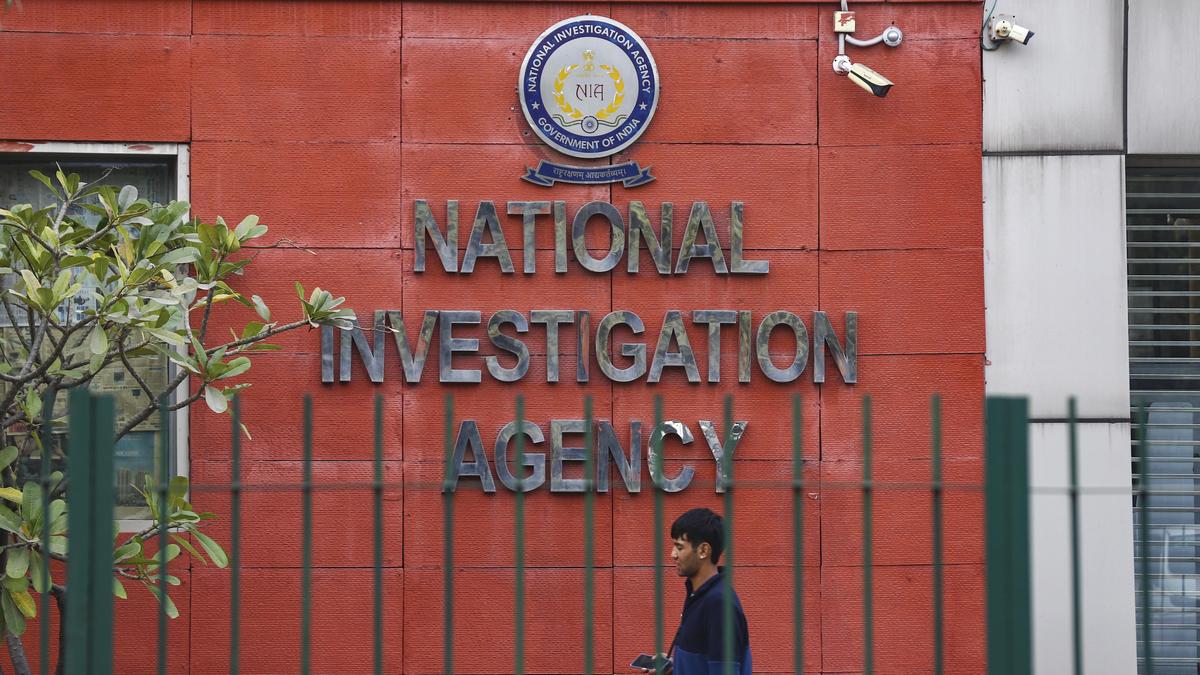
India is on the cusp of a significant shift in its national security paradigm with the impending release of its first comprehensive anti-terror policy. This move signifies a proactive and unified strategic approach to counter the multifaceted and evolving threats of terrorism that have plagued the nation for decades. Historically, India has responded to terror incidents with a combination of specific laws, intelligence operations, and reactive measures. While robust, these efforts often operated within a somewhat fragmented framework, relying on individual acts and agency mandates rather than a singular, overarching policy document. The need for a comprehensive policy stems from the changing nature of terrorist threats. The proposed policy directly addresses critical contemporary challenges such as digital radicalisation, the misuse of open borders, and foreign-funded conversion networks. Digital radicalisation, amplified through social media, encrypted messaging apps, and the dark web, presents a formidable challenge by enabling rapid indoctrination and recruitment across geographical boundaries. The misuse of India's extensive and often porous borders facilitates infiltration, drug trafficking, arms smuggling, and the movement of foreign fighters, directly impacting national security. Furthermore, foreign-funded conversion networks, often operating under the guise of religious or charitable organizations, pose a threat by fostering ideological extremism and creating internal divisions, potentially leading to radicalisation and violent extremism. Key stakeholders in the formulation and implementation of this policy include the Ministry of Home Affairs (MHA) as the nodal agency, responsible for internal security and policy formulation. Critical operational roles will be played by intelligence agencies like the Intelligence Bureau (IB) for domestic intelligence and the Research and Analysis Wing (RAW) for external intelligence. The National Investigation Agency (NIA), established in 2008 following the Mumbai terror attacks, will continue to be the primary investigative body for terror-related cases, with its pan-India jurisdiction proving crucial. State police forces, border guarding forces (like BSF, ITBP), and other central armed police forces will be vital for ground-level implementation and border management. The Ministry of External Affairs will also play a role in coordinating international counter-terrorism efforts and intelligence sharing. This policy holds immense significance for India. From a national security perspective, it aims to create a cohesive framework for intelligence gathering, investigation, prosecution, and prevention, thereby enhancing overall preparedness. Economically, a stable and secure environment is crucial for attracting foreign investment and sustaining economic growth; terror threats deter both. Socially, addressing radicalisation and foreign-funded networks can prevent communal disharmony and strengthen the secular fabric of the nation. Politically, a clear policy demonstrates India's resolve to combat terrorism, both domestically and on the international stage, aligning with global efforts against terror financing (e.g., FATF guidelines) and UN counter-terrorism resolutions. India's constitutional framework, particularly the Seventh Schedule, delineates powers between the Union and States. 'Public Order' and 'Police' fall under the State List (List II), while 'Defence' and 'Foreign Affairs' are Union subjects (List I). This division often necessitates careful coordination in counter-terrorism efforts. Existing legal instruments like the Unlawful Activities (Prevention) Act, 1967 (UAPA), which has been significantly amended over the years (notably in 2004, 2008, 2012, 2019) to strengthen its provisions against terrorist acts and organisations, and the National Investigation Agency Act, 2008, form the backbone of India's legal fight against terrorism. The Prevention of Money Laundering Act (PMLA), 2002, is also crucial in choking terror financing. The new policy must navigate the delicate balance between national security imperatives and fundamental rights guaranteed by the Constitution, such as Article 21 (Right to Life and Personal Liberty) and Article 19 (Freedom of Speech and Expression), ensuring due process and human rights are upheld. Historically, India has faced diverse forms of terrorism, from the cross-border militancy in Jammu & Kashmir since the late 1980s to left-wing extremism (Naxalism) and insurgencies in the Northeast. Major incidents like the 2001 Parliament attack, the 2006 Mumbai train bombings, and the devastating 2008 Mumbai attacks underscored the need for a more robust and unified response. The proposed policy is a logical evolution, moving beyond reactive measures to a proactive, preventive, and comprehensive strategy that integrates intelligence, law enforcement, border security, and social interventions. The future implications are profound. This policy is expected to streamline inter-agency coordination, improve intelligence sharing mechanisms, and potentially lead to the allocation of more dedicated resources for counter-terrorism. It may also emphasize preventive measures such as de-radicalisation programs, community engagement, and strategic communication to counter extremist narratives. The policy is likely to leverage technological advancements, including AI and data analytics, for threat assessment and surveillance. Challenges will include effective implementation across diverse states, ensuring uniform application of laws, and continuously adapting to the ever-evolving tactics of terrorist groups. Internationally, it will strengthen India's position as a committed partner in the global fight against terrorism, fostering greater cooperation with other nations on intelligence sharing and capacity building.
How to study
Turn news into exam marks
Revise monthly events by exam family instead of reading random updates.
Pair one-liners with mock tests so mistakes become the next revision list.
Keep state job pages, calendar pages and GK packs connected in one path.