

The PM MITRA Textile Park is scheduled for early execution in Kalaburagi, Karnataka.
GK and monthly revision
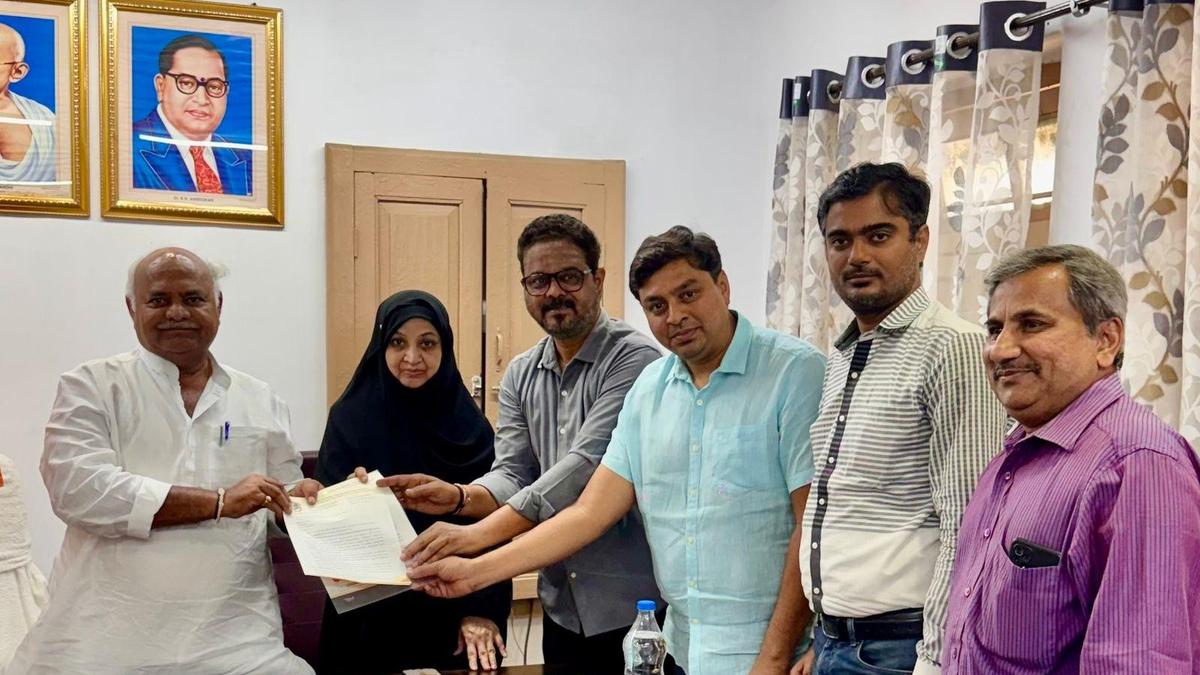
Karnataka Minister promises early execution of PM MITRA Textile Park in Kalaburagi
Karnataka Minister Shivanand Patil has assured early execution of the PM MITRA Textile Park in Kalaburagi. Tenders have been issued for crucial infrastructure, including KPTCL work, road development, and a water barrage. This initiative is vital for boosting the textile sector, creating employment, and fostering regional economic development, making it significant for competitive exams focusing on government schemes and infrastructure projects.
Revision structure
Monthly events and exam calendar context
Static GK and one-liner notes
Quiz and mock-test revision path
Key points
Exam-ready takeaways
Karnataka Minister Shivanand Patil provided assurances regarding the project's timely completion.
Tenders have been issued for essential infrastructure, including KPTCL (Karnataka Power Transmission Corporation Limited) work.
Road development is a key infrastructure component for which tenders have also been issued.
Construction of a water barrage is part of the tendered essential infrastructure for the park.
Detailed analysis
Full exam-oriented breakdown
The announcement by Karnataka Minister Shivanand Patil regarding the early execution of the PM MITRA Textile Park in Kalaburagi is a significant development, underscoring India's strategic push to revitalize its textile sector. This initiative, part of the larger 'PM Mega Integrated Textile Region and Apparel' (PM MITRA) scheme, aims to create world-class industrial infrastructure that can attract large-scale investment and boost employment. The genesis of the PM MITRA scheme lies in the recognition of India's immense potential in the textile and apparel sector, coupled with existing challenges. India is one of the largest producers of textiles and apparel globally, boasting a complete value chain from raw material to finished products. However, the sector has historically faced issues such as fragmentation, lack of scale, high logistics costs, and inadequate infrastructure, which hinder its global competitiveness. To address these challenges and to realize the Prime Minister's '5F' vision – Farm to Fibre to Factory to Fashion to Foreign – the Union Government introduced the PM MITRA scheme. This vision emphasizes an integrated approach, connecting the agricultural base to the final export market, thereby creating a seamless and efficient textile ecosystem. Under the PM MITRA scheme, seven Mega Textile Parks are being established across the country. These parks are designed to be comprehensive ecosystems, offering common infrastructure facilities, plug-and-play services, and a conducive environment for textile manufacturing. The Union Government provides financial support for the development of common infrastructure up to Rs 500 crore per park, along with a 'Competitive Incentive Support' of Rs 300 crore per park to incentivize manufacturing units. The state governments, in turn, provide contiguous and encumbrance-free land parcels of at least 1000 acres, ensuring essential utilities and regulatory support. Kalaburagi, located in the Kalyana Karnataka region, is one of the chosen sites for these mega parks. The region has been historically significant but has also faced developmental challenges. The Minister's assurance regarding the issuance of tenders for critical infrastructure such as KPTCL (Karnataka Power Transmission Corporation Limited) work, road development, and the construction of a water barrage highlights the foundational steps being taken. KPTCL work ensures a reliable power supply, a prerequisite for any industrial park. Robust road development is crucial for efficient logistics and connectivity, reducing transportation costs and time. The water barrage is particularly vital for the textile industry, which is water-intensive, ensuring a sustainable and consistent water supply for manufacturing processes. Key stakeholders in this project include the Central Government (Ministry of Textiles), which conceptualized and provides financial backing for the scheme; the Karnataka State Government, responsible for land acquisition, state-specific incentives, and implementation; local administrative bodies; private investors who will set up manufacturing units within the park; and the local communities, including farmers and workers, who stand to benefit from employment opportunities and economic upliftment. The involvement of KPTCL and other infrastructure development agencies is also critical for project execution. This initiative holds immense significance for India. Economically, it is poised to boost manufacturing, enhance the 'Make in India' and 'Atmanirbhar Bharat' initiatives, and contribute significantly to the nation's GDP. The textile sector is a major employer, second only to agriculture, and these parks are expected to create direct and indirect employment for lakhs of people, including women, thereby fostering inclusive growth. For regions like Kalaburagi, it promises regional development, reducing disparities and creating new economic hubs. By providing integrated infrastructure, PM MITRA parks aim to make India's textile products more competitive on the global stage, attracting Foreign Direct Investment (FDI) and increasing exports, thereby strengthening India's position as a global textile manufacturing and exporting hub. From a constitutional perspective, the PM MITRA scheme underscores the principles of cooperative federalism, as both the Union and State governments collaborate for economic development. The allocation of responsibilities aligns with the Seventh Schedule of the Indian Constitution, where 'Industries' (Entry 24 in the State List, but concurrent powers exist for regulation under Entry 52 of Union List) and 'Trade and Commerce' (Entries 26 and 27 in State List, with Union having powers under Entry 41 of Union List) are subjects where both levels of government have roles. Furthermore, the scheme resonates with the Directive Principles of State Policy (DPSP), particularly Article 38 (promoting welfare of the people by securing a social order based on justice), Article 39 (securing the right to an adequate means of livelihood), and Article 43 (securing a living wage and decent standard of life). The focus on infrastructure like water barrages also touches upon environmental governance and sustainable resource management, often guided by environmental protection acts. The future implications are far-reaching. Successful implementation of PM MITRA parks could transform India's textile value chain, encouraging advanced manufacturing techniques, promoting sustainability, and integrating circular economy principles. It could lead to a significant increase in textile exports, reduce reliance on imported components, and position India as a leader in sustainable and ethical textile production. The Kalaburagi park is a crucial step in this journey, promising a brighter economic future for the region and contributing to India's broader developmental aspirations.
How to study
Turn news into exam marks
Revise monthly events by exam family instead of reading random updates.
Pair one-liners with mock tests so mistakes become the next revision list.
Keep state job pages, calendar pages and GK packs connected in one path.