

Billionaire investor Ray Dalio stated he consistently holds 8-10% of his wealth in gold.
GK and monthly revision
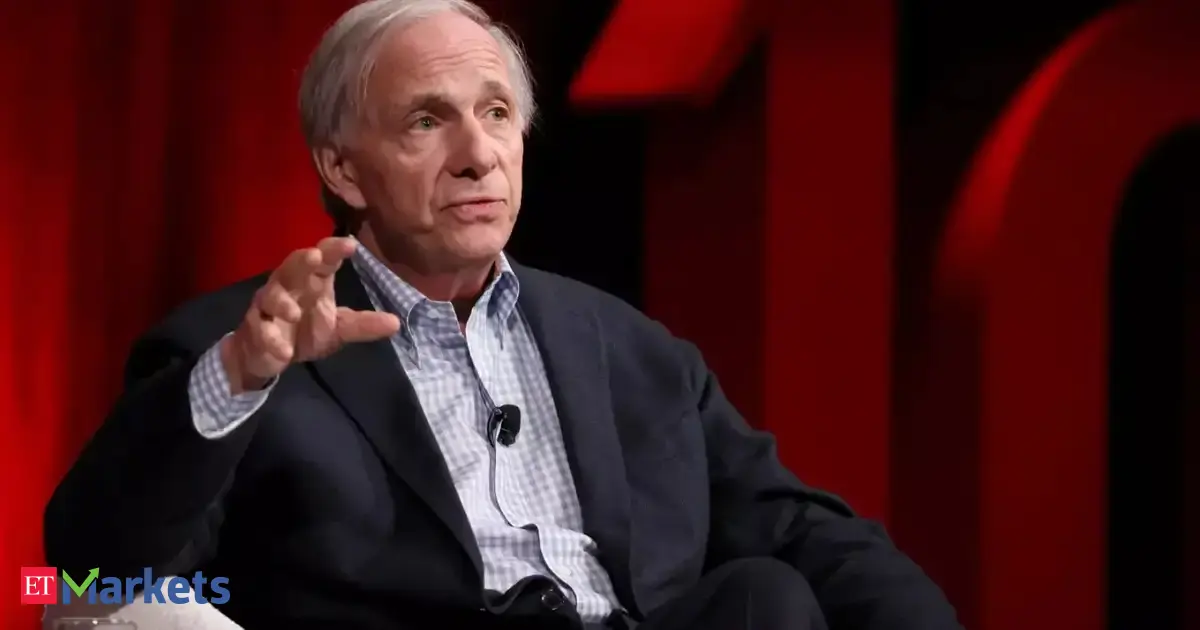
Ray Dalio explains why he always holds up to 10% of his wealth in gold on Nikhil Kamath’s podcast
Billionaire investor Ray Dalio revealed on Nikhil Kamath's podcast that he consistently allocates 8-10% of his wealth to gold. He advocates for gold as the premier hedge against a debt-driven global economy and an "anti-dollar asset," highlighting risks in fiat currency systems. This insight is crucial for competitive exams to understand global economic trends, investment strategies, and the role of gold in financial stability, alongside expert views on India's economic prospects.
Revision structure
Monthly events and exam calendar context
Static GK and one-liner notes
Quiz and mock-test revision path
Key points
Exam-ready takeaways
Dalio shared this investment strategy on a podcast hosted by Nikhil Kamath.
He described gold as the "best hedge" against a debt-driven global economy.
Dalio referred to gold as an "anti-dollar asset" and warned about risks in fiat systems.
He also identified India as a "standout long-term growth story" among global economies.
Detailed analysis
Full exam-oriented breakdown
Billionaire investor Ray Dalio's recent comments on Nikhil Kamath's podcast, advocating for a significant allocation to gold and highlighting India's long-term growth potential, offer crucial insights into global economic trends and investment philosophy. This analysis delves into the background, implications, and relevance for competitive exam aspirants. **Background Context: The Global Economic Crucible** To understand Dalio's perspective, one must grasp the current global economic landscape. Since the abandonment of the Bretton Woods system in 1971, which linked the US dollar to gold, most global currencies have become 'fiat money' – their value derived from government decree rather than a physical commodity. This system has allowed central banks to print money and governments to incur significant debt, often through quantitative easing policies, especially after financial crises like 2008. The result is a 'debt-driven global economy' where the sheer volume of money in circulation and mounting sovereign debts raise concerns about inflation, currency devaluation, and the long-term stability of financial systems. It's in this context that traditional safe havens like gold regain prominence. **Dalio's Thesis: Gold as the Ultimate Hedge** Ray Dalio, founder of Bridgewater Associates, the world's largest hedge fund, is renowned for his macro-economic analysis. His consistent holding of 8-10% of his wealth in gold stems from his belief that it serves as the "best hedge" against the risks inherent in a debt-laden fiat currency system. He views gold as an "anti-dollar asset" because its value often moves inversely to the US dollar, especially when the dollar's purchasing power is eroded by inflation or excessive money printing. When confidence in fiat currencies wanes, investors often flock to gold, driving its price up. This strategy is not about speculating on gold's price but rather using it as a portfolio diversifier and a store of value during economic uncertainty. **Key Stakeholders and Their Roles** Several stakeholders are central to this discussion: * **Ray Dalio**: As an influential global investor, his pronouncements carry significant weight, often influencing market sentiment and investment strategies worldwide. * **Nikhil Kamath**: An Indian entrepreneur and podcast host, he provides a platform that connects global financial thought leaders with an Indian audience, fostering financial literacy and insights. * **Central Banks (e.g., RBI, Federal Reserve)**: They are custodians of national wealth, managing foreign exchange reserves that include substantial gold holdings. Their monetary policies directly impact currency values and inflation, thereby influencing gold's attractiveness. * **Governments**: Their fiscal policies, debt management, and trade regulations (e.g., gold import duties) play a crucial role in shaping the economic environment and gold market dynamics. * **Investors (Institutional and Retail)**: These are the direct beneficiaries or affected parties, as Dalio's advice informs their portfolio allocation decisions. **Significance for India: A Golden Opportunity?** Dalio's commendation of India as a "standout long-term growth story" is highly significant. India, with its young demographic, growing middle class, and ongoing economic reforms, presents a compelling narrative for sustained growth. However, India is also one of the world's largest gold consumers, with gold deeply embedded in its cultural and financial fabric as a traditional store of wealth. This reliance on gold often leads to substantial imports, impacting the current account deficit. Dalio's view might validate the Reserve Bank of India's (RBI) strategy of increasing its gold reserves, which stood at 822.10 tonnes as of December 2023, positioning it among the top global holders. A strong domestic economy combined with prudent reserve management, including gold, can bolster India's financial stability and resilience against global economic shocks. Policies like the Gold Monetization Scheme (GMS), launched in 2015, aim to mobilize idle household gold and reduce import dependence, aligning with the broader goal of economic stability. **Historical Echoes and Future Implications** The debate around gold versus fiat currency is not new. Historically, the Gold Standard provided a stable, albeit rigid, monetary system. The current fiat system, while offering flexibility, carries the risk of inflation and currency debasement. Dalio's 'anti-dollar' stance resonates with a growing global trend towards de-dollarization, where several countries and central banks are exploring diversification of their foreign exchange reserves away from the US dollar. For India, this means navigating a complex global financial architecture. A stronger domestic economy, coupled with a diversified reserve portfolio, including gold, can enhance India's economic sovereignty and reduce its vulnerability to external currency fluctuations. Future implications include a potential shift in global reserve currency dynamics, continued volatility in fiat currencies, and a sustained role for gold as a hedge, especially for emerging economies like India aiming for greater financial autonomy and stability. **Relevant Constitutional & Policy Frameworks** While Dalio's statements are investment advice, they touch upon areas governed by Indian laws and policies: * **Reserve Bank of India Act, 1934**: This Act establishes the RBI as the central bank, empowering it to regulate currency, maintain price stability, and manage the country's foreign exchange reserves, including gold. Sections related to the Issue Department (e.g., Section 33) detail the assets, including gold, that back the currency in circulation. * **Foreign Exchange Management Act (FEMA), 1999**: This act regulates foreign exchange transactions in India, including the import and export of gold. Policies under FEMA directly impact the availability and pricing of gold in the domestic market and influence India's trade balance. * **Directive Principles of State Policy (DPSP)**: While not directly about gold, Articles such as **Article 38** (State to secure a social order for the promotion of welfare of the people) and **Article 39** (certain principles of policy to be followed by the State) guide the government in formulating economic policies that ensure financial stability and equitable growth, which prudent reserve management and a stable currency contribute to. * **Government Policies**: Schemes like the Gold Monetization Scheme (2015) are specific policy interventions aimed at leveraging India's substantial private gold holdings for economic benefit, demonstrating the government's active role in managing gold's economic impact.
How to study
Turn news into exam marks
Revise monthly events by exam family instead of reading random updates.
Pair one-liners with mock tests so mistakes become the next revision list.
Keep state job pages, calendar pages and GK packs connected in one path.