

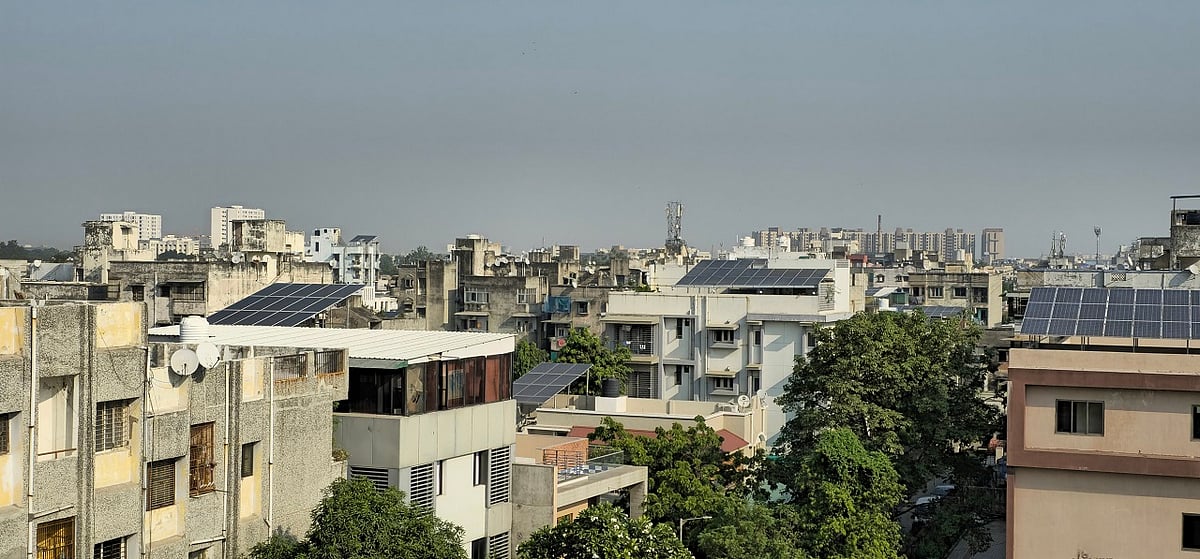
India is confronting a 'generation blind spot' in its rapidly expanding rooftop solar sector.
GK and monthly revision
As rooftop solar scales up, India confronts a generation blind spot
India is experiencing a significant data gap concerning rooftop solar energy generation, despite the rapid scaling up of installations. There is currently no comprehensive data on the actual electricity produced by these systems. This 'generation blind spot' is critical as it hinders effective policy interventions and strategic planning for the country's renewable energy goals, necessitating new policy frameworks to address the issue.
Revision structure
Monthly events and exam calendar context
Static GK and one-liner notes
Quiz and mock-test revision path
Key points
Exam-ready takeaways
A key issue is the absence of comprehensive data regarding the actual electricity generated by rooftop solar systems.
The lack of generation data exists despite the ongoing scaling up of rooftop solar installations across the country.
Addressing this data deficiency will require additional policy interventions beyond the current regulatory framework.
This data gap impedes effective policy-making and strategic planning for India's renewable energy targets.
Detailed analysis
Full exam-oriented breakdown
India, a rapidly developing nation, has set ambitious targets for renewable energy, aiming for 500 GW of non-fossil fuel energy capacity by 2030. A significant component of this strategy is solar power, particularly rooftop solar installations, which empower individual consumers to become 'prosumers' – both producers and consumers of electricity. However, despite the rapid scaling up of rooftop solar capacity, India is now confronting a critical 'generation blind spot': the absence of comprehensive and reliable data on the actual electricity generated by these distributed systems. This data deficiency poses a substantial challenge to effective policy-making, grid management, and the accurate assessment of the country's progress towards its renewable energy goals. The genesis of India's solar push lies in the Jawaharlal Nehru National Solar Mission (JNNSM), launched in 2010, which aimed to establish India as a global leader in solar energy. Initially, the focus was on large-scale solar parks and utility-scale projects, which inherently have robust monitoring and data collection mechanisms. As the cost of solar technology declined, the emphasis shifted towards decentralized rooftop solar, with the government setting a target of 40 GW of rooftop solar capacity by 2022 (later extended and refined). Schemes like the recent PM-Surya Ghar Muft Bijli Yojana, launched in February 2024, aim to provide free electricity to 1 crore households by installing rooftop solar, indicating a strong policy push for widespread adoption. While installation numbers are tracked, the actual operational output from these myriad small-scale systems remains largely unmeasured, creating the 'generation blind spot'. This lack of granular data means policymakers cannot accurately gauge the true contribution of rooftop solar to the national grid, nor can they effectively plan for its integration and manage potential challenges like grid stability. Several key stakeholders are involved in this complex issue. The **Ministry of New and Renewable Energy (MNRE)** is the primary central agency responsible for policy formulation, target setting, and scheme implementation. **State Nodal Agencies (SNAs)** and **State Electricity Regulatory Commissions (SERCs)** play a crucial role in implementing central schemes and formulating state-specific regulations, including net-metering policies. The **Distribution Companies (DISCOMs)** are perhaps the most critical link, as they are responsible for integrating rooftop solar into the grid, managing billing (especially net metering), and maintaining grid stability. Consumers, who invest in these systems, and solar developers/installers also form significant stakeholders. The **Central Electricity Authority (CEA)** provides technical guidelines and data, but its focus has traditionally been on larger generation assets. The absence of a standardized, pan-India monitoring framework, coupled with varying state-level regulations and the sheer distributed nature of rooftop solar, makes comprehensive data collection a significant hurdle. This 'generation blind spot' has profound implications for India. Firstly, it hampers accurate **energy planning and forecasting**. Without knowing how much electricity is actually being generated, DISCOMs struggle to predict demand and supply, leading to potential grid instability and inefficient resource allocation. Secondly, it affects the **assessment of policy effectiveness**. Schemes with substantial subsidies might not be yielding the expected generation, leading to suboptimal public expenditure. Thirdly, it impedes India's ability to accurately report its progress towards its **international climate commitments**, such as the Intended Nationally Determined Contributions (INDCs) under the Paris Agreement, which rely on verifiable data. Economically, it can lead to inefficient investment decisions and makes it harder to attract further investment in the sector if the true performance cannot be demonstrated. Socially, it impacts consumer confidence if the benefits or performance of their systems cannot be reliably measured. From a legal and constitutional perspective, **electricity** falls under the Concurrent List (Entry 38) of the Seventh Schedule of the Constitution, allowing both the Central and State governments to legislate on it. This dual jurisdiction often results in varied state-level policies, which contributes to the lack of uniformity in data collection and monitoring. The **Electricity Act, 2003**, provides the overarching framework for the power sector, establishing regulatory commissions (CERC and SERCs) and mandating Renewable Purchase Obligations (RPOs) for DISCOMs. While the Act empowers regulators, specific provisions for detailed, real-time generation data collection from distributed sources are not explicitly robust, necessitating additional policy interventions. The future implications are clear: India needs to move beyond simply tracking installed capacity to accurately measuring actual generation. This will require **additional policy interventions** beyond the current framework. Implementing **smart metering** for all rooftop solar installations, developing **centralized data aggregation platforms** at both state and national levels, and standardizing **monitoring protocols** are crucial steps. Incentivizing DISCOMs to actively participate in data collection and integration, perhaps through performance-linked incentives, is also vital. Leveraging technologies like IoT and AI for data analytics can provide valuable insights into system performance, predictive maintenance, and grid balancing. Addressing this generation blind spot is not just about data; it's about ensuring India's energy security, optimizing its renewable energy transition, and making its ambitious climate goals a tangible reality through informed and data-driven policymaking.
How to study
Turn news into exam marks
Revise monthly events by exam family instead of reading random updates.
Pair one-liners with mock tests so mistakes become the next revision list.
Keep state job pages, calendar pages and GK packs connected in one path.