

Mustard cultivation nationwide has increased by 4 percent.
GK and monthly revision
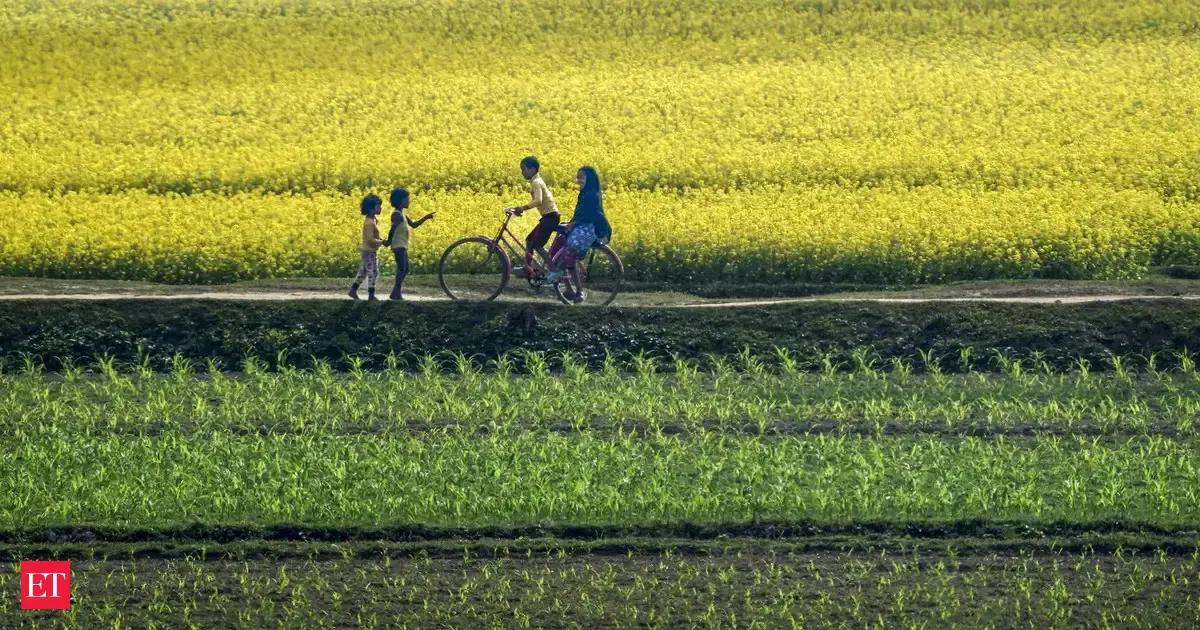
Mustard acreage rises 4% to 84.67 lakh hectares as crop condition remains normal
Mustard cultivation in India has seen a 4% increase, reaching 84.67 lakh hectares, driven by expansion in key states like Rajasthan and Uttar Pradesh. This rise in acreage, coupled with favorable weather and low pest levels, indicates a healthy crop outlook. For competitive exams, this highlights trends in agricultural production, crop diversification, and regional contributions to India's oilseed economy, essential for questions on agriculture and economy.
Revision structure
Monthly events and exam calendar context
Static GK and one-liner notes
Quiz and mock-test revision path
Key points
Exam-ready takeaways
The total mustard acreage has reached 84.67 lakh hectares.
Major states showing expansion include Rajasthan, Uttar Pradesh, Madhya Pradesh, Haryana, and West Bengal.
Overall crop conditions for mustard are reported as generally normal, with recovery evident from early season rain issues.
Favorable weather, adequate soil moisture, and low pest levels are supporting the current growth of mustard crops.
Detailed analysis
Full exam-oriented breakdown
India's agricultural landscape is constantly evolving, and the recent 4% increase in mustard cultivation, reaching 84.67 lakh hectares, is a significant development with far-reaching implications. This rise, primarily driven by major states like Rajasthan, Uttar Pradesh, Madhya Pradesh, Haryana, and West Bengal, underscores a renewed focus on oilseed production, crucial for India's food security and economic stability. The generally normal crop conditions, aided by favorable weather and low pest levels, further paint a positive picture for the upcoming harvest. **Background Context: The Edible Oil Conundrum** India is one of the world's largest consumers of edible oils, yet it remains heavily reliant on imports, fulfilling nearly 60-70% of its domestic demand through foreign sources. This import dependency costs the nation significant foreign exchange, making it a critical area for policy intervention. The 'Yellow Revolution' of the late 1980s aimed to make India self-sufficient in oilseeds, leading to a substantial boost in production for a period. However, subsequent policy shifts, market dynamics, and a focus on cereal crops led to a decline in oilseed acreage and production, widening the import gap. The recent surge in global edible oil prices has further highlighted the urgency of enhancing domestic production, prompting both farmers and the government to prioritize oilseed cultivation, including mustard. **What Happened and Why it Matters** The 4% increase in mustard acreage is not merely a statistical figure; it represents a collective effort and favorable conditions. Farmers, incentivized by potentially better returns and government support, have expanded their cultivation. Favorable weather patterns, including adequate soil moisture, have provided optimal growing conditions, while low pest levels have minimized potential crop damage. Even early season rain issues, which could have been detrimental, saw recovery, demonstrating the resilience of the crop and farming practices. This expansion in key agricultural states signifies a broad-based commitment to boosting mustard output, a vital rabi crop. **Key Stakeholders and Their Roles** Several stakeholders are intrinsically linked to this development. **Farmers** are at the forefront, making cultivation decisions based on market signals, weather forecasts, and government policies. The **Government of India**, particularly the Ministry of Agriculture & Farmers Welfare, plays a crucial role through various schemes and Minimum Support Price (MSP) policies to ensure remunerative prices for farmers. Agencies like the National Agricultural Cooperative Marketing Federation of India Ltd. (NAFED) are involved in procurement. The **oil processing industry** benefits directly from increased domestic availability of raw materials, reducing their reliance on imported crude oils. **Consumers** stand to gain from more stable prices and a secure supply of edible oils. Finally, **agricultural scientists and research institutions** like the Indian Council of Agricultural Research (ICAR) continuously work on developing high-yielding, disease-resistant varieties, crucial for sustained growth. **Significance for India: Economic, Food Security, and Farmer Welfare** This increase in mustard cultivation holds immense significance for India. Economically, it contributes to reducing the country's colossal edible oil import bill, thereby saving precious foreign exchange. It also injects vitality into the rural economy by providing income to farmers and employment in related sectors. From a food security perspective, greater domestic production of edible oils enhances self-reliance and reduces vulnerability to global supply chain disruptions and price volatility. For farmers, mustard is often a profitable crop, especially with a supportive MSP, contributing to their income stability and encouraging crop diversification away from water-intensive crops in some regions. **Constitutional and Policy Framework** Agriculture in India is primarily a **State Subject**, as per **Entry 14 of List II (State List)** in the **Seventh Schedule** of the Constitution. This means state governments have significant legislative and executive powers over agricultural policies, extension services, and land reforms. The Central government, however, plays a crucial coordinating and supportive role through national schemes and policy formulations. The **Minimum Support Price (MSP)** for mustard, recommended by the Commission for Agricultural Costs and Prices (CACP) and approved by the Cabinet Committee on Economic Affairs (CCEA), is a critical policy instrument that provides price assurance to farmers. Schemes like the **National Food Security Mission (NFSM) – Oilseeds** and **Pradhan Mantri Annadata Aay Sanrakshan Abhiyan (PM-AASHA)** are central to the government's strategy to boost oilseed production and ensure remunerative prices. These policies collectively aim to create an ecosystem conducive to increased oilseed output. **Future Implications** The positive trend in mustard cultivation offers a promising outlook. It signals a potential shift towards greater self-reliance in edible oils, provided this momentum is sustained. Future efforts will likely focus on enhancing productivity per hectare through better seeds, improved farming practices, and efficient irrigation. However, challenges such as climate change, with its unpredictable weather patterns, and market price fluctuations, will remain critical factors influencing future acreage. Continued investment in research and development, along with robust procurement and marketing infrastructure, will be essential to ensure long-term stability and growth in India's oilseed sector, moving closer to the ambitious goal of 'Atmanirbhar Bharat' (self-reliant India) in edible oils.
How to study
Turn news into exam marks
Revise monthly events by exam family instead of reading random updates.
Pair one-liners with mock tests so mistakes become the next revision list.
Keep state job pages, calendar pages and GK packs connected in one path.