

China rejected U.S. claims regarding its defense policy and India ties.
GK and monthly revision
China rejects U.S. claims on India ties, says border issue is bilateral
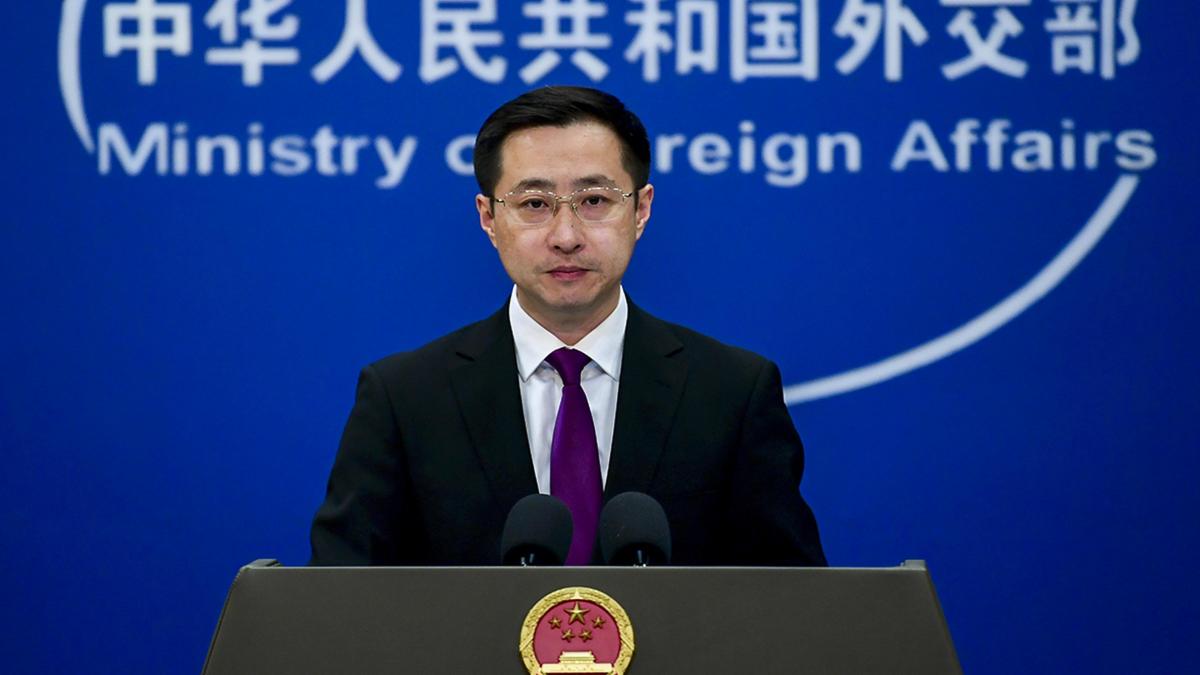
China has rejected U.S. claims concerning its defense policy and ties with India, asserting that the border issue between India and China is purely bilateral. Beijing accused Washington of distorting its defense posture to hinder improved China-India relations. This development is significant for competitive exams as it highlights the complex geopolitical dynamics involving India, China, and the U.S., particularly in the context of Indo-Pacific strategy and bilateral relations.
Revision structure
Monthly events and exam calendar context
Static GK and one-liner notes
Quiz and mock-test revision path
Key points
Exam-ready takeaways
China asserted that the India-China border issue is a bilateral matter, to be resolved between the two nations.
Beijing accused the United States of distorting its defense policy.
China stated that the U.S. aim is to prevent an improvement in China-India relations.
The incident underscores ongoing geopolitical competition and strategic interests involving India, China, and the U.S.
Detailed analysis
Full exam-oriented breakdown
The recent statement from China, rejecting U.S. claims about its defense policy and ties with India, and asserting the bilateral nature of the India-China border issue, provides a crucial lens through which to understand the complex geopolitical dynamics unfolding in the Indo-Pacific region. This incident is not an isolated event but rather a symptom of deeper strategic competition and shifting alliances that directly impact India's foreign policy and security calculus. **Background Context and Historical Underpinnings** To fully grasp this development, we must first understand the broader geopolitical chessboard. The United States and China are locked in an intense strategic rivalry, encompassing economic, technological, and military domains. The U.S. views China's growing assertiveness, particularly in the South China Sea and along the Line of Actual Control (LAC) with India, as a challenge to the rules-based international order. Consequently, Washington has actively sought to strengthen its alliances and partnerships in the Indo-Pacific, most notably through the Quadrilateral Security Dialogue (Quad) involving the U.S., India, Japan, and Australia. This grouping is often perceived by China as an attempt to contain its rise. India and China share a long, often tumultuous, history. The unresolved border dispute, stemming from the 1962 Sino-Indian War, remains a significant point of contention. Major standoffs like Doklam in 2017 and the deadly Galwan Valley clash in 2020 have underscored the fragility of peace along the LAC. These incidents have significantly deteriorated bilateral trust, pushing India to diversify its strategic partnerships and enhance its defense capabilities. Simultaneously, the U.S. has increasingly positioned itself as a strategic partner to India, offering defense technology, intelligence sharing, and diplomatic support, particularly in the context of China's aggressive posture. **What Happened and Key Stakeholders** China's recent statement is a direct response to perceived U.S. attempts to meddle in its relations with India. Beijing explicitly accused Washington of
How to study
Turn news into exam marks
Revise monthly events by exam family instead of reading random updates.
Pair one-liners with mock tests so mistakes become the next revision list.
Keep state job pages, calendar pages and GK packs connected in one path.