

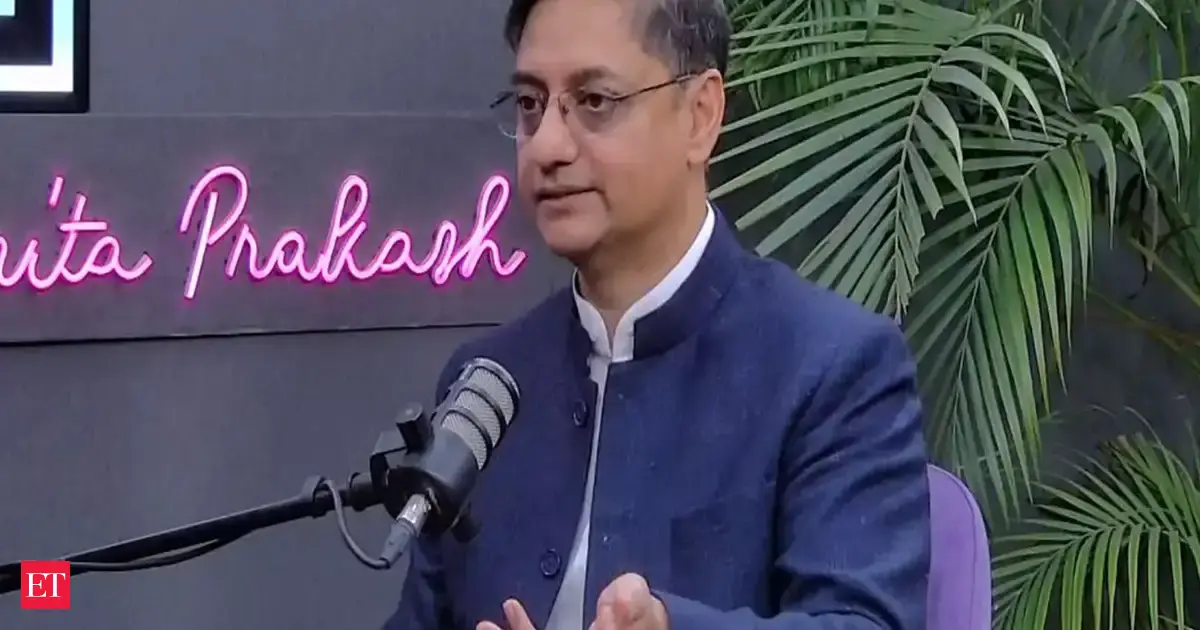
The statement was made by Sanjeev Sanyal, a member of the Economic Advisory Council to the Prime Minister (EAC-PM).
GK and monthly revision
India must allow insolvency and bankruptcy to build dynamic, risk-taking economy: PM's EAC member Sanjeev Sanyal
Sanjeev Sanyal, member of the Economic Advisory Council to the Prime Minister, emphasized that India must embrace company bankruptcies to foster a dynamic and risk-taking economy. He asserted that continuous insolvency allows new businesses to emerge and builds long-term economic strength. This perspective is crucial for understanding India's economic policy direction, especially concerning the Insolvency and Bankruptcy Code, and is highly relevant for competitive exams.
Revision structure
Monthly events and exam calendar context
Static GK and one-liner notes
Quiz and mock-test revision path
Key points
Exam-ready takeaways
Sanyal stressed the necessity for India to allow company bankruptcies to build a dynamic and risk-taking economy.
He highlighted that continuous insolvency is essential for new businesses to emerge and for long-term economic strength.
Sanyal cited the year 2017, noting that allowing large companies to fail ultimately strengthened the corporate sector.
The approach encourages greater risk-taking and innovation within the Indian economy.
Detailed analysis
Full exam-oriented breakdown
India's economic trajectory has long been influenced by its approach to business failures. For decades, a complex and often inefficient legal framework made it incredibly difficult for companies to exit the market, leading to a phenomenon known as 'zombie firms' – companies that were technically insolvent but continued to operate, tying up valuable capital and resources. This historical context forms the backdrop for the recent emphasis by Sanjeev Sanyal, a prominent member of the Economic Advisory Council to the Prime Minister (EAC-PM), on the critical need for India to embrace company bankruptcies. Sanyal's statement underscores a fundamental shift in economic philosophy: that continuous insolvency is not a sign of weakness but a vital mechanism for fostering a dynamic, risk-taking, and ultimately stronger economy. He argues that allowing inefficient or failed businesses to exit frees up capital, labor, and entrepreneurial talent, which can then be reallocated to more productive and innovative ventures. His reference to 2017 is particularly insightful, as it marks the period following the implementation of the Insolvency and Bankruptcy Code (IBC) in 2016, when several large, debt-ridden companies were pushed into insolvency proceedings. This process, though initially painful, ultimately contributed to strengthening the corporate sector by cleaning up balance sheets and instilling greater financial discipline. Key stakeholders in this ecosystem include the Government of India, which formulated and implemented the IBC; the Reserve Bank of India (RBI), deeply concerned with financial stability and the resolution of Non-Performing Assets (NPAs); the Insolvency and Bankruptcy Board of India (IBBI), the regulator overseeing the insolvency process; creditors, primarily banks and financial institutions seeking to recover their dues; and the debtor companies themselves, navigating resolution or liquidation. Crucially, the National Company Law Tribunal (NCLT) and the National Company Law Appellate Tribunal (NCLAT) serve as the adjudicating authorities, playing a pivotal role in the timely and fair resolution of cases. Insolvency Professionals (IPs) also form a critical component, facilitating the resolution process. Historically, India struggled with a fragmented and ineffective insolvency regime. Prior to the IBC, laws like the Sick Industrial Companies (Special Provisions) Act, 1985 (SICA), the Recovery of Debts Due to Banks and Financial Institutions Act, 1993 (DRT Act), and the Securitisation and Reconstruction of Financial Assets and Enforcement of Security Interest Act, 2002 (SARFAESI Act), existed. However, these laws often led to significant delays, low recovery rates, and lacked a unified, time-bound framework for resolution. This contributed to the 'twin balance sheet problem' – stressed balance sheets of banks due to NPAs and overleveraged corporate balance sheets. The IBC, 2016, was a landmark reform designed to address these systemic issues by providing a comprehensive, time-bound framework for insolvency resolution, aiming to maximize asset value, promote entrepreneurship, and balance the interests of all stakeholders. Its introduction significantly improved India's 'Ease of Doing Business' rankings, particularly in the 'resolving insolvency' parameter. This approach holds immense significance for India. Economically, it promotes efficient capital allocation, reduces the incidence of 'evergreening' of loans, and strengthens the credit culture. By providing a clear exit mechanism, it encourages risk-taking and innovation, as entrepreneurs are more willing to venture into new businesses knowing there's a predictable way out if things don't work. Politically, it demonstrates the government's commitment to structural reforms and sound economic governance. Socially, it indirectly benefits the broader economy by fostering a more competitive and productive business environment, which can lead to job creation and better goods and services. From a constitutional perspective, while the IBC itself is a legislative act passed by Parliament, its underlying principles often touch upon fundamental rights and duties. For instance, the protection of property rights (Article 300A) of creditors and debtors, and the promotion of economic justice. The IBC draws its legislative competence from entries in the Concurrent List of the Seventh Schedule of the Constitution, specifically relating to bankruptcy and insolvency. The Companies Act, 2013, and the Banking Regulation Act, 1949, are also intrinsically linked, providing the overarching legal framework for corporate entities and financial institutions involved. Looking ahead, the future implications of this philosophy are profound. A robust insolvency framework will continue to attract domestic and foreign investment by providing greater certainty and predictability for investors. It will foster a culture of accountability among corporate management and promoters. Ongoing reforms, such as those related to cross-border insolvency and personal insolvency, are expected to further strengthen the ecosystem. The continuous evolution and refinement of the IBC, addressing implementation challenges like delays and capacity constraints within NCLT, will be crucial. Ultimately, embracing bankruptcy as a natural part of the business cycle is essential for India to build a truly dynamic, resilient, and globally competitive economy.
How to study
Turn news into exam marks
Revise monthly events by exam family instead of reading random updates.
Pair one-liners with mock tests so mistakes become the next revision list.
Keep state job pages, calendar pages and GK packs connected in one path.