

Approximately 24 lakh voters were reportedly excluded from the draft voters' list in Kerala.
GK and monthly revision
Parties, public cry foul as SIR drive excludes lakhs of voters in Kerala
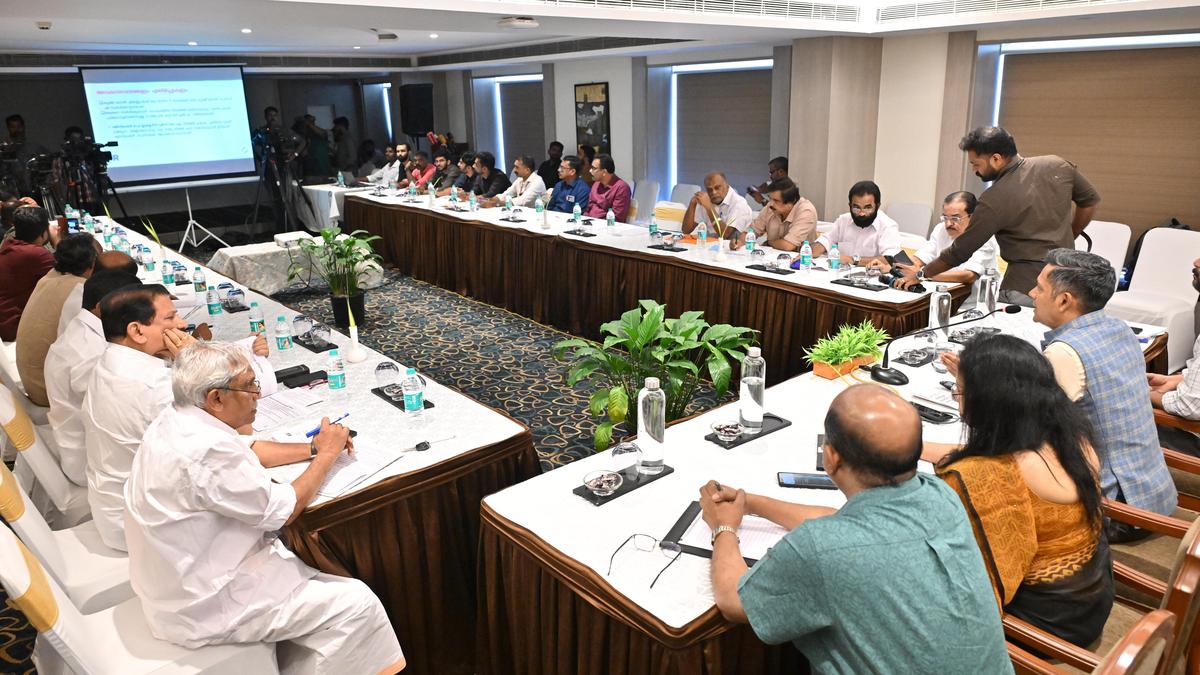
Around 24 lakh voters have reportedly been excluded from Kerala's draft voters' list following a Special Intensive Revision (SIR) of the electoral rolls. This development has sparked significant debate and concerns among political parties and the public regarding potential voter disenfranchisement. For competitive exams, this highlights the critical importance of electoral processes, voter registration mechanisms, and the challenges in ensuring inclusive democratic participation.
Revision structure
Monthly events and exam calendar context
Static GK and one-liner notes
Quiz and mock-test revision path
Key points
Exam-ready takeaways
The exclusion occurred after a process named the Special Intensive Revision (SIR) of the electoral rolls.
The controversy has led to widespread debate and concerns raised by both political parties and the public.
The revision pertains specifically to the electoral rolls of Kerala.
The issue underscores the importance of accurate and inclusive voter registration processes in a democratic setup.
Detailed analysis
Full exam-oriented breakdown
The reported exclusion of approximately 24 lakh voters from the draft electoral rolls in Kerala following a Special Intensive Revision (SIR) has ignited a significant debate, underscoring critical aspects of India's democratic process. This incident highlights the intricate balance between ensuring accurate voter lists and preventing the disenfranchisement of eligible citizens. **Background Context:** India, as the world's largest democracy, places immense importance on free, fair, and inclusive elections. The bedrock of such elections is an accurate and updated electoral roll. The Election Commission of India (ECI), a constitutional body established under Article 324, is vested with the superintendence, direction, and control of elections to Parliament, State Legislatures, and the offices of President and Vice-President. A crucial part of its mandate involves the preparation and periodic revision of electoral rolls. These revisions are necessary to account for new eligible voters (those turning 18), deceased individuals, changes in residence, and other demographic shifts. Such revisions are typically carried out annually, with special revisions often undertaken before major elections to ensure maximum accuracy. **What Happened:** In Kerala, a Special Intensive Revision (SIR) of the electoral rolls was conducted. The purpose of an SIR is generally to meticulously scrutinize the existing voter list, remove duplicate entries, names of deceased voters, and those who have shifted residence, while simultaneously adding new eligible voters. However, post-SIR, it was reported that around 24 lakh voters were excluded from the draft voters' list. This substantial number has sparked alarm among political parties and the public, who fear that a large segment of the electorate might have been inadvertently or erroneously removed, potentially affecting their right to vote in future elections. **Key Stakeholders Involved:** 1. **Election Commission of India (ECI):** As the primary custodian of electoral processes, the ECI is responsible for conducting the SIR and ensuring its fairness and accuracy. Their credibility is at stake in ensuring that all eligible voters are included and that the revision process is transparent and robust. 2. **Political Parties:** Parties across the political spectrum in Kerala have raised concerns, alleging potential disenfranchisement and questioning the methodology or implementation of the SIR. Their interest lies in ensuring that their voter base is accurately represented and that no eligible voter is left out, which could impact election outcomes. 3. **Voters/Public:** The most directly affected stakeholders are the citizens whose names have been excluded. They face the immediate challenge of verifying their status and undertaking the necessary steps to re-register or appeal their exclusion to exercise their fundamental right to vote. 4. **State Government:** While the ECI is an autonomous body, the state government provides administrative support and resources for the electoral process. They also play a role in responding to public concerns and facilitating the smooth conduct of the revision process. **Why This Matters for India:** This incident in Kerala holds significant implications for India's democratic fabric. Firstly, it directly impacts **democratic participation** and the principle of **universal adult franchise** enshrined in Article 326 of the Constitution, which guarantees every citizen above 18 the right to vote. The exclusion of such a large number of voters, if erroneous, undermines this fundamental right. Secondly, it raises questions about the **integrity and transparency of electoral processes**. Public trust in the ECI and the electoral system is paramount for the legitimacy of election results. Any perceived unfairness or systemic error can erode this trust. Thirdly, it has **political ramifications**, as the composition of the electoral roll can significantly influence election outcomes, leading to accusations of manipulation or bias. Finally, it highlights the continuous challenge of **electoral roll purification** – a necessary but often contentious exercise aimed at maintaining an accurate and up-to-date voter list while safeguarding against disenfranchisement. **Historical Context and Constitutional Provisions:** The process of electoral roll revision is governed primarily by the **Representation of the People Act, 1950**, which outlines the preparation and revision of electoral rolls. This Act, along with the **Representation of the People Act, 1951** (which deals with the conduct of elections), forms the legal framework for India's electoral system. Historically, electoral rolls have been a source of debate, with various committees and expert bodies (like the Dinesh Goswami Committee or the Law Commission Reports) recommending measures for their accuracy and integrity. The ECI has consistently strived to improve the process, often leveraging technology. However, challenges persist, especially in a diverse country with significant internal migration and demographic changes. **Future Implications:** The immediate future will likely involve a robust **claims and objections process**. Affected individuals and political parties will file applications for inclusion, correction, or deletion. The ECI will need to ensure that this process is efficient, accessible, and transparent, with adequate time and resources provided for resolution. This incident could also lead to a review of the SIR methodology by the ECI, potentially prompting procedural reforms to prevent similar large-scale exclusions in the future and enhance public confidence. The outcome of these appeals and the final electoral roll will be crucial for upcoming elections in Kerala, influencing voter turnout and the overall political narrative. The ECI's response and subsequent actions will set a precedent for how such large-scale revisions are handled nationwide, emphasizing the need for a delicate balance between accuracy and inclusivity.
How to study
Turn news into exam marks
Revise monthly events by exam family instead of reading random updates.
Pair one-liners with mock tests so mistakes become the next revision list.
Keep state job pages, calendar pages and GK packs connected in one path.