

A recent study identifies "hidden costs" associated with renewable energy production.
GK and monthly revision
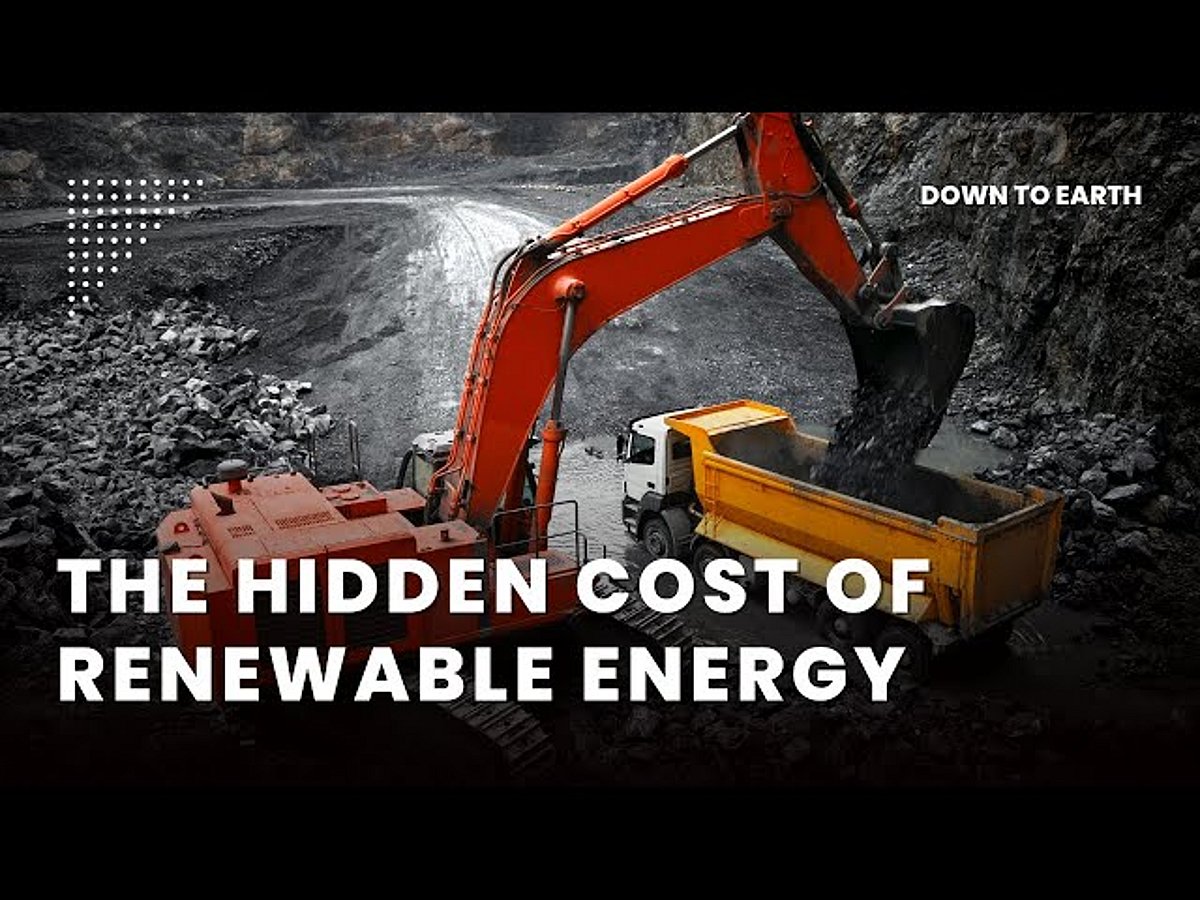
The hidden cost of renewable energy: Mining, forest loss and climate crisis
A recent study highlighted a potential environmental crisis linked to renewable energy development, revealing significant "hidden costs." These costs include extensive mining for raw materials and substantial forest loss, which contradict the clean image of renewables. This nuanced perspective is crucial for competitive exams, as it deepens understanding of sustainable development challenges and the complexities of climate change mitigation strategies.
Revision structure
Monthly events and exam calendar context
Static GK and one-liner notes
Quiz and mock-test revision path
Key points
Exam-ready takeaways
These hidden costs include increased mining activities for critical minerals required by renewable technologies.
Significant forest loss is highlighted as another environmental impact linked to renewable energy infrastructure.
The study suggests these environmental issues contribute to and potentially exacerbate the broader climate crisis.
The analysis of these environmental concerns was reported by downtoearth.org.in.
Detailed analysis
Full exam-oriented breakdown
The global push towards renewable energy sources like solar and wind power is a cornerstone of our strategy to combat climate change. Driven by the urgent need to reduce greenhouse gas emissions and transition away from fossil fuels, nations worldwide, including India, have set ambitious targets for renewable energy deployment. However, a recent study has brought to light a crucial, often overlooked aspect of this transition: the 'hidden costs' associated with renewable energy development, particularly extensive mining for raw materials and significant forest loss. This nuanced perspective is vital for a comprehensive understanding of sustainable development. Historically, humanity's energy needs have primarily been met by fossil fuels – coal, oil, and natural gas. The industrial revolution was powered by coal, leading to unprecedented economic growth but also to severe environmental degradation and, more recently, the climate crisis. As scientific consensus on climate change solidified, the focus shifted dramatically towards cleaner alternatives. Renewable energy, derived from natural processes that are continuously replenished, such as sunlight, wind, and hydropower, emerged as the most viable solution. India, a rapidly developing nation with a massive energy demand and a commitment to climate action, has aggressively pursued renewable energy, aiming for 500 GW of installed renewable capacity by 2030 and a Net Zero emissions target by 2070. This ambitious target necessitates a massive scale-up of renewable infrastructure. The 'hidden costs' highlighted by the study primarily revolve around the material intensity of renewable technologies and the land footprint of large-scale projects. Solar panels, wind turbines, and especially batteries for energy storage require significant quantities of 'critical minerals' such as lithium, cobalt, nickel, copper, and rare earth elements. The extraction of these minerals often involves open-pit mining, which is inherently destructive to landscapes, causes soil erosion, water pollution, and habitat destruction. Furthermore, the establishment of large solar parks, wind farms, and associated transmission lines requires vast tracts of land. This often leads to the conversion of agricultural land, grasslands, and, critically, forest areas, resulting in biodiversity loss and disruption of local ecosystems. The irony is that the very solutions meant to combat climate change, through their supply chains and land requirements, can contribute to environmental degradation and exacerbate the climate crisis by diminishing carbon sinks like forests. Several key stakeholders are involved in this complex equation. **Governments** (both central and state in India) are the primary drivers of renewable energy policy and regulation. The Ministry of New and Renewable Energy (MNRE) sets targets, while the Ministry of Environment, Forest and Climate Change (MoEFCC) is responsible for environmental clearances. **Renewable energy developers** and **mining companies** are the industrial players, responsible for project implementation and resource extraction, respectively. **Local communities**, especially tribal populations, are often directly impacted by land acquisition, displacement, and environmental degradation, frequently lacking adequate compensation or rehabilitation. **Environmental NGOs and research institutions** play a crucial role in monitoring, advocacy, and highlighting these hidden costs. International bodies like the UNFCCC and IRENA also influence global renewable energy policies and standards. For India, the significance of this issue is profound. With its vast population and growing energy needs, balancing development with environmental protection is a constant challenge. India's resource-rich regions, often home to significant forest cover and tribal communities, are precisely where mineral extraction and renewable energy projects are likely to be concentrated. This raises critical questions about environmental justice and sustainable development goals. The **Forest (Conservation) Act, 1980**, regulates the diversion of forest land for non-forest purposes, requiring compensatory afforestation, often managed through the **Compensatory Afforestation Fund Act (CAMPA), 2016**. However, the effectiveness of compensatory afforestation in replacing mature forest ecosystems is debated. The **Mines and Minerals (Development and Regulation) Act, 1957**, governs mining activities, while the **Environmental Impact Assessment (EIA) Notification, 2006**, mandates environmental clearances for projects. The **Right to Fair Compensation and Transparency in Land Acquisition, Rehabilitation and Resettlement Act, 2013**, aims to protect the rights of affected communities. Constitutionally, **Article 48A** of the Directive Principles of State Policy mandates the State to 'endeavour to protect and improve the environment and to safeguard the forests and wild life of the country,' while **Article 51A(g)** imposes a Fundamental Duty on every citizen 'to protect and improve the natural environment including forests, lakes, rivers and wild life, and to have compassion for living creatures.' These provisions underscore India's constitutional commitment to environmental protection, which must guide its renewable energy transition. Looking ahead, the future implications demand a holistic approach. India must integrate circular economy principles into its renewable energy strategy, focusing on recycling critical minerals from retired renewable components to reduce reliance on virgin mining. This includes developing robust domestic recycling infrastructure. Sustainable mining practices, including responsible sourcing, reduced water usage, and land reclamation, are crucial. Furthermore, careful spatial planning and robust environmental and social impact assessments (ESIAs) must precede project development, ensuring minimal disruption to biodiversity hotspots and local communities. Technological innovations that reduce the material intensity of renewable technologies or develop alternatives to critical minerals will also be vital. Ultimately, achieving a truly 'green' energy transition requires acknowledging and mitigating these hidden costs, ensuring that our solutions to climate change do not inadvertently create new environmental crises.
How to study
Turn news into exam marks
Revise monthly events by exam family instead of reading random updates.
Pair one-liners with mock tests so mistakes become the next revision list.
Keep state job pages, calendar pages and GK packs connected in one path.