

The Supreme Court has kept its previous November judgment regarding the Aravalli hills in abeyance.
GK and monthly revision
Aravalli hills hearing updates: Supreme Court keeps its November judgment in abeyance
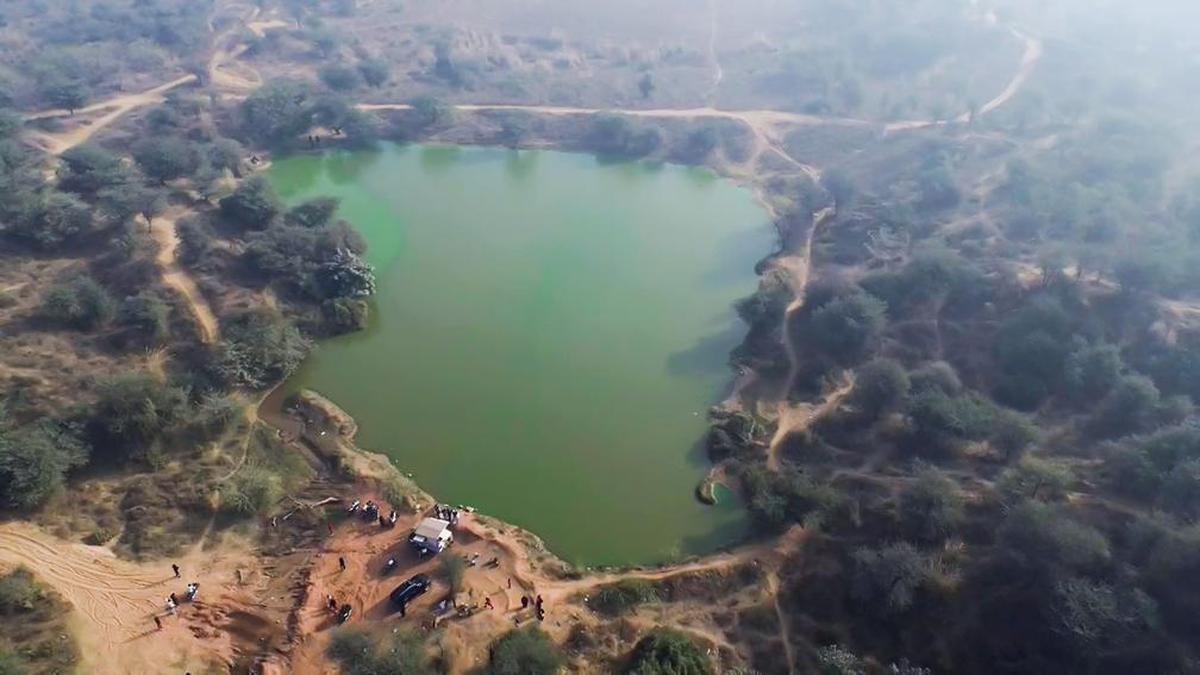
The Supreme Court has kept its November judgment concerning the Aravalli hills in abeyance, issuing a notice for a new hearing on January 21. This decision is significant as it mandates the formation of a new committee to conduct a comprehensive survey and study on the Aravalli hills, highlighting the judiciary's active role in environmental conservation. For competitive exams, this underscores the importance of environmental protection laws and judicial interventions in critical ecological zones.
Revision structure
Monthly events and exam calendar context
Static GK and one-liner notes
Quiz and mock-test revision path
Key points
Exam-ready takeaways
A notice has been issued for the Aravalli hills case to be heard again on January 21.
The Chief Justice of India (CJI) stated that a new committee must be formed to conduct a survey and study on the Aravalli hills.
The ongoing legal proceedings pertain to the environmental protection and conservation of the Aravalli hill range.
The Supreme Court's intervention highlights judicial oversight in significant environmental and ecological matters.
Detailed analysis
Full exam-oriented breakdown
The Supreme Court's decision to keep its November judgment concerning the Aravalli hills in abeyance and mandate a new committee for a comprehensive survey underscores the critical importance of this ancient mountain range and the judiciary's proactive role in environmental conservation. This development is not merely a procedural step but a significant moment in India's ongoing struggle to balance development with ecological preservation. **Background Context: The Lifeline of Northern India** The Aravalli Range, one of the oldest fold mountain systems in the world, stretches approximately 692 km across Gujarat, Rajasthan, Haryana, and Delhi. Ecologically, it serves as the 'green lung' for the National Capital Region (NCR), acting as a crucial barrier against desertification from the Thar Desert, a vital groundwater recharge zone, and a significant biodiversity hotspot. Its forests regulate climate, purify air, and provide habitats for diverse flora and fauna, including endangered species. However, over decades, the Aravallis have faced relentless degradation due to illegal mining, encroachment, rampant deforestation, and unplanned urbanization. These activities have led to severe environmental consequences, including depletion of groundwater, increased air pollution, loss of biodiversity, and heightened vulnerability to climate change impacts. Various legal battles and environmental movements have sought to protect the Aravallis, highlighting the inadequacy of existing enforcement mechanisms and the powerful vested interests involved in their exploitation. **What Happened: Judicial Intervention for Renewed Scrutiny** In this particular instance, the Supreme Court, through the Chief Justice of India, decided to keep its earlier November judgment in abeyance. This means the previous order is temporarily suspended, not nullified. The court has called for a fresh hearing on January 21 and, most importantly, directed the formation of a new committee. This committee's mandate will be to conduct a comprehensive survey and study of the Aravalli hills. This move signals the judiciary's intent to gather updated and thorough ground realities before issuing definitive directives, ensuring that any future judgment is based on the most current and scientific assessment of the ecological situation. **Key Stakeholders: A Multi-faceted Challenge** Several key stakeholders are involved in the Aravalli conservation saga. The **Supreme Court** stands as the primary guardian of environmental laws and the 'public trust doctrine,' ensuring that natural resources are preserved for future generations. **Central Government** bodies like the Ministry of Environment, Forest and Climate Change (MoEFCC) are responsible for policy formulation and oversight, while the **State Governments** of Rajasthan, Haryana, Delhi, and Gujarat are crucial for on-ground implementation and enforcement. **Local communities**, particularly those dependent on the Aravallis for their livelihoods, are directly impacted by both degradation and conservation efforts. **Environmental activists and Non-Governmental Organizations (NGOs)** often act as petitioners and watchdogs, bringing environmental transgressions to judicial notice. Conversely, **mining companies, real estate developers, and industries** represent the economic interests that often clash with conservation goals. **Significance for India: A Model for Sustainable Governance** The protection of the Aravallis holds immense significance for India. Ecologically, its preservation is vital for the environmental security of the entire Delhi-NCR region, impacting air quality, water supply, and climate resilience. The case highlights the broader challenge of **sustainable development**, where economic growth must be harmonized with ecological imperatives. It also underscores the crucial role of **judicial activism** in environmental governance, especially when executive and legislative actions fall short. The Supreme Court's continued oversight reinforces the principle that environmental protection is a non-negotiable aspect of the 'right to life' (Article 21). This case could set a precedent for how other critical ecological zones in India, from the Western Ghats to the Himalayan ranges, are managed and protected, influencing future policy decisions and enforcement strategies. **Historical Context and Constitutional Mandate** India's environmental jurisprudence has evolved significantly since the 1970s, largely driven by Public Interest Litigations (PILs). Landmark judgments, such as those involving M.C. Mehta, have established the polluter pays principle, precautionary principle, and the public trust doctrine. The legal framework for environmental protection is robust, comprising the **Environment (Protection) Act, 1986**, the **Forest (Conservation) Act, 1980**, and the **Wild Life (Protection) Act, 1972**. Constitutionally, environmental protection is enshrined in **Article 48A** (Directive Principles of State Policy), which directs the State to
How to study
Turn news into exam marks
Revise monthly events by exam family instead of reading random updates.
Pair one-liners with mock tests so mistakes become the next revision list.
Keep state job pages, calendar pages and GK packs connected in one path.