

The U.S. approved chipmaking tool shipments to China for South Korean firms Samsung and SK Hynix.
GK and monthly revision
U.S. approves Samsung, SK Hynix chipmaking tool shipments to China for 2026, sources say
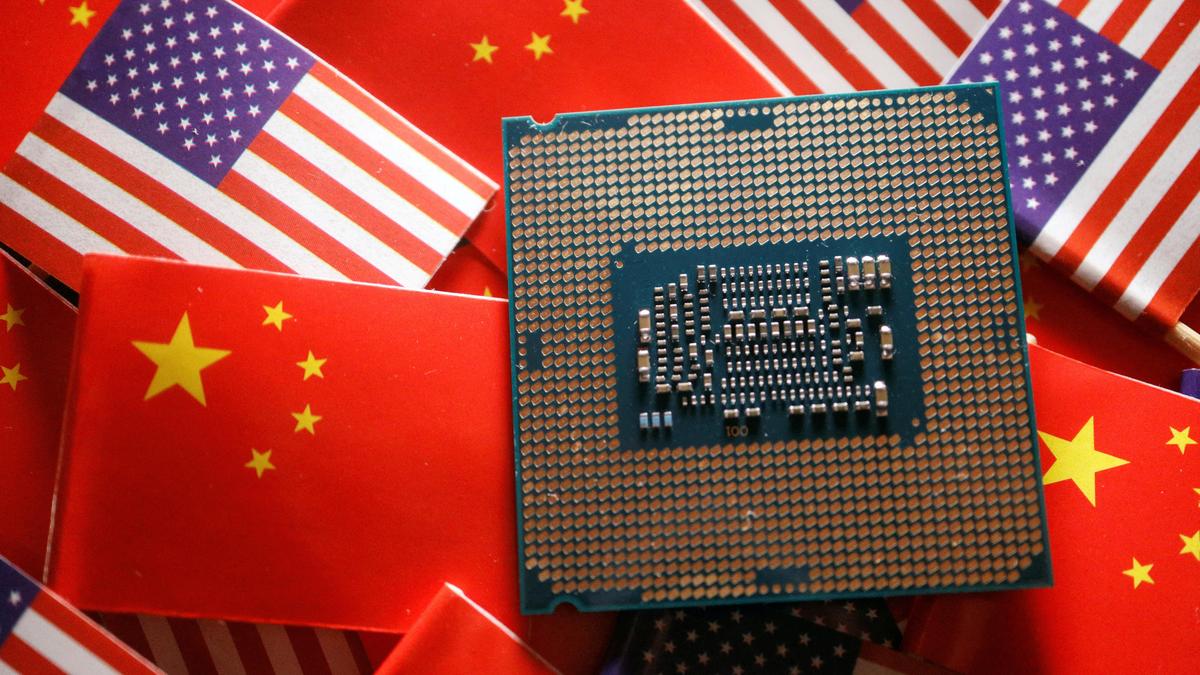
The U.S. has granted temporary approval for South Korean chipmakers Samsung and SK Hynix to continue shipping chipmaking tools to their factories in China until 2026. This decision provides a temporary reprieve amidst escalating U.S. restrictions aimed at limiting China's access to advanced semiconductor technology. It is significant for understanding global tech supply chains, international trade policies, and the ongoing geopolitical rivalry between the U.S. and China, making it relevant for competitive exams.
Revision structure
Monthly events and exam calendar context
Static GK and one-liner notes
Quiz and mock-test revision path
Key points
Exam-ready takeaways
The approval is valid until 2026, providing a temporary relief for the companies.
This decision follows an earlier U.S. move to revoke license waivers given to some tech companies.
The affected companies, Samsung and SK Hynix, are major South Korean memory chip manufacturers.
The move highlights the ongoing U.S. policy to restrict China's access to advanced semiconductor technology.
Detailed analysis
Full exam-oriented breakdown
The recent decision by the United States to grant a temporary waiver, until 2026, for South Korean chipmakers Samsung and SK Hynix to continue shipping advanced chipmaking tools to their factories in China is a pivotal development in the ongoing geopolitical and technological rivalry between the U.S. and China. This move offers a brief respite for these companies, which are critical players in the global memory chip market, but it underscores the broader strategy of the U.S. to curb China's access to cutting-edge semiconductor technology. **Background Context: The Semiconductor Battleground** At the heart of this issue lies the immense strategic importance of semiconductors, often dubbed the 'new oil.' These tiny chips are the foundational technology for everything from smartphones and AI to advanced military systems. The U.S. has historically dominated key aspects of the semiconductor supply chain, particularly in chip design, intellectual property, and sophisticated manufacturing equipment. China, despite significant investment, remains heavily reliant on foreign technology for advanced chip production. This reliance became a national security concern for the U.S., fearing that China's technological advancements, fueled by American technology, could enhance its military capabilities and economic influence, challenging U.S. global supremacy. The initial salvo in this tech war saw the U.S. placing Chinese tech giants like Huawei on an 'entity list' in 2019, severely restricting their access to U.S. technology. This was followed by broader export controls in October 2022, aimed at preventing China from manufacturing advanced logic chips and memory chips, and even restricting the use of U.S. citizens and green card holders in supporting China's chip industry. **What Happened: A Temporary Reprieve** The U.S. Commerce Department's decision to grant a temporary authorization for Samsung and SK Hynix to continue their operations in China, specifically allowing them to bring in necessary manufacturing equipment, provides a crucial breathing room. This comes after the U.S. had previously revoked similar license waivers for other tech companies, indicating a tightening of controls. The 2026 deadline suggests that this is not a permanent reversal but rather a strategic pause, potentially allowing U.S. allies like South Korea to adjust their supply chains and reduce their exposure to China, while also giving the U.S. time to assess the impact of its policies. It highlights the complex balancing act the U.S. faces: restricting China's tech growth without unduly harming allied economies or disrupting global supply chains. **Key Stakeholders and Their Interests** * **United States:** The primary goal is to maintain its technological edge, particularly in critical sectors like AI and advanced computing, and to prevent China from developing capabilities that could pose a national security threat. The U.S. government, particularly the Department of Commerce, is the architect of these restrictions. * **China:** Aims for semiconductor self-sufficiency (known as 'chip autonomy') to reduce its vulnerability to foreign sanctions. These restrictions, while challenging, also galvanize China's domestic innovation efforts. * **South Korea (Samsung, SK Hynix):** These companies are caught in a difficult position. They have massive investments and significant market share in China, which is both a major production base and a crucial market. Complying with U.S. restrictions while maintaining profitability and market access in China is a delicate balancing act for the South Korean government and its corporate giants. * **Other Global Chip Ecosystem Players:** Companies like TSMC (Taiwan) and ASML (Netherlands), which supply critical tools and manufacturing services, are also indirectly affected, facing pressure to align with U.S. policies. **Significance for India: A Strategic Opportunity** This geopolitical chess game presents a unique opportunity for India. For India, this situation matters profoundly across economic, political, and technological dimensions. **Economically**, as global supply chains are forced to de-risk from China, India can position itself as an attractive alternative manufacturing hub. The 'India Semiconductor Mission' (ISM), launched in 2021 with an outlay of ₹76,000 crore (approximately $10 billion), along with Production Linked Incentive (PLI) schemes for electronics manufacturing, aims to attract global semiconductor companies to set up design and fabrication units in India. The disruptions caused by U.S.-China tensions make India's stable policy environment and large domestic market more appealing. **Politically**, India benefits from strengthening its strategic partnership with the U.S. and its allies, including through platforms like the Quad (Quadrilateral Security Dialogue) and the Indo-Pacific Economic Framework (IPEF). By offering a reliable and democratic alternative in the global tech supply chain, India enhances its geopolitical leverage and reinforces its commitment to a rules-based international order. This aligns with India's long-standing foreign policy of strategic autonomy, allowing it to engage with multiple global powers while safeguarding its national interests. **Technologically**, a robust domestic semiconductor ecosystem will reduce India's import dependence, crucial for national security and economic resilience. It will also foster indigenous research and development, contributing to the 'Make in India' and 'Digital India' initiatives. While India's Constitution doesn't directly address semiconductor policy, the Union Government's authority over international trade and foreign policy, as outlined in the **Seventh Schedule (Union List), Article 246**, provides the framework for formulating policies like the ISM and engaging in international economic diplomacy. **Future Implications** The temporary nature of the waiver suggests that the U.S.-China tech rivalry is far from over. We can expect continued pressure on allies to align with U.S. export controls, further diversification of global semiconductor supply chains, and an acceleration of domestic chip production efforts in various countries. This saga highlights the increasing weaponization of technology in international relations. For India, the future holds the promise of becoming a significant player in the global semiconductor landscape, provided it can successfully execute its ambitious policies, attract substantial foreign investment, and build the necessary infrastructure and talent pool. The current global flux offers India a unique window to integrate itself more deeply into critical global supply chains, moving beyond its traditional role as a consumer to becoming a significant producer and innovator. This evolving scenario underscores the importance of technological sovereignty and resilient supply chains for national security and economic growth, themes that will continue to dominate international relations for the foreseeable future.
How to study
Turn news into exam marks
Revise monthly events by exam family instead of reading random updates.
Pair one-liners with mock tests so mistakes become the next revision list.
Keep state job pages, calendar pages and GK packs connected in one path.