

The year 2026 is highlighted as a significant year for India's economic outlook.
GK and monthly revision
Why the year 2026 can be a big deal for India’s economy
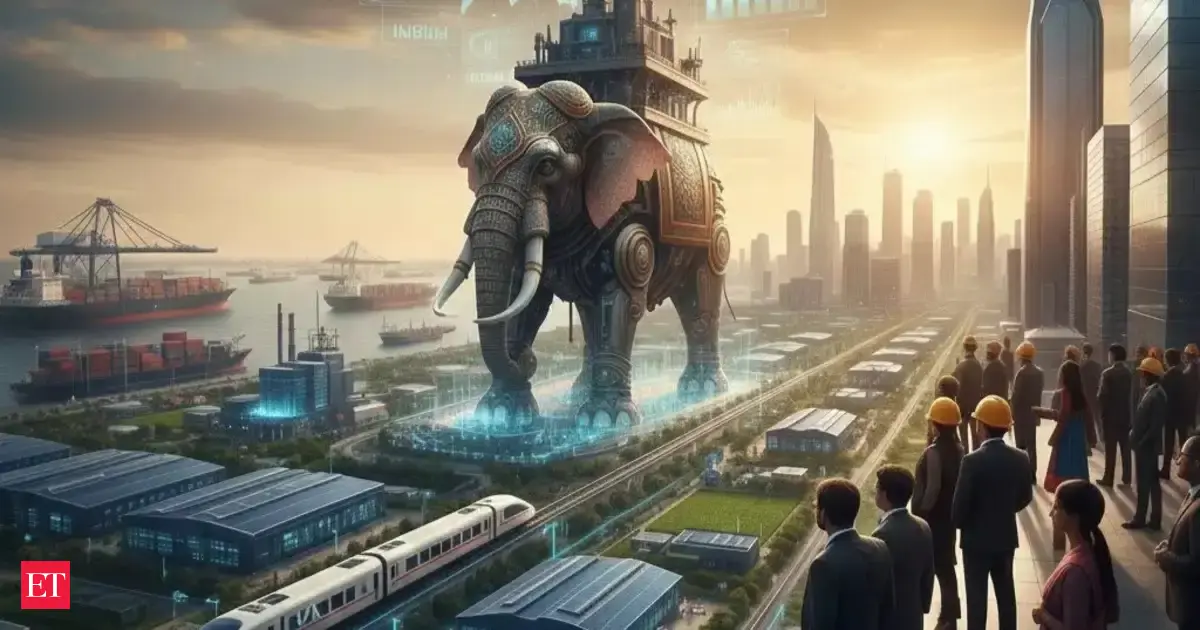
India is projected for a significant economic year in 2026, driven by new trade agreements with nations like Australia and Bahrain. These international deals, coupled with domestic reforms and manufacturing incentives, are strategically aimed at boosting Indian industries. This approach is crucial for positioning India as a major global manufacturing hub, enhancing its economic standing and creating new opportunities for competitive exam aspirants to understand economic policy shifts.
Revision structure
Monthly events and exam calendar context
Static GK and one-liner notes
Quiz and mock-test revision path
Key points
Exam-ready takeaways
New trade agreements are being pursued with countries, specifically mentioning Australia and Bahrain.
These trade deals are intended to open up global markets for Indian products.
Domestic reforms and manufacturing incentives are key components of India's economic strategy.
The overarching goal is to position India as a major global manufacturing hub by 2026.
Detailed analysis
Full exam-oriented breakdown
The year 2026 is being widely anticipated as a pivotal period for India's economic trajectory, driven by a strategic confluence of international trade agreements, robust domestic reforms, and targeted manufacturing incentives. This outlook reflects India's ambition to significantly bolster its economic standing and emerge as a dominant global manufacturing hub, shifting from its traditional service-sector led growth to a more balanced and diversified economic structure. **Background Context and Evolution:** India's economic journey post-liberalization in 1991 has largely been characterized by rapid growth in the services sector. However, successive governments have recognized the imperative of strengthening the manufacturing base to create jobs for its vast workforce and ensure inclusive growth. The 'Make in India' initiative, launched in 2014, marked a significant policy thrust towards encouraging domestic manufacturing and attracting foreign investment. This was further amplified by the 'Atmanirbhar Bharat Abhiyan' (Self-Reliant India Campaign) in 2020, which aimed to make India a resilient global supply chain partner, especially in the wake of global disruptions like the COVID-19 pandemic and geopolitical tensions that exposed vulnerabilities in concentrated supply chains. **Current Strategy and What's Happening:** The current strategy hinges on a two-pronged approach: enhancing market access through Free Trade Agreements (FTAs) and boosting domestic production capabilities. India has actively pursued comprehensive trade agreements, moving beyond mere preferential agreements. Notable examples include the India-UAE Comprehensive Economic Partnership Agreement (CEPA), signed in February 2022 and effective from May 2022, and the India-Australia Economic Cooperation and Trade Agreement (ECTA), signed in April 2022 and effective from December 2022. The mention of Bahrain in the article indicates ongoing or future potential engagements. These agreements aim to reduce tariffs, ease non-tariff barriers, and facilitate trade in goods and services, opening up vast global markets for Indian products, particularly in sectors like textiles, agriculture, engineering goods, and pharmaceuticals. Complementing these external efforts are robust domestic reforms and incentives, most notably the Production Linked Incentive (PLI) schemes. Launched in 2020, these schemes offer incentives on incremental sales from products manufactured in India across 14 key sectors, including automobiles, electronics, pharmaceuticals, and telecom equipment. This policy is designed to attract large investments, boost advanced manufacturing capabilities, enhance export competitiveness, and create employment. **Key Stakeholders Involved:** The primary driver is the **Government of India**, particularly the Ministry of Commerce & Industry and the Ministry of Finance, which formulate trade policies, negotiate agreements, and implement incentive schemes. **Indian businesses**, ranging from Micro, Small, and Medium Enterprises (MSMEs) to large corporations, are critical beneficiaries and implementers, leveraging the PLI schemes and new market access to expand operations and exports. **International trading partners** like Australia, UAE, and potentially Bahrain, are crucial as they provide market access and investment opportunities. **Foreign investors** are also key stakeholders, as their capital and technology transfers are vital for India's manufacturing ambitions. Finally, the **Indian workforce and consumers** are indirect stakeholders, benefiting from job creation, economic growth, and potentially a wider array of quality products. **Significance for India:** This strategic push towards 2026 holds immense significance. Economically, it promises to accelerate GDP growth, diversify export baskets, attract greater Foreign Direct Investment (FDI), and improve India's balance of payments. By becoming a manufacturing hub, India aims to create millions of jobs, addressing the challenge of underemployment and leveraging its demographic dividend. Geopolitically, a stronger manufacturing base enhances India's strategic autonomy and reduces dependence on other nations for critical supplies. It also positions India as a more reliable and attractive partner in global supply chains, potentially offering an alternative to China. Socially, the creation of manufacturing jobs can lead to poverty reduction and skill development, contributing to inclusive growth. This aligns with broader themes of economic nationalism and self-reliance while maintaining an open economy. **Constitutional and Policy Frameworks:** The Indian Constitution provides the framework for such international engagements. **Article 253** empowers Parliament to make any law for implementing any international treaty, agreement, or convention. The **Seventh Schedule** places 'foreign affairs' (Entry 10), 'entering into treaties and agreements with foreign countries' (Entry 14), and 'trade and commerce with foreign countries' (Entry 36) under the Union List, underscoring the central government's authority. The **Foreign Trade (Development and Regulation) Act, 1992**, provides the legal basis for regulating and facilitating foreign trade. The 'Make in India' initiative, the 'National Manufacturing Policy 2011', and the subsequent 'Production Linked Incentive (PLI) Schemes 2020' are key policy instruments driving this vision. **Future Implications:** If successful, this strategy could fundamentally alter India's economic structure, making it a global manufacturing powerhouse alongside its robust services sector. This could lead to sustained high growth rates, improved living standards, and enhanced geopolitical influence. However, challenges remain, including navigating global trade protectionism, ensuring robust infrastructure development, addressing skill gaps, and maintaining policy consistency. The year 2026 could indeed mark a turning point, solidifying India's position as a critical player in global trade and manufacturing, but the sustained effort to overcome these challenges will determine the long-term success of this ambitious vision.
How to study
Turn news into exam marks
Revise monthly events by exam family instead of reading random updates.
Pair one-liners with mock tests so mistakes become the next revision list.
Keep state job pages, calendar pages and GK packs connected in one path.