

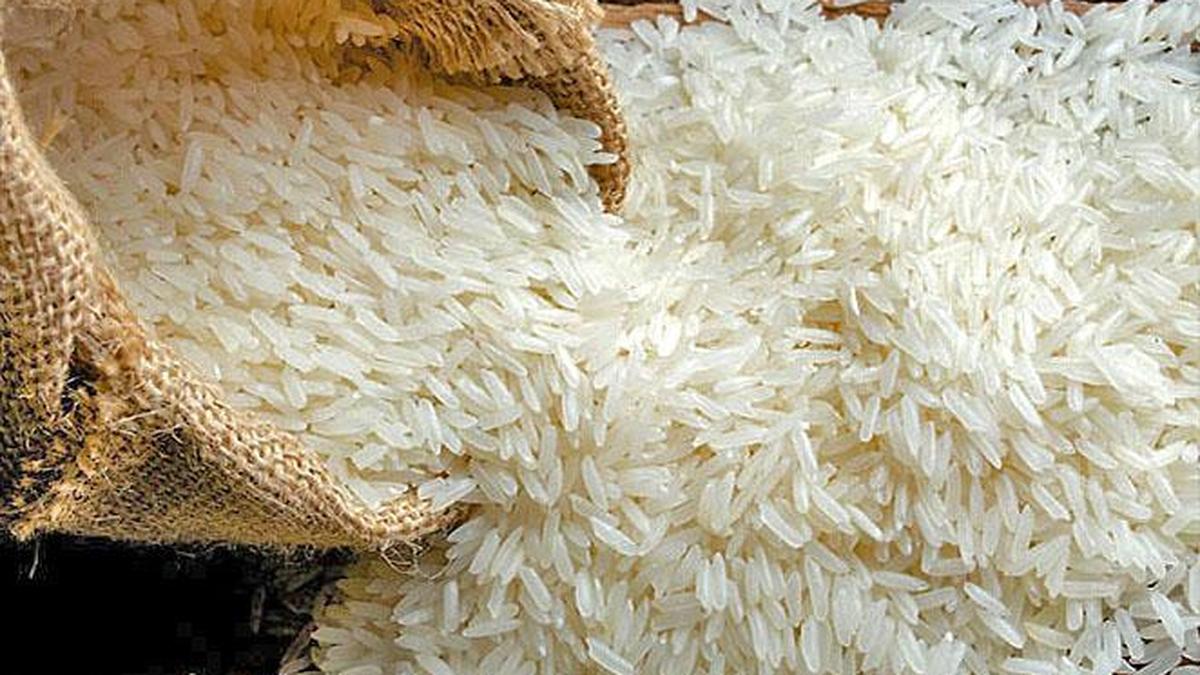
India is recognized as a world leader in rice production and export.
GK and monthly revision
India’s status as world’s rice leader augurs water crisis
India's prominent position as a global rice leader is creating an alarming water crisis, particularly in key agricultural states like Punjab and Haryana. Intensive rice cultivation, a water-guzzling crop, is rapidly depleting groundwater resources in these regions. This issue highlights the environmental unsustainability of current agricultural practices, posing a significant challenge for India's food security and water management policies, crucial for competitive exam topics on environment, agriculture, and economy.
Revision structure
Monthly events and exam calendar context
Static GK and one-liner notes
Quiz and mock-test revision path
Key points
Exam-ready takeaways
This status is directly linked to an impending water crisis within the country.
The states of Punjab and Haryana are specifically identified as facing severe groundwater depletion.
The primary cause of groundwater fall in these states is the pressure from growing rice cultivation.
Experts warn that groundwater levels in Punjab and Haryana are projected to fall further under current agricultural practices.
Detailed analysis
Full exam-oriented breakdown
India's remarkable ascent as the world's leading rice producer and exporter, while a testament to its agricultural prowess, casts a long shadow over its future: an impending water crisis. This paradox, where food security is achieved at the cost of environmental sustainability, is particularly acute in the agrarian heartlands of Punjab and Haryana, regions now grappling with severe groundwater depletion. **Background Context: The Green Revolution's Unintended Consequences** India's journey to becoming a 'rice leader' is deeply rooted in the Green Revolution of the 1960s and 70s. Faced with chronic food shortages, India adopted high-yielding varieties of wheat and rice, coupled with chemical fertilizers and assured irrigation. Policies like the Minimum Support Price (MSP) for these staple crops, along with subsidized electricity and water for irrigation, incentivized farmers, particularly in Punjab and Haryana, to shift towards intensive cultivation of rice, a water-guzzling crop, even in areas not naturally suited for it. Historically, these states were known for wheat, maize, and pulses, but the economic security offered by MSP for rice made it an irresistible choice, transforming them into the 'rice bowls' of India. **The Crisis Unfolds: Groundwater Depletion in Punjab and Haryana** The consequences of this policy-driven agricultural shift are now alarmingly evident. Punjab and Haryana, despite being relatively small states, contribute significantly to India's rice production. This intensive cultivation, especially of paddy (rice), requires massive amounts of water. Farmers, relying heavily on borewells due to erratic canal irrigation, have extracted groundwater at unsustainable rates. Experts warn that the water table in these states is falling by meters annually, leading to a critical situation where many blocks are now categorized as 'over-exploited' or 'critical'. This isn't just about water; it's also about energy, as vast amounts of subsidized electricity are consumed to pump water from ever-deepening wells, adding to the fiscal burden of state governments. **Key Stakeholders and Their Roles** Multiple stakeholders are intertwined in this crisis. **Farmers** are at the forefront, grappling with diminishing returns from agriculture and the increasing cost of water extraction, yet reliant on MSP for their livelihoods. The **Central Government** plays a crucial role through its MSP policy, procurement mechanisms, and export policies, which directly influence cropping patterns. **State Governments** (Punjab, Haryana) bear the immediate burden of managing water resources, providing power subsidies, and dealing with farmer distress. **Agricultural Scientists and Research Institutions** are vital in developing water-efficient crop varieties and sustainable farming practices. Finally, **Indian Consumers** benefit from abundant and affordable rice, but the long-term environmental cost will eventually impact everyone. **Significance for India: A Multifaceted Challenge** The implications for India are profound. Economically, while rice exports boost foreign exchange earnings, the environmental cost threatens long-term agricultural sustainability. The high energy consumption for groundwater pumping strains state finances. Environmentally, the falling water table impacts soil health, biodiversity, and increases the risk of desertification. Socially, it could exacerbate rural distress, leading to migration and potentially even inter-state water disputes as states vie for limited resources. India's food security, though robust currently, faces a future threat if the current trajectory continues, jeopardizing its ability to feed its vast population. **Constitutional & Policy Framework** The issue touches upon several constitutional provisions and policies. **Agriculture** and **Water** are primarily **State subjects** under Entry 14 and Entry 17, respectively, of List II (State List) of the Seventh Schedule. However, the Union Parliament can legislate on the regulation and development of inter-state rivers and river valleys under Entry 56 of List I (Union List). This dual jurisdiction often leads to complex governance challenges. Environment protection is enshrined in **Article 48A** (Directive Principles of State Policy), which mandates the State to protect and improve the environment, and **Article 51A(g)** (Fundamental Duties), which obliges citizens to protect and improve the natural environment. Key policies attempting to address this include the **Minimum Support Price (MSP)**, which needs reform to incentivize crop diversification, and initiatives like the **Pradhan Mantri Krishi Sinchayee Yojana (PMKSY)**, aiming for 'Per Drop More Crop' through efficient irrigation. The **Atal Bhujal Yojana (2019)** focuses specifically on community-led sustainable groundwater management in water-stressed areas, including parts of Punjab and Haryana. **Future Implications and Way Forward** Addressing this crisis requires a multi-pronged strategy. **Crop diversification** away from paddy in water-stressed regions is paramount, requiring policy support for alternative crops like maize, pulses, and oilseeds. Reforming the **MSP regime** to include a wider range of crops and linking it with sustainable practices could be a game-changer. Promoting **water-saving technologies** such as direct seeded rice (DSR), drip irrigation, and sprinkler systems is crucial. Strengthening water governance, encouraging community participation in water management, and investing in climate-resilient agriculture are also vital. Failure to act decisively could lead to irreversible environmental damage, threaten India's agricultural backbone, and undermine its long-term food and water security, impacting its global standing as an agricultural powerhouse.
How to study
Turn news into exam marks
Revise monthly events by exam family instead of reading random updates.
Pair one-liners with mock tests so mistakes become the next revision list.
Keep state job pages, calendar pages and GK packs connected in one path.