

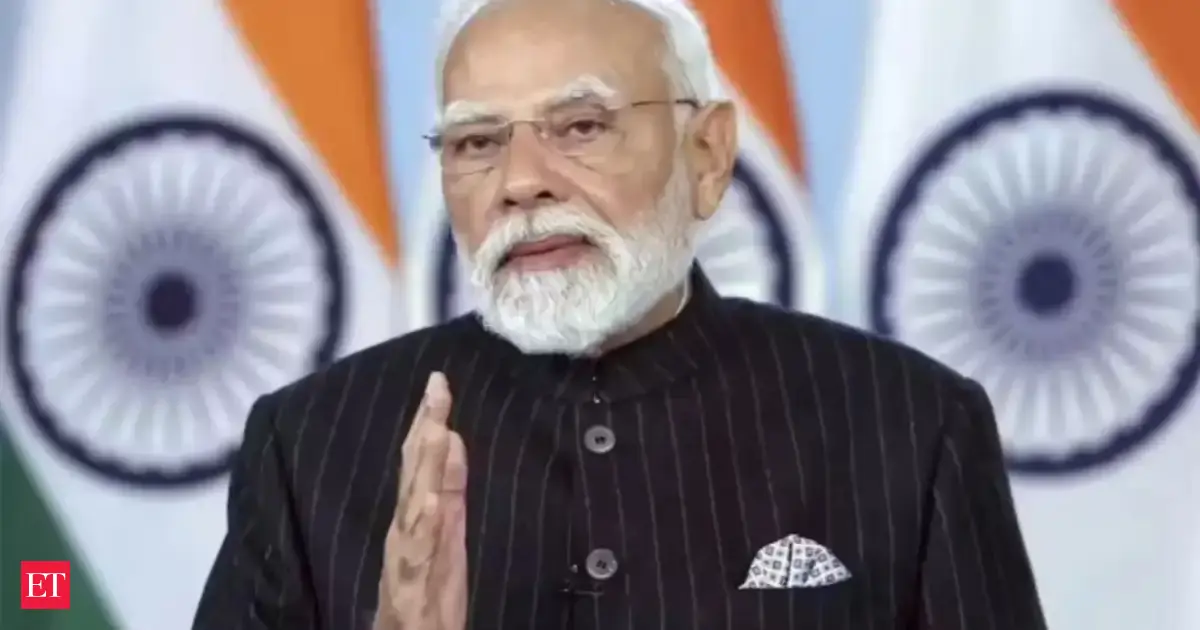
Economists presented pre-Budget 2026 recommendations to Prime Minister Modi.
GK and monthly revision
Union Budget 2026: Economists urge tax incentives, data centre push and export diversification at PM Modi’s pre-Budget meet
Economists recently presented pre-Budget 2026 recommendations to Prime Minister Modi, advocating for tax incentives to boost household savings and strategic support for emerging technologies like data centres, AI, and robotics. They also emphasized diversifying services exports through trade agreements and developing a coordinated strategy for critical mineral access. This discussion is crucial for understanding potential future economic policies and government priorities for the upcoming Union Budget, making it highly relevant for competitive exam preparation on economic policy and government initiatives.
Revision structure
Monthly events and exam calendar context
Static GK and one-liner notes
Quiz and mock-test revision path
Key points
Exam-ready takeaways
Key suggestions included tax incentives for household savings to boost domestic capital.
Experts urged support for emerging technologies such as data centres, Artificial Intelligence (AI), and robotics.
The recommendations emphasized diversifying services exports and leveraging trade agreements for market access.
A coordinated strategy for securing critical mineral access was also proposed during the consultations.
Detailed analysis
Full exam-oriented breakdown
The pre-Budget 2026 consultations, where economists present their recommendations to the Prime Minister, are a crucial annual exercise that shapes India's economic policy direction. This particular set of suggestions highlights the government's ongoing focus on fostering domestic growth, embracing technological advancement, and strengthening India's position in the global economy, all while maintaining fiscal prudence. Understanding these recommendations provides a window into the potential policy priorities for the upcoming Union Budget. **Background Context: Setting the Stage for Budget 2026** India's economic landscape is characterized by robust growth, yet it faces challenges such as global economic uncertainties, supply chain vulnerabilities, and the need for sustained job creation. The government, under Prime Minister Narendra Modi, has consistently emphasized a growth-oriented approach, focusing on capital expenditure, infrastructure development, and leveraging technology. The annual Union Budget, mandated by Article 112 of the Constitution as the 'Annual Financial Statement,' is not merely an accounting exercise but a strategic document outlining the government's fiscal policy for the upcoming financial year. These pre-budget consultations serve as a vital input mechanism, allowing experts to provide independent perspectives and data-driven suggestions to the policy-makers before the final budget is drafted by the Ministry of Finance. **What Happened: Key Recommendations and Their Rationale** During the recent pre-Budget meet, economists put forth several key recommendations. Firstly, they advocated for **tax incentives to boost household savings**. This is critical for increasing domestic capital formation, which can then be channeled into productive investments, reducing reliance on foreign capital, and ensuring financial stability. Higher household savings also act as a buffer against economic shocks. Secondly, a significant emphasis was placed on **strategic support for emerging technologies like data centres, Artificial Intelligence (AI), and robotics**. This aligns with India's 'Digital India' vision and its ambition to become a global technology hub. Support could include production-linked incentives (PLI schemes), tax breaks for R&D, and skill development programs. Thirdly, the experts urged **diversifying services exports and leveraging trade agreements for market access**. India has a strong services sector, particularly in IT and BPO. Diversification into new markets and sectors, coupled with effective utilization of Free Trade Agreements (FTAs) like those with Australia and the UAE, can enhance foreign exchange earnings and improve India's balance of payments. Finally, a **coordinated strategy for securing critical mineral access** was highlighted. Critical minerals (e.g., lithium, cobalt, rare earth elements) are indispensable for green energy technologies, electric vehicles, and high-tech manufacturing. Ensuring a stable supply is crucial for India's energy transition goals and strategic autonomy. **Key Stakeholders Involved** At the forefront is the **Prime Minister's Office (PMO)**, which receives these recommendations and plays a pivotal role in setting the overarching economic agenda. The **Ministry of Finance** is the primary body responsible for drafting the Budget, incorporating inputs from various ministries, departments, and external consultations. The **economists and experts** themselves, typically drawn from academia, industry associations (like FICCI, CII), think tanks, and former government officials, act as crucial advisors, providing evidence-based policy suggestions. The **NITI Aayog**, India's premier policy 'think tank,' also contributes significantly to long-term economic strategy and often participates in such discussions. **Significance for India: A Blueprint for Growth and Resilience** These recommendations hold immense significance for India's economic future. Boosting household savings directly contributes to **domestic capital formation**, which is the backbone of investment and long-term growth. Support for **emerging technologies** like AI and robotics is vital for India to remain competitive in the Fourth Industrial Revolution, fostering innovation, creating high-skill jobs, and attracting foreign investment. This aligns with the 'Make in India' and 'Atmanirbhar Bharat' initiatives by encouraging domestic manufacturing and technological prowess. **Diversifying services exports** strengthens India's global trade footprint, reduces current account vulnerabilities, and creates new avenues for economic growth. The focus on **critical minerals** is a forward-looking strategy, essential for India's ambitious renewable energy targets and its burgeoning EV and electronics manufacturing sectors, thereby enhancing energy security and reducing reliance on volatile global supply chains. Fiscal consolidation, though not detailed in the quick summary, is a recurring theme to ensure macroeconomic stability and attract investment by maintaining investor confidence. **Historical Context and Broader Themes** India has historically struggled with low household savings rates compared to some East Asian economies. Policies since economic liberalization in 1991 have aimed at financial sector reforms to channel savings more efficiently. The emphasis on technology reflects a global trend and India's rapid digital adoption, building on the foundation laid by initiatives like Digital India launched in 2015. Export diversification has been a continuous policy goal to reduce dependence on a few commodities or markets. The push for critical minerals is a relatively newer, but urgent, strategic imperative, driven by global geopolitical shifts and the imperative of climate change mitigation. These recommendations collectively weave into broader themes of **inclusive growth, sustainable development, technological sovereignty, and enhanced global competitiveness**. **Future Implications: What Lies Ahead** If adopted, these recommendations could lead to a Union Budget 2026 that features specific tax benefits for certain savings instruments, increased budgetary allocations or incentive schemes for AI, robotics, and data centre infrastructure development, and a more aggressive foreign trade policy focused on services and market access. Furthermore, we might see the announcement of a comprehensive national policy or mission for critical minerals, potentially involving public-private partnerships and international collaborations. Such measures would likely accelerate India's economic growth, enhance its technological capabilities, strengthen its trade balance, and bolster its strategic resource security, positioning India as a more resilient and self-reliant economy on the global stage. The implementation of fiscal consolidation measures would also ensure a stable macroeconomic environment conducive to long-term investment.
How to study
Turn news into exam marks
Revise monthly events by exam family instead of reading random updates.
Pair one-liners with mock tests so mistakes become the next revision list.
Keep state job pages, calendar pages and GK packs connected in one path.