

The initiative is named 'Sudarshan Chakra' and focuses on air defence.
GK and monthly revision
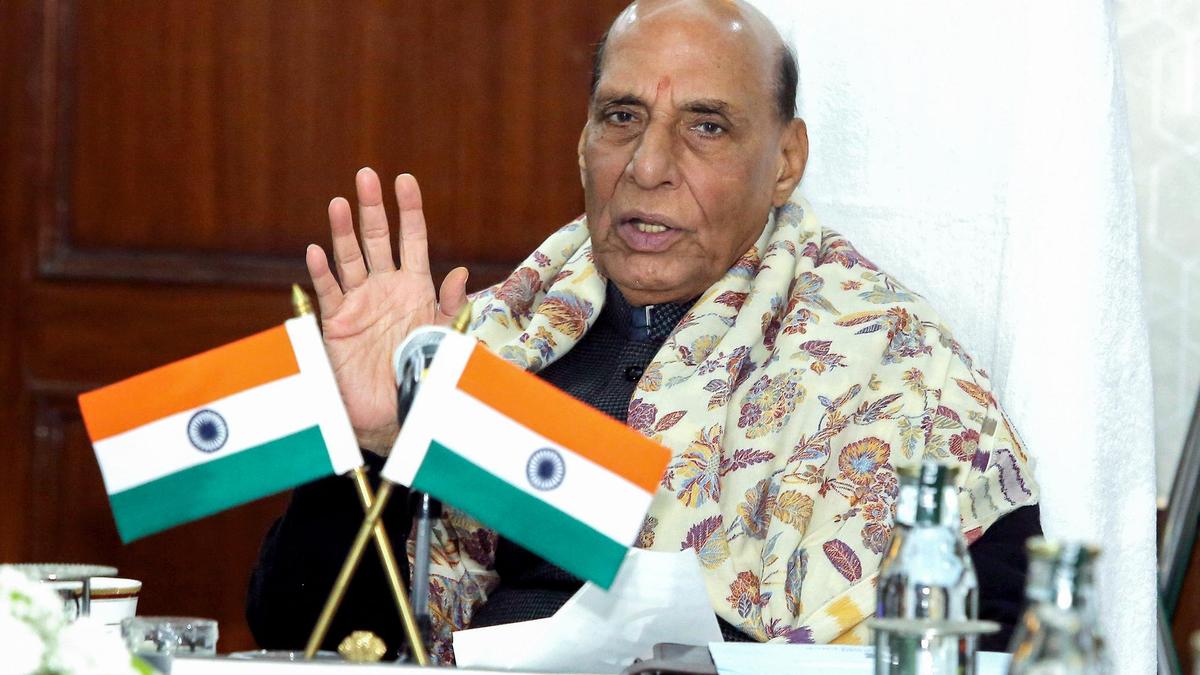
DRDO to play key role in Sudarshan Chakra air defence initiative: Rajnath Singh
Defence Minister Rajnath Singh announced that DRDO will lead the 'Sudarshan Chakra' air defence initiative. This program aims to equip critical installations across India with advanced air defence systems over the next decade, significantly bolstering national security. For competitive exams, this highlights India's focus on indigenous defence capabilities and strategic infrastructure protection, making it relevant for defence, science & technology, and current affairs sections.
Revision structure
Monthly events and exam calendar context
Static GK and one-liner notes
Quiz and mock-test revision path
Key points
Exam-ready takeaways
Defence Research and Development Organisation (DRDO) will play a key role in this initiative.
The announcement was made by Union Defence Minister Rajnath Singh.
The primary objective is to equip critical installations across the country with advanced air defence systems.
The implementation of this comprehensive aerial protection plan is slated to occur over the next decade.
Detailed analysis
Full exam-oriented breakdown
The announcement by Defence Minister Rajnath Singh regarding the 'Sudarshan Chakra' air defence initiative, spearheaded by the Defence Research and Development Organisation (DRDO), marks a pivotal moment in India's journey towards comprehensive national security and defence indigenization. This ambitious program aims to equip critical installations across the country with advanced air defence systems over the next decade, ensuring robust aerial protection against evolving threats. **Background Context and the Imperative for Air Defence:** India, situated in a complex geopolitical neighbourhood, faces a myriad of conventional and unconventional aerial threats. These range from manned aircraft and cruise missiles to ballistic missiles and increasingly, sophisticated drones. The need for a multi-layered, integrated air defence system capable of detecting, tracking, and neutralizing such diverse threats is paramount. Past conflicts, including the 1999 Kargil War and more recent border skirmishes, have underscored the criticality of impenetrable air defence. Furthermore, India's rapid economic growth has led to the development of numerous critical installations—nuclear power plants, space launch facilities, major industrial hubs, financial centres, and military bases—all of which require ironclad protection from aerial attacks. The 'Sudarshan Chakra' initiative is a direct response to this strategic imperative, aiming to create a protective umbrella over these vital assets. **The 'Sudarshan Chakra' Initiative and Key Stakeholders:** At its core, 'Sudarshan Chakra' is a long-term strategic project emphasizing indigenous development and deployment. The **DRDO**, as the primary stakeholder, is tasked with the monumental responsibility of researching, developing, and integrating these advanced air defence systems. With a rich history of developing diverse defence technologies, including missile systems like Akash, Prithvi, and Agni, DRDO brings invaluable expertise. The **Ministry of Defence** provides the overarching policy framework, funding, and strategic direction. The **Indian Armed Forces**, particularly the Indian Air Force, will be the ultimate users and beneficiaries of these systems, providing operational requirements and feedback during development and deployment. While the announcement highlights DRDO's central role, it is likely to involve **public sector undertakings (PSUs)** like Bharat Electronics Limited (BEL) and Bharat Dynamics Limited (BDL), as well as private sector defence manufacturers, fostering a robust defence industrial ecosystem under the 'Make in India' initiative. **Significance for India: Atmanirbhar Bharat and Strategic Autonomy:** This initiative holds immense significance for India. Firstly, it directly bolsters national security by creating a formidable shield against aerial threats, thereby enhancing India's deterrence capabilities. Secondly, and perhaps more importantly, 'Sudarshan Chakra' is a powerful embodiment of the 'Atmanirbhar Bharat Abhiyan' (Self-Reliant India Campaign) in the defence sector. By entrusting DRDO with a 'key role,' the government underscores its commitment to reducing import dependence and fostering indigenous research, development, and manufacturing. This not only saves valuable foreign exchange but also ensures technological sovereignty, preventing reliance on foreign suppliers for critical defence components and systems. The initiative will stimulate domestic R&D, create high-skilled jobs, and boost the capabilities of India's defence industrial base, contributing to economic growth and technological advancement. **Historical Context of India's Defence Indigenization:** India's pursuit of self-reliance in defence is not new. Post-independence, the establishment of DRDO in 1958 was a foundational step. Over the decades, India has made significant strides, particularly in missile technology through programs like the Integrated Guided Missile Development Program (IGMDP) launched in 1983. Systems like Akash (a medium-range mobile surface-to-air missile system) and the Ballistic Missile Defence (BMD) program (comprising Prithvi Air Defence and Advanced Air Defence interceptors) are testament to DRDO's capabilities. However, India has also historically been one of the world's largest arms importers. The 'Sudarshan Chakra' initiative represents a renewed and intensified commitment to reverse this trend, moving beyond mere assembly to true indigenous design and manufacturing, complementing high-end acquisitions like the Russian S-400 Triumf air defence system. **Future Implications and Policy Framework:** Over the next decade, the successful implementation of 'Sudarshan Chakra' will significantly modernize India's air defence capabilities, making them more resilient, integrated, and responsive. It will position India as a more formidable regional power and potentially open avenues for defence exports, further strengthening its strategic standing. Challenges will include ensuring timely development, seamless integration of complex technologies, effective cost management, and continuous upgrades to counter evolving threats. The initiative operates within the broader policy framework of the **Defence Acquisition Procedure (DAP) 2020**, which prioritizes 'Buy (Indian – IDDM)' (Indigenously Designed, Developed and Manufactured) and 'Make' categories for defence procurement. This policy framework is crucial for facilitating indigenous development and private sector participation. Constitutionally, defence is primarily a Union subject under **Entry 1 of the Union List (List I) in the Seventh Schedule**, granting the central government exclusive powers for 'Defence of India and every part thereof including preparation for defence and all such acts as may be conducive in times of war to its prosecution and after its termination to demobilisation.' This initiative directly falls under this constitutional mandate, underscoring the government's responsibility to ensure national security. In conclusion, 'Sudarshan Chakra' is more than just an air defence project; it is a strategic national endeavour that integrates security imperatives with economic self-reliance, technological advancement, and India's vision of becoming a leading global power.
How to study
Turn news into exam marks
Revise monthly events by exam family instead of reading random updates.
Pair one-liners with mock tests so mistakes become the next revision list.
Keep state job pages, calendar pages and GK packs connected in one path.