

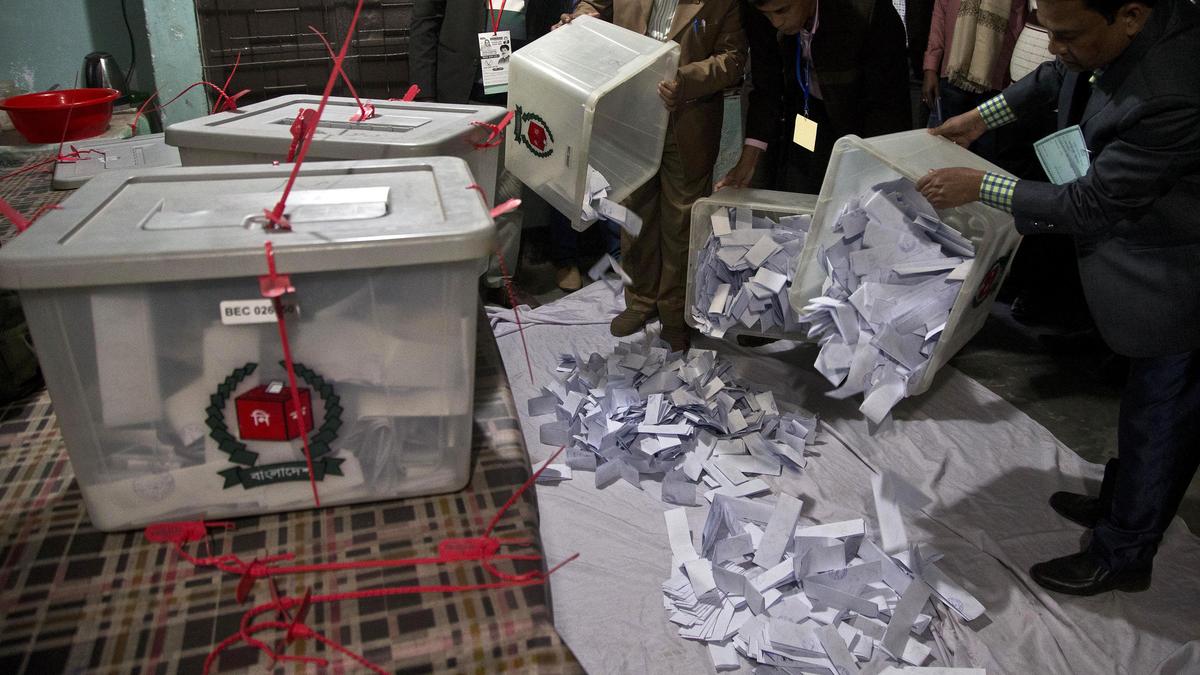
Bangladesh will implement postal ballots for the first time in its history for the 2026 general election.
GK and monthly revision
First time in its history, Bangladesh to try postal ballots in 2026 election
Bangladesh is set to introduce postal ballots for the first time in its history for the 2026 general election. This significant electoral reform aims to enhance voter participation, including for over 1.2 million citizens residing both domestically and abroad who have already registered. This development is crucial for competitive exams as it highlights electoral reforms in neighboring countries, offering insights into democratic processes and comparative governance, particularly relevant for UPSC and State PSC examinations.
Revision structure
Monthly events and exam calendar context
Static GK and one-liner notes
Quiz and mock-test revision path
Key points
Exam-ready takeaways
The decision was announced by the Election Commission of Bangladesh.
Over 1.2 million Bangladeshi citizens have already registered to cast votes via the postal ballot system.
This electoral reform aims to include both citizens living at home and abroad in the voting process.
The 2026 election marks the inaugural use of postal ballots in Bangladesh's electoral history.
Detailed analysis
Full exam-oriented breakdown
Bangladesh's announcement to introduce postal ballots for the first time in its history for the 2026 general election marks a significant milestone in its democratic journey. This electoral reform, spearheaded by the Election Commission of Bangladesh (ECB), aims to bolster voter participation and inclusivity, particularly for the estimated 1.2 million citizens, both domestic and abroad, who have already registered for this facility. This move reflects a broader global trend towards making electoral processes more accessible and robust. Historically, Bangladesh's electoral landscape has been fraught with challenges, including debates over the fairness and transparency of elections, voter turnout issues, and the logistical difficulties of ensuring participation from its vast diaspora. Since its independence in 1971, the nation has seen a dynamic, often turbulent, political environment. Previous elections have largely relied on in-person voting, which, while foundational, inherently excludes citizens who are away from their registered constituencies, either for work, study, or due to physical disabilities. The decision to adopt postal ballots addresses a long-standing demand from various segments of society, especially non-resident Bangladeshis (NRBs), who wish to exercise their fundamental right to vote and contribute to their nation's democratic future. Key stakeholders in this reform include primarily the Election Commission of Bangladesh (ECB), which is the constitutional body responsible for conducting free and fair elections. Their motivation is to enhance the legitimacy of the electoral process, increase voter turnout, and ensure greater inclusivity. The Bangladeshi government, too, plays a crucial role in facilitating the necessary legal and administrative frameworks for such a change. For Bangladeshi citizens, especially those living abroad, this reform is a monumental opportunity to reconnect with their political identity and influence national policies. Political parties will also be significant stakeholders, as the expanded electorate could shift traditional vote banks and campaign strategies. Ensuring the integrity and security of the postal ballot system will be paramount to gain their trust and prevent allegations of fraud. For India, this development in its eastern neighbour holds considerable significance. As the world's largest democracy and a proponent of democratic values, India closely observes political developments in its neighbourhood, particularly in Bangladesh, a key partner under its 'Neighbourhood First' policy. A stable, democratically strong Bangladesh is vital for regional peace, security, and economic cooperation. India itself has a well-established system of postal ballots, primarily for 'service voters' (armed forces personnel, government officials on election duty, etc.) and, more recently, for senior citizens (above 80) and Persons with Disabilities (PwDs). This allows for a comparative analysis of electoral reforms and the challenges faced in extending voting rights to diverse populations. India's Election Commission (ECI), empowered by Article 324 of the Constitution, has consistently worked towards making elections more accessible, leading to innovations like Electronic Voting Machines (EVMs) and Voter Verifiable Paper Audit Trail (VVPAT). The Representation of the People Act, 1950 and 1951, provide the legal framework for these electoral processes, including provisions for postal ballots. This move by Bangladesh connects to broader themes of governance, democratic consolidation, and international relations. It highlights the evolving nature of democracy in the 21st century, where technology and administrative innovations are leveraged to overcome geographical barriers to participation. The successful implementation of postal ballots could serve as a model for other developing nations grappling with similar challenges of diaspora engagement and voter accessibility. Conversely, any logistical or security issues could provide valuable lessons for electoral bodies globally. Looking ahead, the future implications are manifold. If successfully implemented, the postal ballot system could significantly boost voter turnout in the 2026 elections, enhancing the democratic legitimacy of the elected government. It would also empower the Bangladeshi diaspora, potentially leading to increased engagement in national development. However, significant challenges remain, including ensuring the security and secrecy of ballots, preventing fraud, and establishing robust logistical channels for distribution and collection, especially across international borders. The ECB will need to invest heavily in public awareness campaigns and infrastructure to ensure a smooth transition. The success or failure of this initiative will undoubtedly influence future electoral reforms in Bangladesh and potentially inspire or caution other South Asian nations contemplating similar inclusive measures. The journey towards a more inclusive and participative democracy is ongoing, and Bangladesh's step is a testament to this continuous evolution.
How to study
Turn news into exam marks
Revise monthly events by exam family instead of reading random updates.
Pair one-liners with mock tests so mistakes become the next revision list.
Keep state job pages, calendar pages and GK packs connected in one path.