

Ukraine hosted security talks in its capital city, Kyiv.
GK and monthly revision
Ukraine hosts talks with security allies in Kyiv
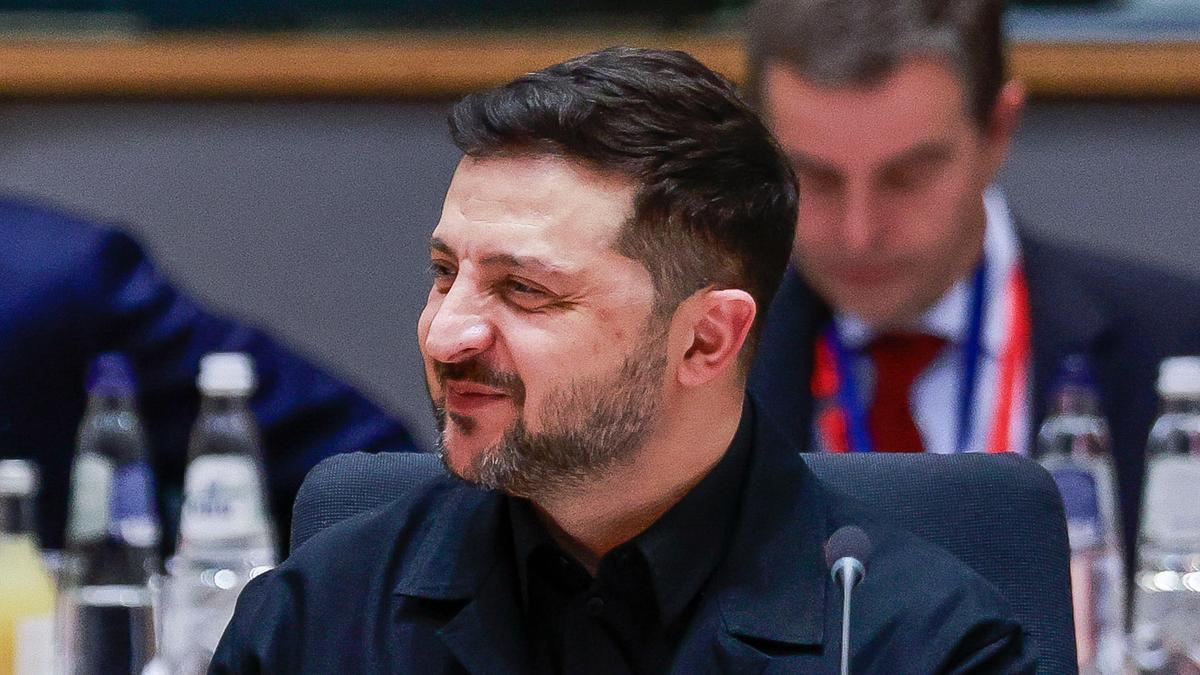
Ukraine recently hosted crucial security talks in Kyiv with approximately 15 allied nations, along with representatives from the European Union and NATO. The U.S. delegation participated via video link. This event signifies ongoing international support for Ukraine amidst the conflict and is important for understanding current global geopolitical alignments and security cooperation for competitive exams.
Revision structure
Monthly events and exam calendar context
Static GK and one-liner notes
Quiz and mock-test revision path
Key points
Exam-ready takeaways
Approximately 15 countries participated in the security talks.
Representatives from the European Union (EU) and NATO also attended the discussions.
The U.S. delegation joined the talks via video link.
Ukrainian President mentioned the participation details of the talks with security allies.
Detailed analysis
Full exam-oriented breakdown
The recent security talks hosted by Ukraine in Kyiv, involving approximately 15 allied nations, representatives from the European Union (EU), and NATO, with the U.S. delegation joining virtually, underscore the persistent international solidarity with Ukraine amidst the ongoing conflict with Russia. This event is not merely a diplomatic gathering but a significant reaffirmation of support, signaling continued Western commitment to Ukraine's sovereignty and territorial integrity. To understand the gravity of these talks, we must first delve into the background context. The current conflict escalated dramatically with Russia's full-scale invasion of Ukraine on February 24, 2022. This invasion was preceded by years of simmering tensions, including Russia's annexation of Crimea in 2014 and its support for separatists in eastern Ukraine's Donbas region. Russia's stated justifications for the invasion included concerns over NATO expansion eastward, alleged denazification of Ukraine, and protection of Russian speakers. However, the international community largely views it as an unprovoked act of aggression violating international law and Ukraine's sovereignty. The conflict has triggered the largest humanitarian crisis in Europe since World War II, displaced millions, and led to unprecedented sanctions against Russia by Western nations. In these talks, several key stakeholders played crucial roles. **Ukraine**, as the host, used the platform to reiterate its urgent need for continued military, financial, and humanitarian aid, as well as to push for stronger security guarantees and its aspirations for eventual EU and NATO membership. The presence of **allied nations**, primarily Western powers, demonstrated their unwavering resolve to support Ukraine's defense efforts and to hold Russia accountable. These nations have collectively provided billions in aid, imposed stringent sanctions on Russia, and worked to isolate Moscow diplomatically. The **European Union (EU)**, having granted Ukraine candidate status in June 2022, is a critical economic and political partner, navigating its own energy security challenges while supporting Ukraine's reconstruction and integration. **NATO**, the transatlantic security alliance, while carefully avoiding direct military engagement with Russia to prevent a wider conflict, has significantly bolstered its eastern flank and coordinated military assistance to Ukraine through its member states. The **United States**, a pivotal global leader, has been at the forefront of orchestrating international support, providing substantial military packages, and leading diplomatic efforts, with its virtual participation underscoring its continued strategic interest in European security. This event carries significant implications for India's foreign policy and broader geopolitical standing. India has maintained a delicate balancing act, rooted in its principle of 'strategic autonomy'. While advocating for a peaceful resolution and respecting territorial integrity, India has refrained from outright condemning Russia, a long-standing defense partner and a crucial supplier of oil and fertilizers. This position is largely guided by India's national interests, including its reliance on Russian military hardware and discounted crude oil. The conflict has, however, pushed India to diversify its defense imports and energy sources, impacting its strategic calculations. Economically, the war has exacerbated global inflation, particularly in energy and food prices, directly affecting India's import bill and domestic economy. India's foreign policy is enshrined in **Article 51 of the Constitution**, a Directive Principle of State Policy, which mandates the promotion of international peace and security, maintenance of just and honorable relations between nations, fostering respect for international law and treaty obligations, and encouraging settlement of international disputes by arbitration. India's stance on Ukraine, while complex, aligns with the broader spirit of international law and peaceful resolution, even as it navigates complex bilateral relations. Historically, the current crisis can be viewed through the lens of post-Cold War power dynamics, the expansion of Western alliances, and Russia's perceived security concerns regarding its 'near abroad'. The collapse of the Soviet Union in 1991 led to a realignment of European security, with many former Soviet bloc countries joining NATO and the EU, a move consistently viewed by Russia as an encroachment on its sphere of influence. These talks in Kyiv signal a future where European security architecture will be fundamentally reshaped. They imply a prolonged period of geopolitical tension, continued military aid to Ukraine, and potentially, a more robust and unified Western front against Russian aggression. For India, the future implications involve navigating a more fragmented global order, adapting its economic and security strategies to new supply chains and alliances, and continually asserting its strategic autonomy in a multipolar world. The global ramifications for energy markets, food security, and multilateral institutions will persist, demanding adaptive and pragmatic foreign policy responses from India.
How to study
Turn news into exam marks
Revise monthly events by exam family instead of reading random updates.
Pair one-liners with mock tests so mistakes become the next revision list.
Keep state job pages, calendar pages and GK packs connected in one path.