

Protests are currently ongoing in Iran, sparked by the country's ailing economy.
GK and monthly revision
Iran's leader says ‘rioters must be put in their place,’ as protest death toll reaches at least 15
Protests have erupted in Iran due to the nation's ailing economy, leading to widespread violence and a reported death toll of at least 15 people. Supreme Leader Ayatollah Ali Khamenei has issued a strong statement, asserting that "rioters must be put in their place." This event is significant for understanding geopolitical stability in the Middle East and the impact of economic distress on internal security, crucial for international relations in competitive exams.
Revision structure
Monthly events and exam calendar context
Static GK and one-liner notes
Quiz and mock-test revision path
Key points
Exam-ready takeaways
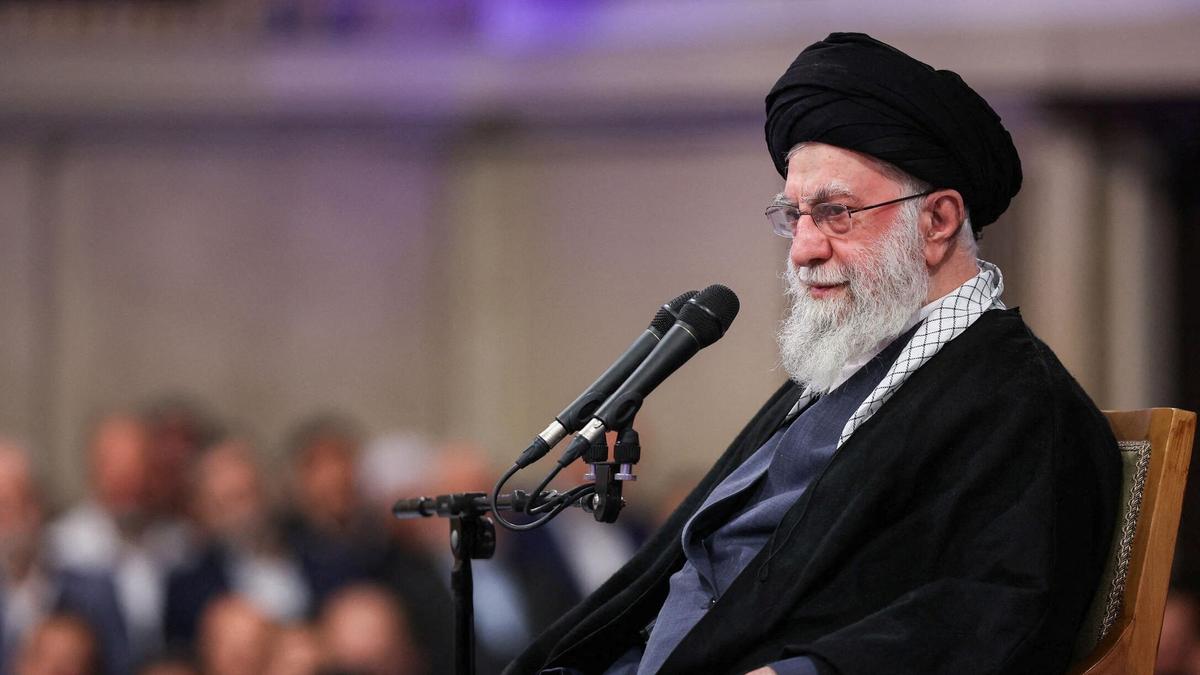
Iran's Supreme Leader, Ayatollah Ali Khamenei, made his first public comments on the demonstrations.
Ayatollah Ali Khamenei stated that "rioters must be put in their place" in response to the unrest.
At least 15 people have been killed in the violence surrounding the demonstrations, according to human rights activists.
The core reason for the demonstrations is attributed to Iran's struggling economic conditions.
Detailed analysis
Full exam-oriented breakdown
The recent wave of protests sweeping across Iran, sparked by the nation's ailing economy and met with a stern response from Supreme Leader Ayatollah Ali Khamenei, represents a critical juncture in the country's internal dynamics and has significant implications for regional and global stability. To truly grasp the gravity of the situation, we must delve into its multifaceted layers, from historical grievances to geopolitical ramifications. **Background Context and What Happened:** Iran has been grappling with severe economic challenges for years, exacerbated by international sanctions, particularly those re-imposed by the United States after its withdrawal from the Joint Comprehensive Plan of Action (JCPOA), or the Iran nuclear deal, in 2018. These sanctions have crippled Iran's oil exports, restricted its access to international financial markets, and deterred foreign investment. Domestically, this has translated into soaring inflation, high unemployment rates (especially among the youth), a depreciating currency, and a general decline in living standards. The current protests are not an isolated incident but rather a continuation of a pattern seen in recent years, including the 2017-18 protests over economic hardship and the 2019 fuel price protests, which were met with brutal crackdowns. The immediate trigger for the latest unrest appears to be the cumulative effect of these economic pressures, pushing ordinary citizens to their breaking point. Human rights activists report at least 15 deaths amidst the violence, indicating a severe escalation in the confrontation between protesters and security forces. **Key Stakeholders Involved:** 1. **Iranian Government and Supreme Leader Ayatollah Ali Khamenei:** As the ultimate authority, Khamenei's declaration that "rioters must be put in their place" signals the regime's resolve to suppress dissent and maintain its grip on power. The government views these protests as a threat to national security and stability, often blaming foreign adversaries for instigating them. 2. **The Protesters:** These are primarily ordinary Iranians—students, workers, and members of the middle class—who are frustrated by economic hardship, corruption, lack of political freedoms, and human rights abuses. Their demands range from economic relief to fundamental political reforms. 3. **Human Rights Organizations:** Groups like Amnesty International and other international watchdogs play a crucial role in documenting the casualties, arrests, and alleged abuses by security forces, bringing international attention to the human cost of the crackdown. 4. **International Community (e.g., US, EU, UN):** These external actors monitor the situation closely. The US, having initiated stringent sanctions, often expresses solidarity with the protesters, while European nations typically advocate for de-escalation and respect for human rights, often in the context of broader nuclear deal negotiations. **Why This Matters for India:** India has significant strategic and economic interests tied to Iran. Firstly, **energy security** is paramount for India, being one of the world's largest oil importers. Instability in a major oil-producing region like the Middle East, particularly Iran, can lead to volatile global oil prices, directly impacting India's economy and inflation. While India has diversified its oil sources due to US sanctions on Iran, a stable Iran remains crucial for overall regional energy market stability. Secondly, the **Chabahar Port project** is a cornerstone of India's 'Connect West' policy and its efforts to enhance regional connectivity. This port provides India with a strategic trade route to Afghanistan and Central Asia, bypassing Pakistan. Political unrest in Iran could jeopardize the security and operational continuity of this vital infrastructure project. Thirdly, Iran's position in **regional geopolitics** affects India's broader strategic calculations. India generally maintains a policy of strategic autonomy, balancing relations with all major powers in the region, including Iran, Saudi Arabia, and Israel. Instability in Iran could alter regional power dynamics, potentially leading to increased sectarian tensions or a greater proxy conflict, which could destabilize the entire Gulf region where a large Indian diaspora resides. **Historical Context and Future Implications:** Iran's contemporary political landscape is shaped by the 1979 Islamic Revolution, which overthrew the monarchy and established the current theocratic system. Since then, the country has experienced periodic waves of protests, often fueled by economic grievances or demands for greater social and political freedoms. The recurring nature of these protests underscores the deep-seated popular discontent with the regime's policies and governance. Looking ahead, the current unrest could have several implications. It might intensify the internal power struggle within Iran, potentially leading to a more hardline approach from the government to suppress dissent. It could also complicate ongoing efforts to revive the JCPOA, as the regime might become more entrenched and less willing to make concessions under internal pressure. For India, the future implications involve navigating a complex diplomatic tightrope, ensuring the safety of its citizens, protecting its strategic investments like Chabahar, and maintaining access to critical energy supplies amidst a volatile geopolitical landscape. **Related Constitutional Articles, Acts, or Policies:** While Iran's constitutional framework isn't directly applicable to India, India's approach to such international events is guided by its own foreign policy principles and economic strategies. India's commitment to **multilateralism** and **strategic autonomy** dictates its response to such crises, focusing on dialogue and de-escalation rather than intervention. From an economic perspective, India's **Energy Security Policy** is directly impacted, emphasizing diversification of energy sources and building strategic reserves. The **'Connect West' policy**, involving projects like Chabahar, reflects India's strategic interest in regional connectivity and trade, making stability in partner nations like Iran crucial. India, while upholding democratic values and human rights globally, often balances these concerns with its national interests, particularly energy security and regional trade routes, when dealing with sovereign nations facing internal strife.
How to study
Turn news into exam marks
Revise monthly events by exam family instead of reading random updates.
Pair one-liners with mock tests so mistakes become the next revision list.
Keep state job pages, calendar pages and GK packs connected in one path.