

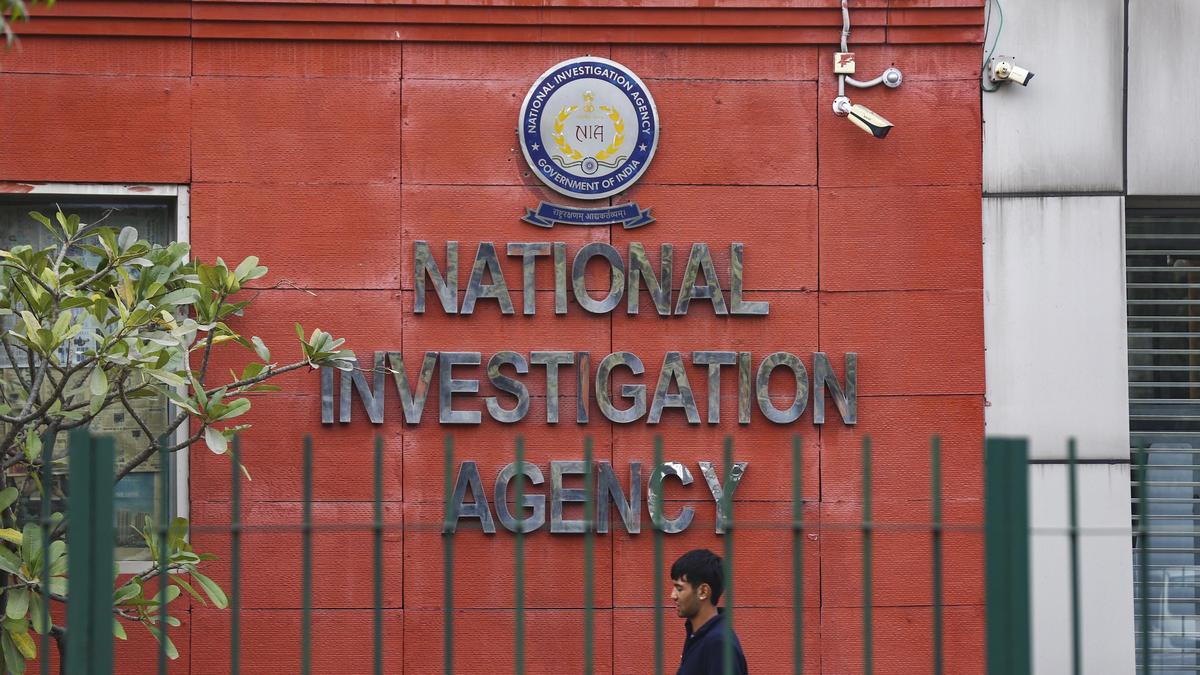
The National Investigation Agency (NIA) filed a charge sheet in the Khalistani-terrorist linked Neemrana hotel firing case.
GK and monthly revision
NIA files charge sheet against main shooters in Khalistani-terrorist linked Neemrana hotel firing case
The National Investigation Agency (NIA) has filed a charge sheet against main shooters Puneet and Narinder Lalli in the Khalistani-terrorist linked Neemrana hotel firing case. This development underscores the ongoing efforts by central agencies to dismantle terror networks and ensure national security. For competitive exams, understanding the role of the NIA and significant anti-terrorism cases is vital for General Awareness and Internal Security sections.
Revision structure
Monthly events and exam calendar context
Static GK and one-liner notes
Quiz and mock-test revision path
Key points
Exam-ready takeaways
The main shooters identified and charged are Puneet and Narinder Lalli.
The case is specifically linked to Khalistani terrorist activities.
The incident of firing occurred at a hotel located in Neemrana.
A total of nine accused individuals have been charged in this case so far.
Detailed analysis
Full exam-oriented breakdown
The filing of a charge sheet by the National Investigation Agency (NIA) against main shooters Puneet and Narinder Lalli in the Khalistani-terrorist linked Neemrana hotel firing case is a significant development, shining a spotlight on India's persistent battle against internal security threats emanating from extremist ideologies. This incident is not an isolated event but rather a manifestation of a broader, long-standing challenge posed by Khalistani separatism, often fueled by elements operating from foreign soil. To truly understand this, we must delve into its background. The Khalistan movement, advocating for a separate Sikh state, gained significant traction in Punjab during the late 1970s and 1980s. Fueled by political, economic, and religious grievances, it escalated into a violent insurgency, marked by events such as the storming of the Golden Temple (Operation Blue Star in 1984), the assassination of Prime Minister Indira Gandhi in the same year, and the subsequent anti-Sikh riots. While the movement was largely suppressed by the mid-1990s through concerted efforts by Indian security forces, its ideological remnants and sympathizers continued to exist, primarily among diaspora communities in countries like Canada, the UK, and the USA. In recent years, there has been a noticeable attempt to revive this extremism, often leveraging social media for radicalization and funding, and sometimes orchestrating targeted acts of violence or intimidation within India. What happened in Neemrana, a town in Rajasthan, is reportedly part of this renewed push. While the specific details of the firing incident in the hotel are not fully disclosed in the brief, such acts are typically linked to extortion, intimidation, or targeted violence aimed at creating a climate of fear and asserting the presence of these groups. The NIA's investigation and subsequent charge sheet against nine accused, including the main shooters, underscore the gravity and organized nature of the crime, indicating a larger conspiracy with potential links to international networks. Key stakeholders involved in this complex scenario include the National Investigation Agency (NIA) itself, which is India's premier counter-terrorism agency established under the NIA Act, 2008, in the wake of the 26/11 Mumbai attacks. The NIA's mandate allows it to investigate and prosecute offenses affecting the sovereignty, security, and integrity of India, often cases with inter-state and international ramifications. Its role here is crucial in unearthing the entire network, from financiers to handlers and perpetrators. Other stakeholders include various Khalistani terrorist organizations (some proscribed under the Unlawful Activities (Prevention) Act, UAPA, 1967), foreign-based sympathizers and financiers, and the Indian government, which is committed to maintaining national security and territorial integrity. Local law enforcement agencies also play a vital initial role, though such cases are often transferred to the NIA due to their broader implications. This case matters profoundly for India's internal security landscape. It highlights the continued threat of radicalization and the potential for terror modules to operate within the country, often with external support. The resurgence of Khalistani extremism, even in a diluted form, poses a challenge to communal harmony, law and order, and the overall stability of states like Punjab and its neighboring regions. Economically, such incidents can deter investment and disrupt normal life. Politically, they test the government's resolve and capacity to counter sophisticated terror networks. Diplomatically, India frequently engages with countries where Khalistani groups are active, seeking cooperation on intelligence sharing and extradition of wanted individuals, making this a matter of international relations as well. The legal framework underpinning such investigations is robust. The NIA Act, 2008, grants the agency wide-ranging powers to investigate scheduled offenses across state boundaries without special permission. Furthermore, the Unlawful Activities (Prevention) Act (UAPA), 1967, which has been amended multiple times (notably in 2019 to allow the designation of individuals as terrorists), is the primary legislation used to combat terrorism. It provides for stringent provisions regarding investigation, arrest, detention, and prosecution of individuals involved in unlawful activities and terrorist acts. These laws empower agencies to dismantle terror infrastructure and bring perpetrators to justice, upholding the constitutional mandate of maintaining public order and national security, as envisioned under Article 355, which places a duty on the Union to protect states against internal disturbance. Looking ahead, the future implications are multi-faceted. The NIA's continued efforts will be crucial in dismantling these networks, but the challenge extends beyond law enforcement. It requires a multi-pronged approach involving intelligence gathering, counter-radicalization programs, especially targeting youth susceptible to online propaganda, and robust international cooperation. India will likely continue to press countries like Canada and the UK for stronger action against Khalistani elements operating from their soil, seeking extradition and stricter controls on funding. The case also serves as a reminder for constant vigilance against all forms of extremism and the need to strengthen India's internal security apparatus to preempt and neutralize such threats effectively.
How to study
Turn news into exam marks
Revise monthly events by exam family instead of reading random updates.
Pair one-liners with mock tests so mistakes become the next revision list.
Keep state job pages, calendar pages and GK packs connected in one path.