

A conservation group indicates that 31.8% of the Aravalli Range is currently at risk.
GK and monthly revision
31.8% of Aravalli Range at risk after recent classification, says conservation group
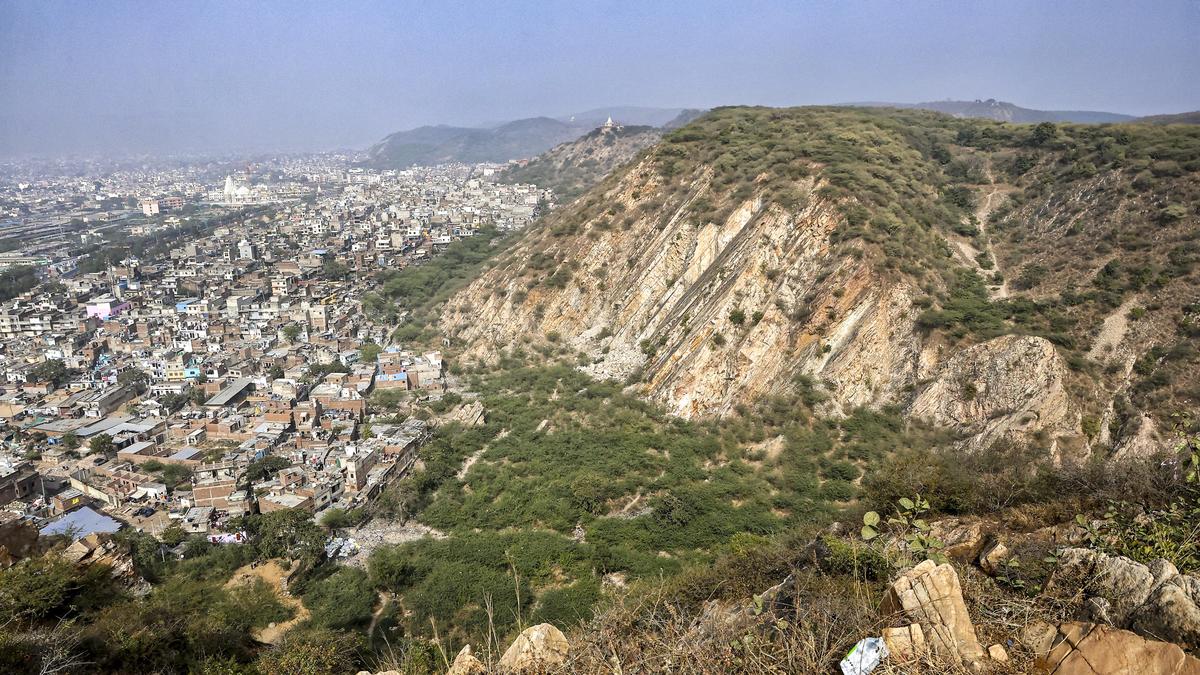
A conservation group has highlighted that 31.8% of the Aravalli Range is currently at risk due to a recent classification. They demand that the entire Aravalli Range be declared a "fully protected zone" by abolishing the distinction between "hills" and "mountains" based on height. This issue is crucial for environmental conservation and sustainable development in the region, making it highly relevant for competitive exams focusing on geography, environment, and policy.
Revision structure
Monthly events and exam calendar context
Static GK and one-liner notes
Quiz and mock-test revision path
Key points
Exam-ready takeaways
The risk to the Aravalli Range is attributed to a recent classification system.
The group demands that the entire Aravalli Range be declared a "fully protected zone".
A key demand is the abolition of the distinction between "hills" and "mountains" within the Aravalli Range.
This distinction, based on height, is considered detrimental to the comprehensive protection of the Aravalli ecosystem.
Detailed analysis
Full exam-oriented breakdown
The Aravalli Range, one of the oldest fold mountain systems in the world, predating the Himalayas, stands as a crucial ecological backbone for Northwestern India. Geologically formed during the Precambrian era (around 2.5 billion years ago), it stretches approximately 692 km across Gujarat, Rajasthan, Haryana, and Delhi. Its significance extends far beyond its physical presence; it acts as a natural barrier to the eastward expansion of the Thar Desert, recharges groundwater aquifers, sustains rivers like the Sabarmati and Luni, and supports a unique biodiversity, including leopards, hyenas, and various bird species. For the densely populated National Capital Region (NCR), the Aravallis are often termed the "green lungs," regulating air quality and temperature. The recent concern raised by a conservation group highlights that 31.8% of the Aravalli Range is at significant risk due to a specific classification system. This classification reportedly distinguishes between "hills" and "mountains" within the range based on height, thereby creating loopholes for development and exploitation in areas designated as mere "hills." The conservation group demands the abolition of this distinction and the declaration of the entire Aravalli Range as a "fully protected zone." This issue is not new; the Aravallis have faced relentless degradation over decades due to rampant illegal mining, urbanization, encroachment, and industrialization, despite numerous legal interventions and environmental regulations. Key stakeholders in this ongoing environmental struggle include various actors with often conflicting interests. **Conservation groups and environmental NGOs**, such as the Aravalli Bachao Andolan, are at the forefront, advocating for stronger protection, conducting research, and pursuing legal remedies. **State governments** of Rajasthan, Haryana, Gujarat, and the National Capital Territory of Delhi hold primary responsibility for land use planning, mining leases, and forest management within their respective jurisdictions. Their policies directly impact the fate of the range. The **Central Government**, particularly the Ministry of Environment, Forest and Climate Change (MoEFCC), plays a crucial role in formulating national environmental policies, conducting Environmental Impact Assessments (EIAs), and enforcing environmental laws. **Local communities and tribal populations** residing in and around the Aravallis are directly dependent on its resources for their livelihoods and cultural practices, making them vulnerable to environmental degradation. Conversely, **mining and real estate lobbies** represent powerful economic interests that often push for the exploitation of the Aravalli's resources and land, driving the demand for less stringent environmental classifications. This issue holds immense significance for India. Ecologically, the continued degradation of the Aravallis threatens to accelerate desertification, exacerbate water scarcity in an already water-stressed region, and lead to a significant loss of biodiversity. Environmentally, it will worsen air quality, increase soil erosion, and disrupt crucial wildlife corridors. Socio-economically, it impacts the livelihoods of local communities, jeopardizes urban water security, and poses long-term health risks to millions. Historically, the Supreme Court has intervened multiple times, notably in the 1990s and 2000s, to curb illegal mining, emphasizing the Aravallis' critical ecological role. Despite these interventions, the pressure on the range persists, often due to administrative loopholes or inadequate enforcement. From a constitutional perspective, the protection of the Aravallis aligns with several key provisions. **Article 48A** of the Directive Principles of State Policy (DPSP) mandates that "The State shall endeavour to protect and improve the environment and to safeguard the forests and wild life of the country." Furthermore, **Article 51A(g)**, a Fundamental Duty, enjoins every citizen "to protect and improve the natural environment including forests, lakes, rivers and wild life, and to have compassion for living creatures." Specific legislative frameworks like the **Environment (Protection) Act, 1986**, provide the Central Government with powers to take measures for protecting and improving the environment, including declaring Eco-Sensitive Zones (ESZs). The **Forest (Conservation) Act, 1980**, regulates the diversion of forest land, while the **Mines and Minerals (Development and Regulation) Act, 1957**, governs mining operations. The **National Green Tribunal Act, 2010**, establishes a specialized body for expeditious environmental justice. Future implications are stark. If the entire Aravalli Range is not declared a fully protected zone, the incremental loss of its 'hill' areas will lead to irreversible ecological damage, impacting regional climate patterns, water resources, and biodiversity. This could trigger more frequent droughts, intensify dust storms, and further strain urban infrastructure. Conversely, comprehensive protection would not only restore ecological balance but also foster sustainable development models, promote eco-tourism, and ensure long-term environmental security for the millions who depend on this ancient mountain range. The current demand by conservation groups is a call for a holistic, ecosystem-based approach to conservation, moving beyond piecemeal protection to safeguard a vital national asset.
How to study
Turn news into exam marks
Revise monthly events by exam family instead of reading random updates.
Pair one-liners with mock tests so mistakes become the next revision list.
Keep state job pages, calendar pages and GK packs connected in one path.